
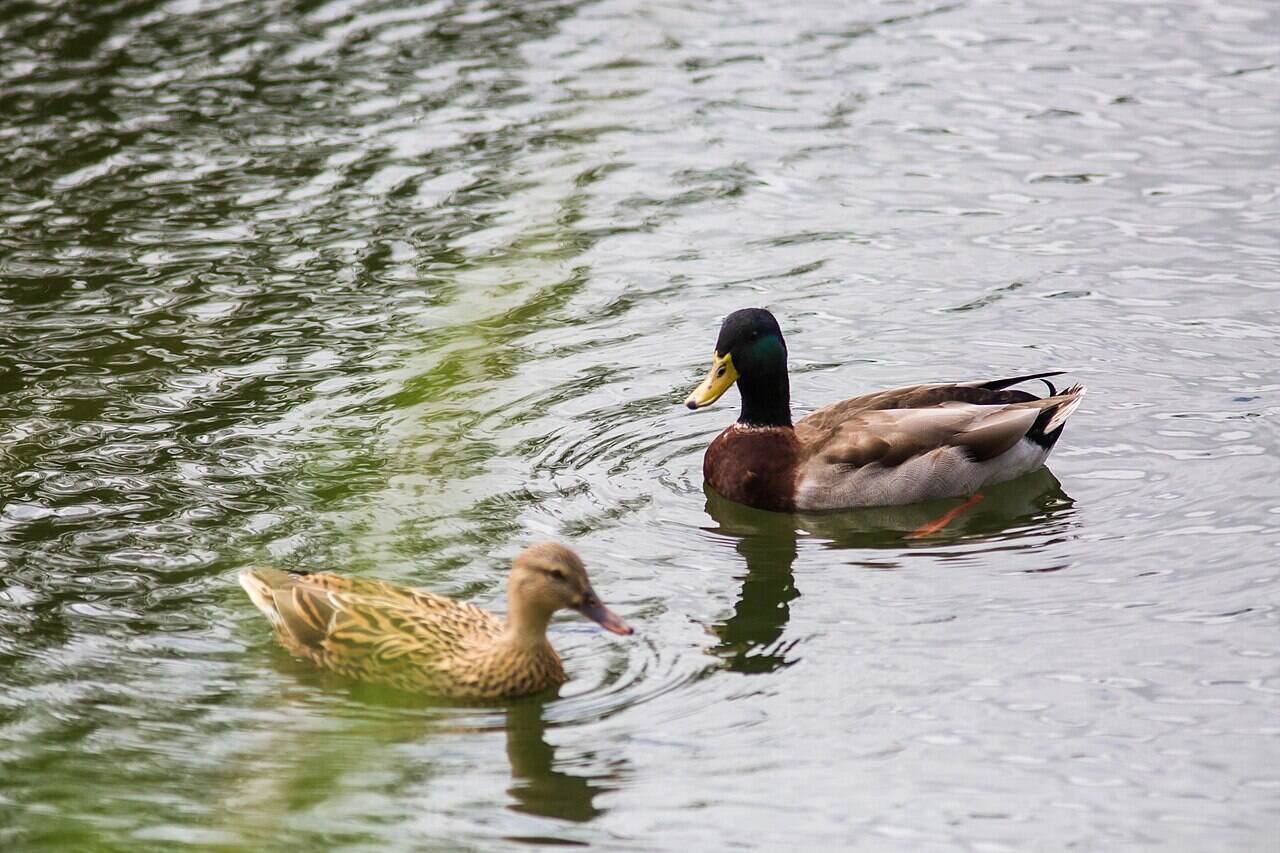
The koloa maoli, or Hawaiian duck, is one of Hawaii’s native bird species found nowhere else in the world. But the endangered species now faces a less visible threat as hybridisation with non-native mallards puts its genetic identity at risk. Rather than a population decline, the threat lies in the genetic changes caused by mating between native ducks and feral mallards.
Get breaking news anytime, anywhere. Download the TOI app now!

A study published in the journal Molecular Ecology examined how breeding between the endangered Hawaiian duck and introduced mallards has affected populations across the main Hawaiian Islands. The researchers used genomic data to study genetic patterns across 425 putative koloa, mallards and hybrids, analysing 3,308 double-digest restriction-site-associated DNA (ddRAD) loci to measure the extent of hybridisation across the main Hawaiian Islands.
The paper reports that the strongest evidence for introgression was on O‘ahu, Hawai‘i Island and Maui, where most birds were assigned to either highly admixed or backcrossed classes rather than “pure” koloa or mallard. It also found that while Kaua‘i still held the largest proportion of koloa-like genomes, even there several individuals showed mallard ancestry, underscoring how widespread the genetic swamping has become across the archipelago.
The degree of admixture varied across the islands. Some populations still showed signs of native duck genetics, while others were dominated by hybrids carrying genes from both koloa and mallards.
Genetic issues for the Hawaiian duck
The Hawaiian duck is endemic to the state of Hawaii. When trying to conserve the species, it is important not only to preserve its numbers but also its genetics. The authors discovered that the island of Kauaʻi, which hosts the largest number of koloa, has relatively low levels of hybrids among the birds.
However, populations sampled outside Kauaʻi showed a very different pattern. The researchers described these groups as hybrid swarms, with individuals carrying mixed ancestry from koloa and mallards. In these areas, the distinction between the native duck and the introduced mallard had become much less clear.
The study also found evidence that these hybrid populations may remain stable over time. This suggests the mixing is not just short-term but can continue across generations.
The scientists observed that species on islands with small populations are especially vulnerable when similar species move in and breed, because there are no natural barriers between them.
Gene protection on Hawaii Island Ecosystem
Kaua‘i Island has fewer hybrids, whereas other islands have witnessed hybridisation of genes. According to USGS , this distinction is significant in the sense that, for conservation, it may not be appropriate to apply one single method everywhere, as the conditions vary according to population. For example, a population having fewer hybrids needs protection methods different from one that has many hybrids.
The researchers also showed that genetic studies can reveal changes that simple bird counts may miss. A population can survive while its genetic makeup gradually changes. Understanding these changes helps scientists track the future of endangered species more accurately. This research helps show how introduced animals can affect native species in Hawaii.






