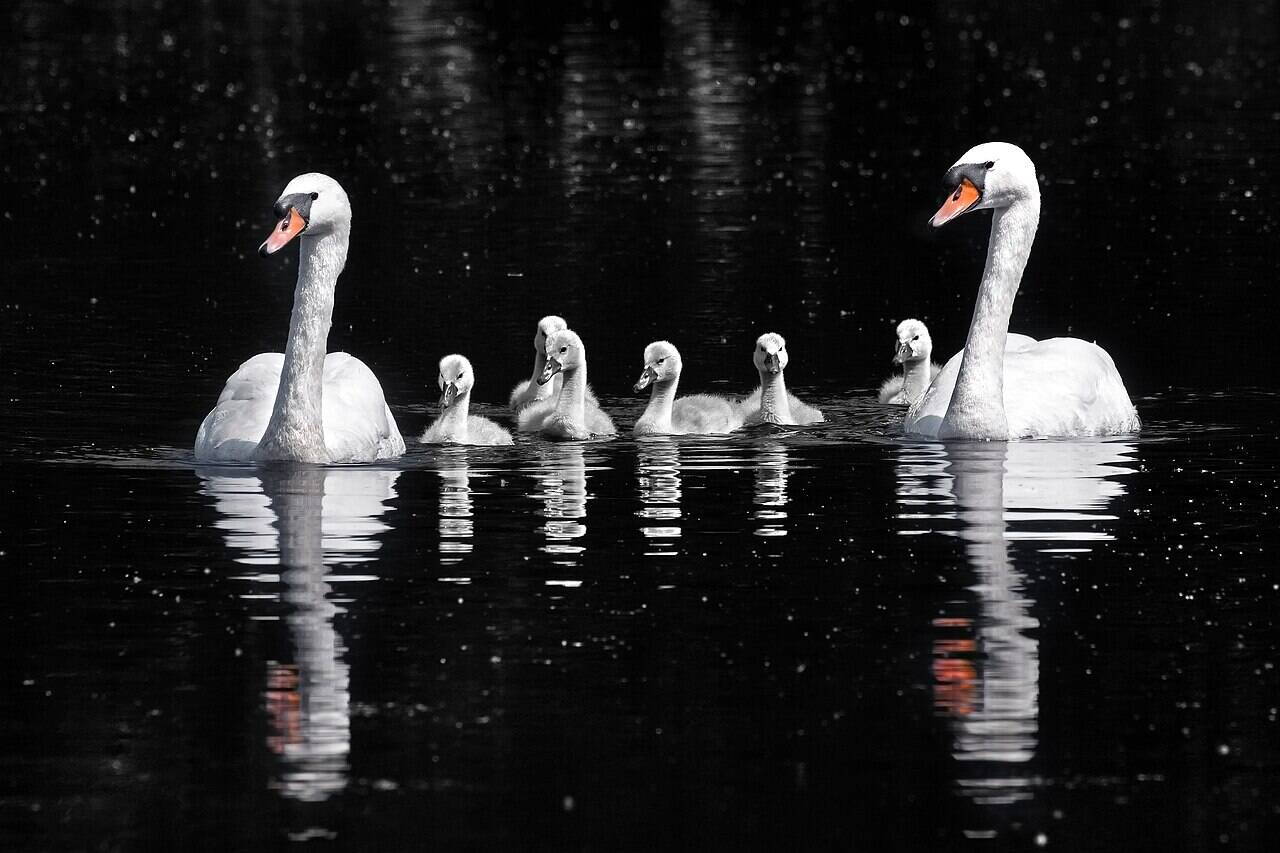
Mute swans have long fascinated people with their white plumage and graceful movement across lakes and ponds. That appeal made them popular in paintings and in royal and municipal gardens. The reputation is also why they were introduced to America in the late nineteenth century. According to the study Mute Swans and Their Chesapeake Bay Habitats: Proceedings of a Symposium, mute swans were introduced to North America during the late nineteenth century as ornamental birds for parks, private estates and decorative ponds.
Get breaking news anytime, anywhere. Download the TOI app now!

What seemed like a harmless introduction later became an environmental problem. The research brought together wildlife biologists, ecologists and conservation managers to examine how the descendants of those early introductions expanded across parts of the Chesapeake Bay. Their findings showed that the main concern was the ecological impact of growing populations on wetlands, underwater vegetation and native wildlife.
Unlike native birds that have adapted to local conditions over time, mute swans have found abundant food and habitat, with few natural checks on their numbers. As the numbers increased, the strain became greater on underwater vegetation and native species dependent on the same wetlands.
How a decorative bird started to change Chesapeake Bay
The Chesapeake Bay is a diverse ecosystem of rivers, wetlands, shorelines and shallow habitats that provide food, shelter and breeding areas for more than 3,600 species of plants and animals. Submerged aquatic vegetation, commonly known as underwater grasses, thrives beneath the water's surface.
According to the study, mute swans rely heavily on submerged aquatic vegetation, an important habitat that supports fish, crabs, insects and other aquatic life while also helping to stabilise sediments and maintain water quality. Many waterfowl also rely on the vegetation for food, making it one of the most valuable natural resources in the bay.
Mute swans feed extensively on these underwater plants. Rather than eating only the leaves, they often pull entire plants from the sediment, including the roots. This feeding method makes it difficult for vegetation to recover quickly, particularly in places where several swans repeatedly forage. Researchers noted that a single bird can consume substantial amounts of aquatic vegetation each day, and large flocks can have a significant cumulative effect.
As patches of underwater vegetation shrink, the consequences spread beyond the plants themselves. Fish lose nursery areas where young individuals can hide from predators. Small aquatic creatures lose shelter, while birds that depend on healthy wetlands find fewer feeding opportunities. The symposium described these changes as part of a wider ecological chain, where damage to one important habitat affects many other species connected to it.
Scientists also observed that swans moved from one foraging spot to another, so the pressure was not confined to a single area. Over time, grazing affected large areas of shallow water and slowed natural vegetation recovery in those parts of the bay.
How mute swans affect native birds
Food is not the only form of competition. Another factor discussed at the symposium was mute swans' behaviour during the breeding season. They become highly territorial during this period. Adult pairs often defend their breeding areas aggressively and drive away ducks, geese and other waterbirds that come nearby.
This mattered because the Chesapeake Bay supports a wide diversity of resident and migratory birds. Every year, many species depend on its marshes and shallow waters to rest, feed or raise young. As mute swan populations expanded, wildlife managers worried that competition for habitat would add pressure to ecosystems already stressed by habitat loss and environmental change.
The study showed that the effects extended beyond birds alone. Healthy underwater vegetation supports many organisms that form the foundation of the wetland food web. Aquatic insects, shellfish, fish and amphibians all benefit from these plant communities in different ways. When vegetation declines, many of these species lose places to feed, reproduce or seek protection, making the ecosystem less resilient over time.
The researchers also noted that the changes happened gradually. Initially, the number of introduced mute swans was small, so their ecological impact remained limited. However, after decades of population growth, the birds' impact became more pronounced. Over time, an ornamental species became a conservation problem.
Balancing beauty with wildlife conservation needs
Among the difficult issues addressed during the symposium was that of public perception. Some people saw the mute swan as something beautiful, peaceful and elegant. It was therefore hard for them to understand why the swan became a conservation problem.
Scientists stressed that management decisions were based on ecological evidence rather than opinions about the birds themselves. Their assessments focused on changes to underwater vegetation, habitat use, breeding success and interactions with native wildlife. The goal was to protect ecosystems that support a wide variety of native species rather than target an individual bird because of its appearance.
The research also illustrated a broader lesson about introducing species outside their natural range. Animals that seem harmless in one setting can have unintended consequences when introduced into environments with different ecological relationships. Even introductions made for aesthetic reasons can create long-term challenges if populations grow without natural checks.
The mute swan story in Chesapeake Bay shows how conservation science can reveal changes that develop slowly over many years. What began as an effort to beautify estates and ornamental lakes eventually affected underwater plant communities, altered habitat for native birds and changed the balance of an internationally important wetland.
Today, the mute swan still inspires admiration, but the Chesapeake Bay case shows that conservation decisions must look beyond appearance. Ecosystems depend on connections among plants, animals and their environments. The research shows that managing introduced species can become necessary when growing populations threaten native habitats and the wildlife that depends on them.