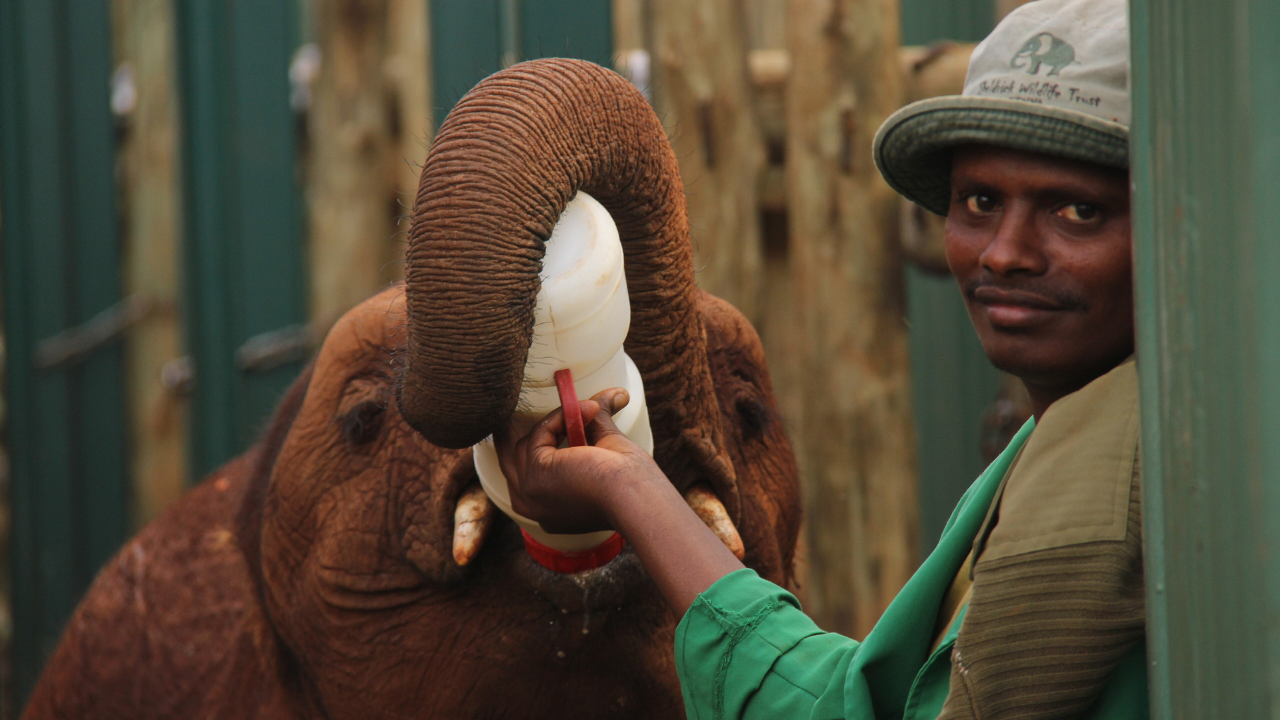
Until the 1970s, orphaned baby elephants rarely survived in human care. Wildlife rangers could rescue calves that were separated from their mothers by poaching, drought, or other causes, but feeding them successfully proved to be far more difficult. Cow's milk and commercially available formulas failed to meet their nutritional needs, and many calves died within weeks. Kenyan conservationist Dame Daphne Sheldrick was determined to change that, and spent years experimenting with different milk formulas while caring for orphaned elephants at Tsavo National Park. Through years of trial and error, she developed a formula based on human infant milk and coconut-derived fats that supported the growth of milk-dependent calves. According to the Sheldrick Wildlife Trust , Daphne also pioneered the specialized round-the-clock care needed to raise orphaned elephants successfully, which created methods that have since helped save more than 300 orphaned elephants.
Get breaking news anytime, anywhere. Download the TOI app now!

One orphan changed everything
A breakthrough came in 1974 with a tiny elephant calf named Aisha, also known as "Shmetty." She was rescued after falling into an abandoned well in northern Kenya, and was only days old and completely dependent on milk. Earlier orphaned calves had died despite every effort to keep them alive, but Aisha became the first to survive on Daphne's evolving formula. She realized that baby elephants needed constant companionship, emotional reassurance and around-the-clock care almost as much as they needed the right food. According to the Sheldrick Wildlife Trust's history of the Orphans' Project , Aisha's survival laid the foundation for modern elephant rehabilitation, which demonstrated that successful hand-rearing depended on both the correct milk formula and a dedicated team of keepers acting as surrogate family members.
The recipe was only part of the solution
Elephant calves remain milk-dependent for several years, which requires frequent bottle feeds day and night, and gradually transitioning to vegetation. The milk mixture itself continued evolving as calves grew, with different formulations required for different stages of development. Keepers also learned to recreate the social bonds that young elephants normally share with their mothers and herds, such as sleeping beside the calves, accompanying them on daily walks and providing constant physical contact to reduce stress. Those methods became the blueprint for the Nairobi Elephant Nursery, which was established in 1987, and has since become one of the world's leading centers for rescuing and rehabilitating orphaned elephants. According to the Sheldrick Wildlife Trust , the Orphans' Project has now successfully raised more than 320 orphaned elephants, many of which have returned to the wild and later given birth to calves of their own, extending the conservation impact across generations.
A discovery that continues to shape elephant conservation
Today, wildlife organizations across Africa draw on techniques that were pioneered by Daphne Sheldrick more than five decades ago. Elephant rescues remain complex, and survival is never guaranteed, but orphaned calves now have a chance that scarcely existed before her work. The formula itself has been refined over the years, but its underlying principles are still rooted in the discoveries made through years of careful observation, repeated setbacks and extraordinary patience. The broader lesson was equally important: saving an elephant required far more than replacing its mother's milk. It meant recreating the care, security and social structure that wild calves depend on from birth. That combination of nutrition and nurturing transformed something that had once been considered nearly impossible into a conservation model that continues to give orphaned elephants a second chance at life.