Get all your news in one place.
100's of premium titles.
One app.
Start reading
The Economic Times
The Economic Times
Team Global

In the 1960s, a Paradise Valley landowner acquired 2 mute swans for their beauty; by the late 1970s, they numbered 120, prompting a Yellowstone-led removal effort in 1987

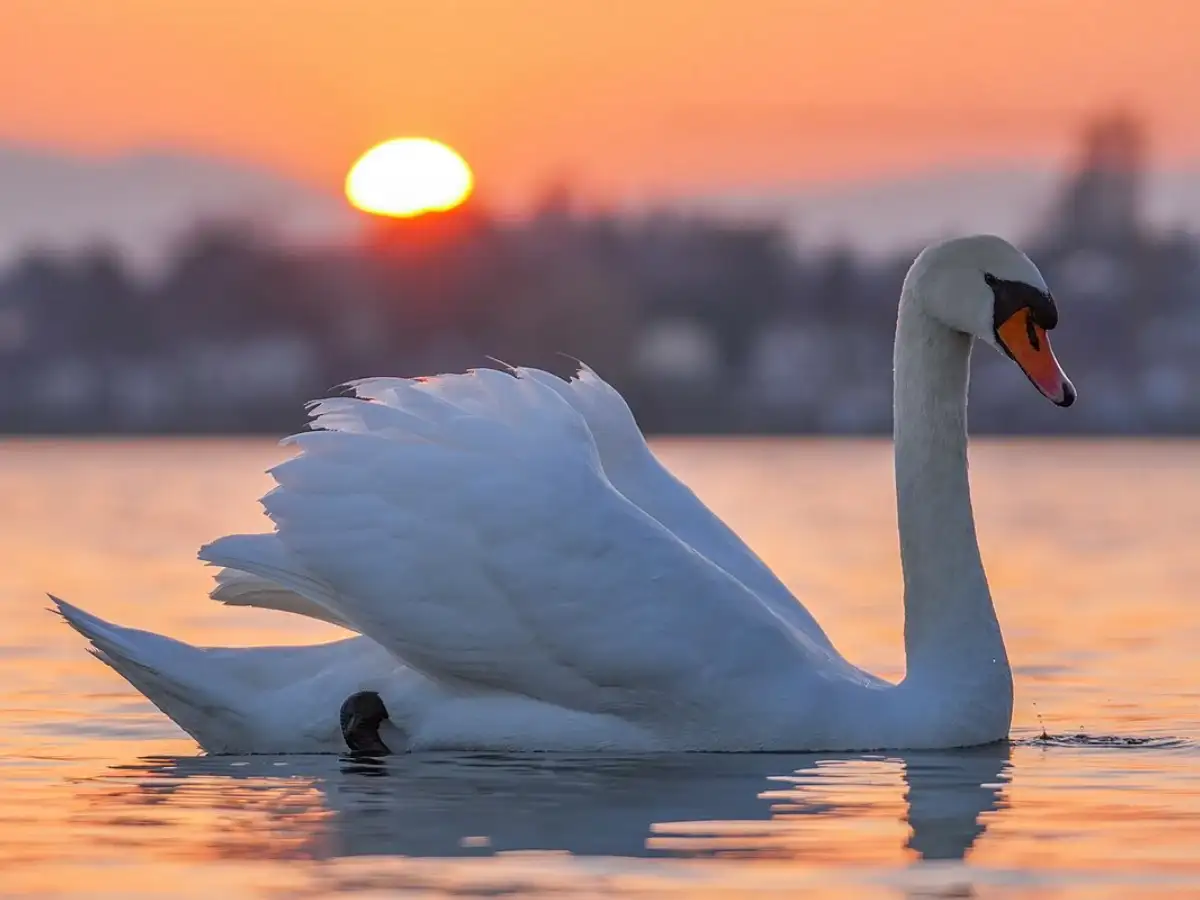
It is a little-known chapter in the history of wildlife management in the American West. In the 1960s, a private landowner in Paradise Valley, Montana, acquired two mute swans because he liked the way they looked swimming in a pond. According to Terry McEneaney’s Yellowstone Bird Report, the pair multiplied rapidly, and by the late 1970s, the mute swan population in Paradise Valley had reached a high of 120.

Mute swans are native to parts of Europe and Asia and were introduced to North America largely for ornamental purposes. Their presence in Paradise Valley became a concern because the area was north of Yellowstone National Park and was also used by native trumpeter swans. The National Park Service became involved because officials feared the exotic mute swans could compete with the native birds.

The two species also differ in behaviour. Mute swans can be strongly territorial, raising concerns that a large population could occupy habitat used by trumpeter swans. Rather than Yellowstone simply removing birds from private property, park staff worked with Paradise Valley landowners who were interested in helping resident trumpeter swans. In 1987, Yellowstone staff presented a programme to the landowners, after which an informal agreement was reached to eliminate the mute swans and introduce captive-raised trumpeter swans.

The programme depended on private funding. The Cinnabar Foundation and Chevron Corporation contributed money, while private citizens also provided donations. With that support, Yellowstone's staff ornithologist, assisted by landowners and park rangers, began removing mute swans in the autumn of 1987.

How the replacement effort unfolded

The change happened over several years rather than as a one-for-one exchange. By 1989, the mute swan population had been reduced to 13, and trumpeter swans were introduced into Paradise Valley. In 1991, Yellowstone's report recorded nine trumpeter swans and two mute swans in the area. By the mid-1990s, mute swans had been eliminated from Paradise Valley.

The figures do not mean that every mute swan removed was replaced by a trumpeter swan. The programme's aim was to remove the introduced species while establishing a separate population of native trumpeter swans, so the total number of swans did not have to remain constant.

The trumpeter swan programme also experienced setbacks. In December 1995, two captive swans and one wild swan were illegally shot on the DePuy Ranch. Severe flooding along the Yellowstone River in 1997 and 1998 also flushed many swans downstream and caused a major decline in the flock. McEneaney's report noted additional adult mortalities in the following years.

Despite those setbacks, the trumpeter swan population continued to develop. The Yellowstone Bird Report's records show that the Paradise Valley flock included 17 captive adults and seven wild swans or cygnets in 2005, for a total of 24 birds. Three nesting pairs fledged seven young from two broods that year. Banded swans from Paradise Valley had also been observed inside Yellowstone National Park.

Sign up to read this article
Read news from 100's of titles, curated specifically for you.
Already a member? Sign in here
Related Stories
Top stories on inkl right now
One subscription that gives you access to news from hundreds of sites
Already a member? Sign in here
Our Picks
Fourteen days free
Download the app
One app. One membership.
100+ trusted global sources.