Get all your news in one place.
100's of premium titles.
One app.
Start reading
The Economic Times
The Economic Times
Team Global

In the 1950s, two IBM engineers built a new way to store computer data on spinning disks; it held 5 million characters and recalled a record in under 1 second

Somewhere between "please don't lose my file" and "why is my phone begging me to buy more cloud storage" was the rather unglamorous fact that a computer "remembering" something instantaneously, without a person sifting through a filing cabinet, was barely a human lifespan old when it first appeared. It happened with a creation that was the size of two refrigerators, a ton and a half heavy, and held as much information as a single low-resolution image.

According to the National Inventors Hall of Fame, engineers William Goddard and John Lynott, with help from Louis Stevens and a wider IBM team up in San Jose during the 1950s, developed a magnetic disk storage device that could store five million characters and recall any individual record in under a second. In 1956, that was pretty astonishing.

The problem (literally) was a filing cabinet

Before then, businesses used punch cards, and if a warehouse needed to update a single record, they would have to have someone go dig through the filing cabinet, find the individual card with the information they wanted, update it, and write it back in place. The Computer History's Museum account of the project notes that IBM put together a team of people, led by researcher Reynold Johnson, to try and come up with something faster than punch cards or magnetic tape for the storage and management of accounting and inventory data, a genuinely mundane logistics headache that ended up birthing an entire industry.

The answer was a spinning stack and a clever form of "floating"

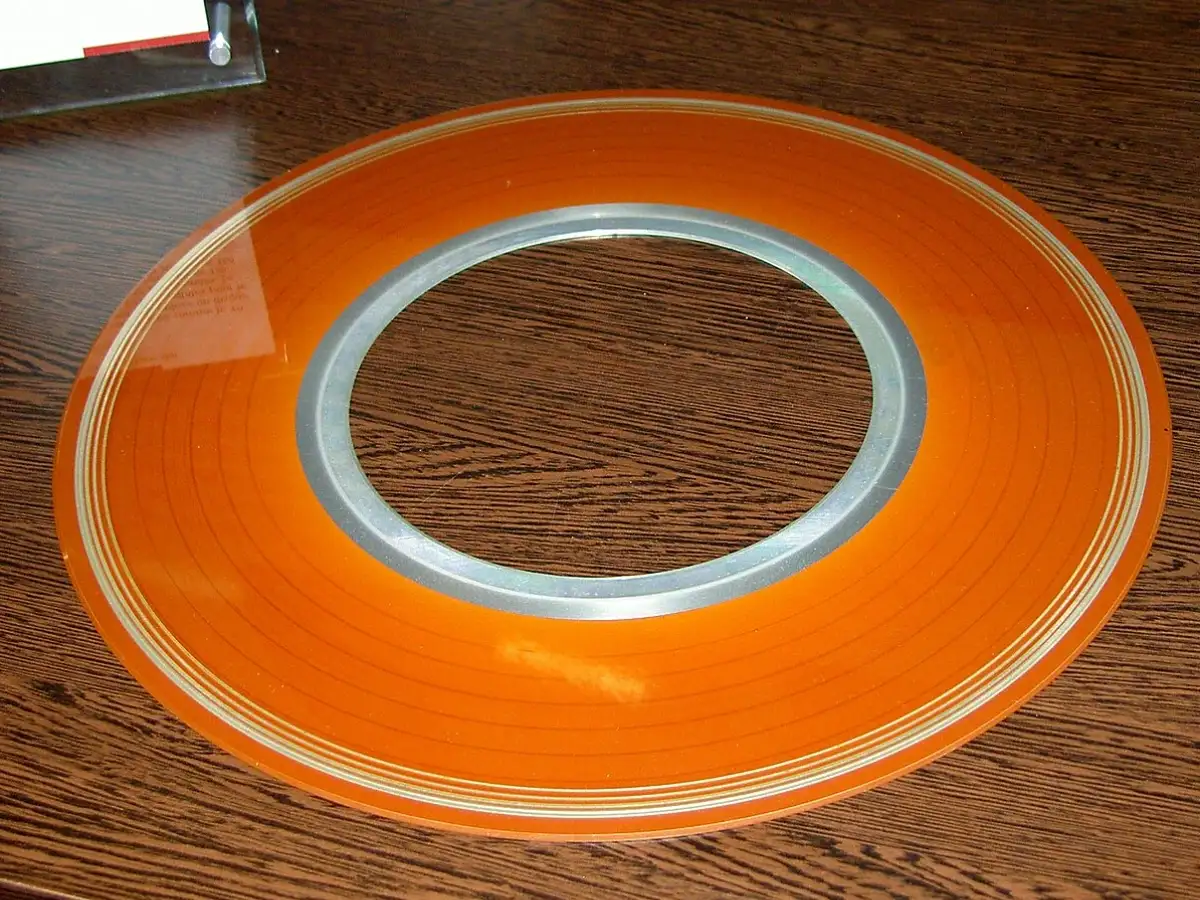
The creation that followed, the IBM 350 disk storage unit, a component of the IBM 305 RAMAC system, was a fifty-disk stack spinning on a central axis, every twenty-four inches across. According to the original 1957 technical paper titled “The Random-Access Memory Accounting Machine—II. The Magnetic-Disk, Random-Access Memory,” by T. Noyes and W. E. Dickinson, published in the IBM Journal of Research and Development, the system's overall capacity was five million alphanumeric characters, with read/write heads held up to the spinning disks by jets of air.

Sign up to read this article
Read news from 100's of titles, curated specifically for you.
Already a member? Sign in here
Related Stories
Top stories on inkl right now
One subscription that gives you access to news from hundreds of sites
Already a member? Sign in here
Our Picks
Fourteen days free
Download the app
One app. One membership.
100+ trusted global sources.