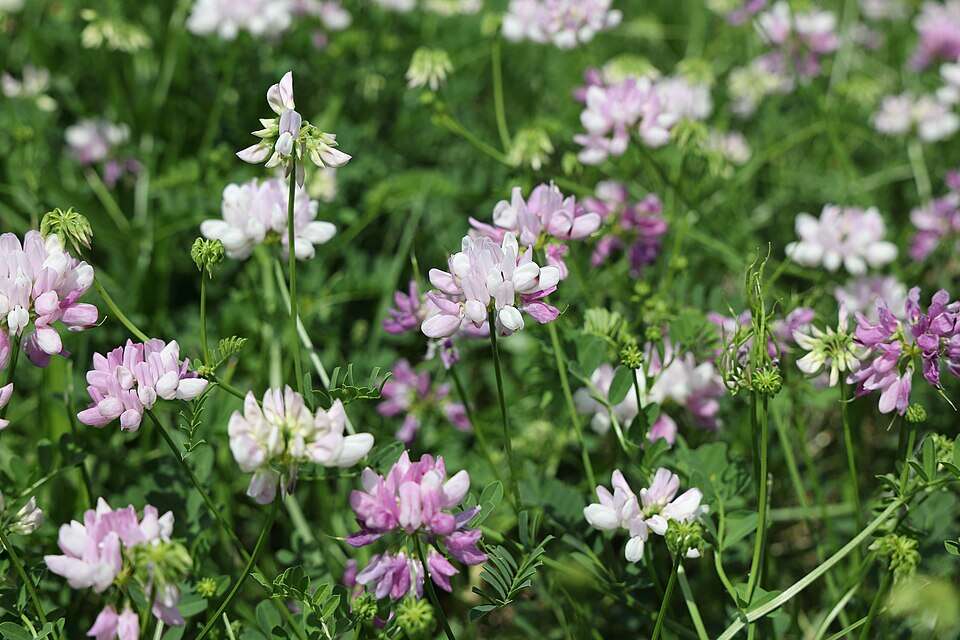
Crown vetch, once seen as a solution to erosion problems in the US, is now an environmental problem in many parts of the country. This flowering plant was widely used for soil stabilisation on road banks and slopes because of its ability to spread quickly and hold soil together. During the 1950s, the plant became popular and was widely planted across the country.
Get breaking news anytime, anywhere. Download the TOI app now!
Crown vetch is scientifically known as Securigera varia (previously classified as Coronilla varia ). It is native to the Mediterranean region of Europe, North Africa and western Asia. According to the USDA Natural Resources Conservation Service , crown vetch was introduced to the US because its extensive root system and spreading ability made it useful for soil stabilisation and erosion control.
However, the same characteristics that made crown vetch effective at preventing erosion also made it difficult to manage. The plant spreads through rhizomes, creeping underground stems that allow it to cover large patches of soil. According to the Missouri Department of Conservation , crown vetch was introduced in the US during the 1950s for soil stabilisation and is now present in every state except four.
Highway plant solution spreads beyond the roadside
In the middle of the 20th century, American states began searching for fast-growing plants to revegetate disturbed areas, especially roadside slopes affected by highway construction. Crown vetch gained popularity because it tolerated poor soil conditions and spread easily on bare ground with little maintenance.
Erosion-control research in the late 1950s also identified crown vetch as a potentially useful plant for highway roadbank stabilisation. Studies on erosion-control techniques in the Southern Piedmont region highlighted crown vetch as one of the plants that could help protect exposed slopes. But gradually, the plant moved beyond the places where it was intentionally planted. Roadsides became corridors through which crown vetch spread to fields, grasslands, forest edges and other natural habitats.
How does crown vetch colonise its surroundings?
Most plants spread mainly through seeds, but crown vetch also reproduces vegetatively through underground stems. In a 2009 study published in The American Midland Naturalist titled “Modes of Crown Vetch Invasion and Persistence,” scientists David A. Losure, Kirk A. Moloney and Brian J. Wilsey investigated how crown vetch spreads, survives and persists in invaded habitats.
The researchers examined crown vetch patches in Boone County, Iowa, studying root ages, seed banks and the plant’s ability to regenerate. They found little clear age patterning in roots, suggesting rapid turnover of individual plant shoots rather than a simple outward expansion from an invasion front.
The study also found no evidence of a large persistent seed reserve. Instead, greenhouse experiments showed that even small stem fragments of crown vetch could regenerate into new plants. This ability to reproduce from fragments helps explain why the species can survive and return even after control efforts. Crown vetch can form dense green mats that block sunlight and crowd out other plants. One of the most commonly observed effects of its invasion is the displacement of native vegetation.
Why are scientists worried about native ecosystems?
Native plants have evolved alongside local insects, birds and other wildlife, creating complex relationships within ecosystems. When invasive plants establish themselves and form large monocultures, they can reduce plant diversity and alter habitats.
According to the US Forest Service, crown vetch is considered highly invasive in some regions of the country. It has become a management concern in grasslands and other natural areas. The plant has aggressively invaded tallgrass prairie habitats, including areas within Kansas’ Konza Prairie Biological Station.
By forming thick ground cover, crown vetch can limit the growth of native plants by competing for sunlight, water and space. The loss of native vegetation can also affect animals that rely on those plants for food and shelter. Although crown vetch can still be useful in some settings, conservation organisations advise against planting it near natural habitats where it could escape and spread.
The challenge of managing a plant once considered beneficial
Removing crown vetch is difficult because its underground stems allow it to regrow after above-ground parts are cut back. Even small fragments left behind can develop into new plants. According to the Missouri Department of Conservation, early detection and management are important to prevent crown vetch from spreading into new environments, particularly along roadsides where it can easily establish and move into nearby habitats.
Crown vetch shows how a plant introduced for a useful purpose can become a problem once it spreads beyond where it was intended. A species selected to protect American landscapes from erosion eventually became a challenge for protecting native ecosystems.