Get all your news in one place.
100's of premium titles.
One app.
Start reading
The Times of India
The Times of India
World
TOI World Desk

In the 1930s, America introduced African buffelgrass to feed cattle and control erosion; it is now turning Arizona's fire-resistant desert into flammable grassland

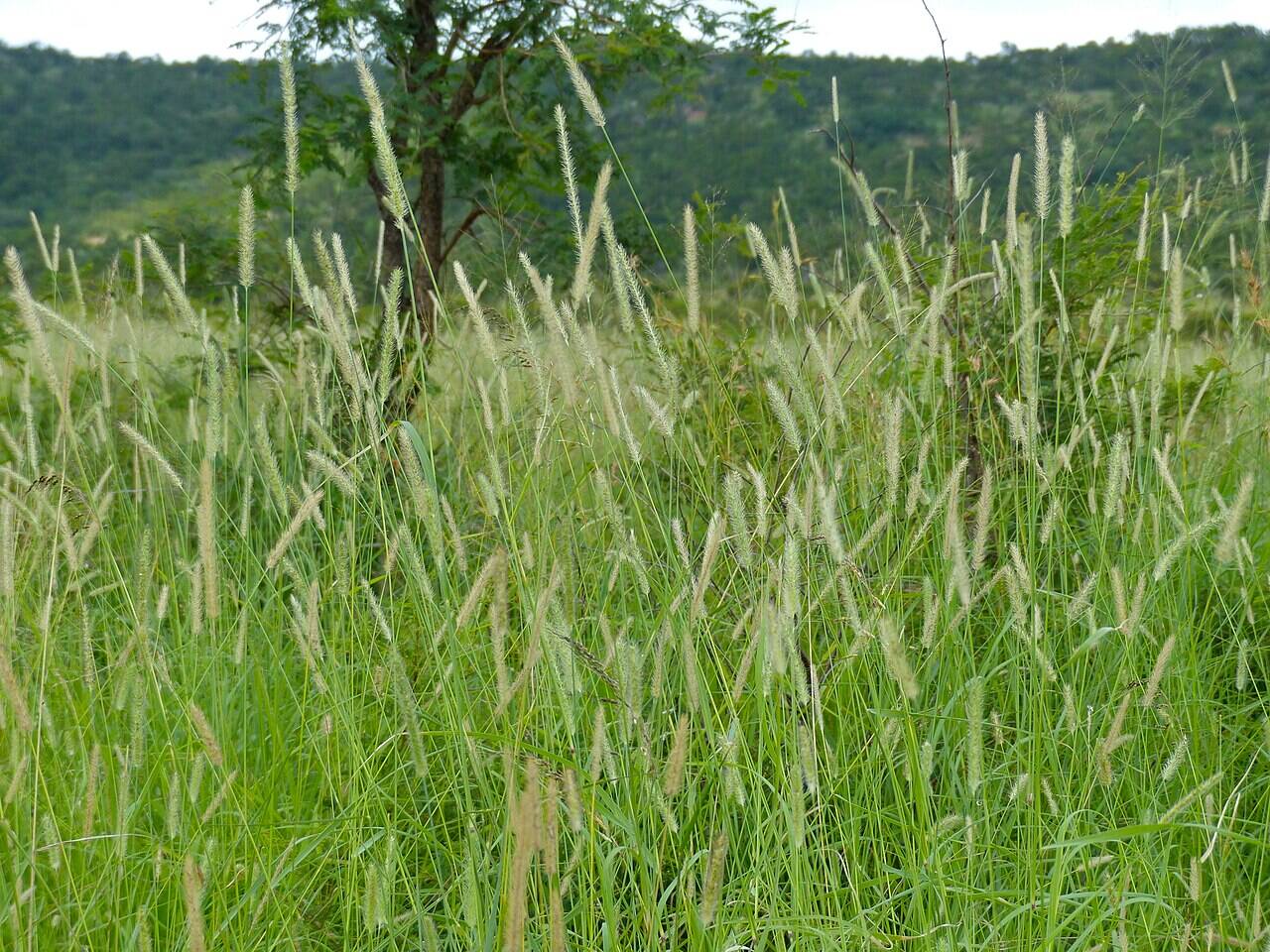
For many years, buffelgrass was viewed as an ideal solution to an existing challenge. A native of some regions in Africa, Asia, and the Middle East, the grass, which is resilient and grows very fast, was imported to the US during the 1930s with the aim of improving livestock pasture and soil stability in arid conditions. Few people anticipated that the grass, imported for agricultural purposes, would become a major environmental threat in Arizona's desert regions.

Get breaking news anytime, anywhere. Download the TOI app now!

The Arizona-Sonora Desert Museum explains how the early introduction gradually changed the Sonoran Desert. The grass escaped the areas where it had originally been planted and spread into natural landscapes, where it began competing with native plants and fundamentally changing how the desert functions. The same traits that made buffelgrass useful as forage also helped it spread quickly as an invasive species.

In contrast to many native desert plants, buffelgrass tends to form dense thickets that continue spreading once established. With such patches becoming larger, the areas of natural spacing between cacti, shrubs, and trees disappear. This natural spacing is a distinctive trait of the Sonoran Desert and helps prevent fire spread. With buffelgrass filling the spacing and creating a contiguous blanket of vegetation, fire is able to easily spread over the area.

From a useful pasture grass to an invasive species

Buffelgrass was brought to the region because farmers and land managers valued its drought tolerance, forage production, and ability to prevent soil erosion in arid environments.

According to the Arizona-Sonora Desert Museum's Learn About Buffelgrass , the same qualities that made buffelgrass desirable also enabled it to spread beyond cultivated areas. It grows rapidly after rainfall, produces large numbers of seeds and establishes dense clumps that can outcompete many native species for water, sunlight and space.

This gradual expansion has significant consequences for the Sonoran Desert, one of the world's most distinctive desert ecosystems. Native plants such as the iconic saguaro cactus evolved in an environment where naturally occurring fires were uncommon. The vegetation is generally scattered rather than continuous, making it difficult for flames to travel long distances.

Buffelgrass changes that natural pattern. Instead of isolated plants separated by bare ground, large areas become connected by thick grass. Once dry, this vegetation provides continuous fuel, allowing fires to spread into places where they were historically rare.

The museum explains that many native desert plants are poorly adapted to frequent fires. Saguaros, palo verde trees and numerous shrubs often suffer severe damage or die after burning. While buffelgrass can recover quickly after fire, many native species cannot. This creates conditions that favour the invasive grass even more, allowing it to return while the original vegetation struggles to recover.

Scientists and conservationists often describe this as a self-sustaining cycle. Increased buffelgrass results in increased fire incidences, while fires clear out indigenous vegetation and leave room for further expansion of the buffelgrass. This cycle might gradually lead to a structural change in the desert.

Beyond increasing wildfire risk, buffelgrass can also reduce the diversity of native desert plant communities as it spreads into new areas. The Arizona-Sonora Desert Museum notes that dense stands of buffelgrass compete with native vegetation for limited resources such as water, sunlight and space. As native plants become less abundant, the habitats they provide for desert wildlife may also change. The extent of these impacts varies across locations, but the museum emphasises that detecting and removing new infestations early is an important part of protecting intact desert ecosystems.

The reason for the difficulty of buffelgrass control

One of the most prominent problems pointed out by the Arizona-Sonora Desert Museum is the persistence of buffelgrass once it has been established. Plants generate seeds in abundance, and these will germinate if there is enough rainfall. The removal of established plants from the hilly and rocky desert landscape is a difficult task

Because buffelgrass spreads across both public and private land, successful management depends on cooperation between landowners, conservation groups and government agencies. Small infestations are easier to remove than large, well-established populations, making early detection an important part of long-term control efforts.

The museum also notes that stopping further spread is just as important as removing existing plants. Every new patch increases the likelihood that neighbouring natural areas will eventually become invaded, especially if seeds are carried into suitable habitats.

Despite the scale of the challenge, conservation efforts continue across Arizona. Volunteers and land managers regularly remove buffelgrass from vulnerable desert areas in an effort to protect native habitats before the grass becomes firmly established. These projects often focus on reducing fuel loads around sensitive landscapes where fires could cause long-lasting ecological damage.

The story of buffelgrass shows how an introduced species can have consequences that extend far beyond its original purpose. A grass valued for livestock forage and erosion control has altered the natural relationship between desert vegetation and wildfire, creating conditions that many native plants never evolved to withstand.

Today, the real problem with buffelgrass is not just that it is invasive. Buffelgrass is especially damaging because it alters how the Sonoran Desert functions. By replacing open desert with continuous vegetation, it increases the risk of fire in an ecosystem that historically burned infrequently. The Arizona-Sonora Desert Museum shows that conserving the desert means protecting both species and the ecosystem they depend on.

Sign up to read this article
Read news from 100's of titles, curated specifically for you.
Already a member? Sign in here
Related Stories
Top stories on inkl right now
One subscription that gives you access to news from hundreds of sites
Already a member? Sign in here
Our Picks
Fourteen days free
Download the app
One app. One membership.
100+ trusted global sources.