Get all your news in one place.
100's of premium titles.
One app.
Start reading
The Conversation
The Conversation
Politics
Kirsten Matoy Carlson, Professor of Law and Adjunct Professor of Political Science, Wayne State University

Supreme Court reversed almost 200 years of US law and tradition upholding tribal sovereignty in its latest term

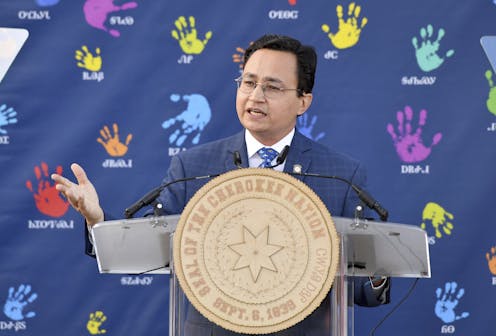
Principal Chief of the Cherokee Nation Chuck Hoskin Jr. speaks in Tahlequah, Okla. A U.S. Supreme Court ruling is upending decades of law in support of tribes. AP Photo/Michael Woods

Over the past 50 years, Congress and the U.S. Supreme Court have increasingly diverged in how they view the laws that relate to Indian tribes. Congress has passed significant legislation that expands tribal governments’ sovereignty and control over their land, while the Supreme Court has ignored and reversed long-standing principles of federal Indian law that protected tribal sovereignty and prevented the states from exercising authority in Indian country.

This trend at the court was seen most recently in a ruling from late June, which, as one longtime court observer put it, wiped away “centuries of tradition and practice.” Justice Neil Gorsuch scorned the ruling in his dissent: “Truly, a more ahistorical and mistaken statement of Indian law would be hard to fathom.”

Sign up to read this article
Read news from 100's of titles, curated specifically for you.
Already a member? Sign in here
Related Stories
Top stories on inkl right now
One subscription that gives you access to news from hundreds of sites
Already a member? Sign in here
Our Picks
Fourteen days free
Download the app
One app. One membership.
100+ trusted global sources.