For more than a decade, you could pass quickly through the line of people at public comment sessions in the Georgia Public Service Commission’s hearing room. Liz Coyle, who has intervened in rate cases on behalf of the consumer group Georgia Watch since 2013, remembered when the room was nearly empty.
Lately, the comment period runs for hours, and the same faces come back day after day. “Over the last three to five years there’s been a significant increase in people who are even aware of the proceedings,” Coyle told Capital & Main. The crowd, she said, is driven by “concerns about climate change but also affordability and kind of connecting the two.”
That connection — quiet, unglamorous, rarely spoken in the language of climate activism — is suddenly one of the most consequential political forces in Georgia heading into the 2026 midterms.
Inflation, the economy and housing top an Atlanta Journal-Constitution survey of what Georgia voters say they care about. Climate change and clean energy do not. And yet the state’s dependence on fossil fuels, expressed through a single line on a monthly Georgia Power bill, has already delivered something most of this cycle’s energy fights only promise: an electoral verdict you can point to.
Last November, voters flipped two seats on the Public Service Commission, the obscure five-member body that sets utility rates, installing Democrats Alicia Johnson and Peter Hubbard and ending nearly two decades of Republican control.
“There was a lot of thinking that the Democrats would win because it was an off-year” election, said Mark Woodall, who handles legislative and political work for the Sierra Club’s Georgia chapter. “But the margins they won [by] was the big shock — 60% to 40%. There were a lot of Republicans voting for those two Democrats.”
The Blank Check
What moved those Republicans was basic arithmetic. The average Georgia Power residential bill climbed more than $43 per month from 2022 to 2025, leaving the utility’s customers frustrated — though in May it announced a plan to lower rates starting the next month. Woodall counted “six rate increases from Georgia Power in two years.” The biggest, he said, came after Russia invaded Ukraine and “ran the natural gas prices up,” compounded by the roughly $20 billion overrun on the new Vogtle nuclear reactors. The ousted incumbents had approved all of it.
“Those two incumbent Republicans voted for all those rate increases,” Woodall said. “They’re the ones that gave Georgia Power the blank check.”
Even the election losers conceded the point: One beaten commissioner, he noted, credited the Democrats for sticking to a single talking point — too much money, too many rate increases. Fitz Johnson, one of the defeated Republicans, said he “feels for” customers paying more but had no regrets about his record.
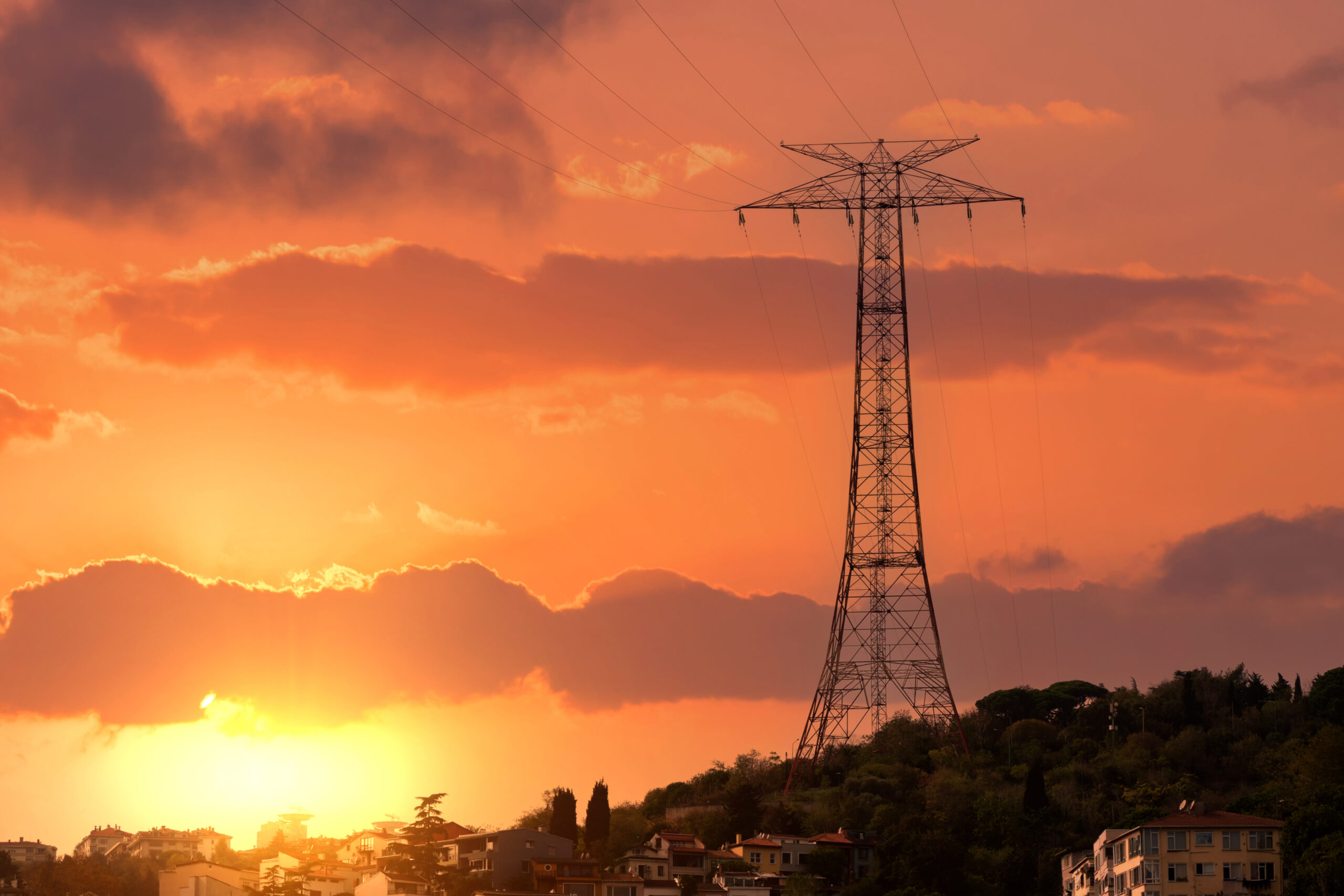
The bill is about to grow. In December the commission gave Georgia Power unanimous approval for nearly 10,000 megawatts of new capacity to feed the energy-hungry data centers spreading across the state. The buildout leans hard on fossil fuel — five new natural gas plants, with new methane units planned at Plant Bowen, Plant McIntosh and Plant Wansley. Roughly 60% of the planned capacity would come from gas, and the whole package could cost customers an estimated $50 billion-$60 billion over its life. Georgia Power chief executive Kim Greene framed it as a win, saying the company knows “every dollar counts” and that the plan keeps more money in customers’ pockets. Greene did not return requests for comment from Capital & Main.
Voters are not buying it. The data center fights, Woodall said, are “the hot thing down here” — in the largely blue Atlanta suburbs and in deeply Republican counties alike.
“We’ve never seen anything like this level of citizen pushback. As soon as one of these proposals comes up, there’s like 5,000 people on a Stop the Data Center Facebook group.” His worry is what the contracts conceal: Real-time pricing for the data centers that, he said, “excludes all this new natural gas expansion, interstate gas lines” and other costs, so “Residential ratepayers are out of luck.”
The Flip
For years the affordability argument belonged to fossil fuels: Gas was cheap while renewables were the expensive gamble. In Georgia that script has flipped. “The cleanest, cheapest form of energy is that which is not produced,” Coyle said, arguing the state should invest in efficiency and widen access to rooftop solar.
The volatility now cuts the other way.
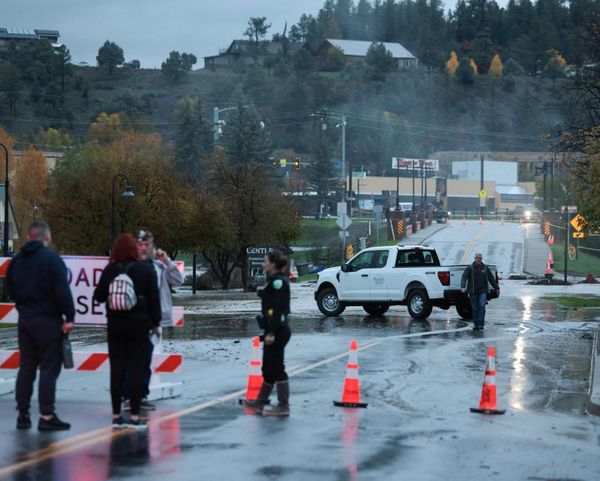
“Fossil fuels are intermittent,” Woodall said, describing what his group’s experts keep telling regulators — that Georgia faces “increasing exposure to the volatility of natural gas costs.” At the commission, Coyle said, ordinary Georgians have begun making the fuller connection themselves, between coal and gas plants, higher bills and the severe weather that lands “that additional impact on people’s pocketbooks of having to rebuild in those storms.”
The reckoning is reaching the Legislature, where industry-friendly lawmakers are newly exposed. State Sen. Chuck Hufstetler, a Republican from the Georgia city of Rome, wrote a ratepayer protection bill that would have barred Georgia Power from charging residential customers for data center infrastructure, then watched as it was rewritten with industry-preferred language.
Woodall described Hufstetler as a rare consumer hawk in his own party — an anesthesiologist and former restaurant owner whose constituents “have two problems they come to him with. One of them is the utility bills, and the other’s property taxes,” Woodall said.
Lawmakers failed to pass any data center restrictions this session even as communities organized against the projects. Meanwhile Gov. Brian Kemp vetoed $100 million for state retirees, Woodall noted, to help cover tax cuts that included billions for the state’s wealthiest. “People are getting tired of that,” he said, “in red states and blue states.”
The lasting question is whether the commission election was a one-off or the start of a trend. Hubbard, who drew only a one-year term in the staggered field, must run again this year; in one of the new races, Woodall noted, the Republican candidate has pledged to take no money from Georgia Power — “that’s unheard of.” Affordability, he added, is shaping up as a top-three issue in the governor’s race.
All of it now hangs over the broadest ballot Georgia has seen in years. Two more commission seats are up on Nov. 3, in Districts 3 and 5, and together they decide whether Republicans keep their 3-to-2 majority or lose the panel outright. District 3 is an exact rematch: Hubbard faces Fitz Johnson again, this time for a full six-year term.
Above them sit the marquee contests, shadowed by the same anger. With Kemp termed out, the open governor’s race pits Democrat Keisha Lance Bottoms, the former Atlanta mayor, against Republican Rick Jackson, a billionaire health care executive who upset Trump-backed Burt Jones in the primary. And Sen. Jon Ossoff — the only Democratic incumbent defending a seat in a state Trump carried in 2024 — faces Republican U.S. Rep. Mike Collins in a race that could help decide control of the Senate.
Coyle, the Georgia Watch affiliate who is barred by her nonpartisan group from talking about candidates, would say only that what she hears in the hearing room, again and again, is that many Georgians “just can’t afford another increase.” In a state still learning to read its own weather — Hurricane Helene cut a path clear across Georgia and into the North Carolina mountains two years ago this September — that sentence may turn out to be the whole campaign.