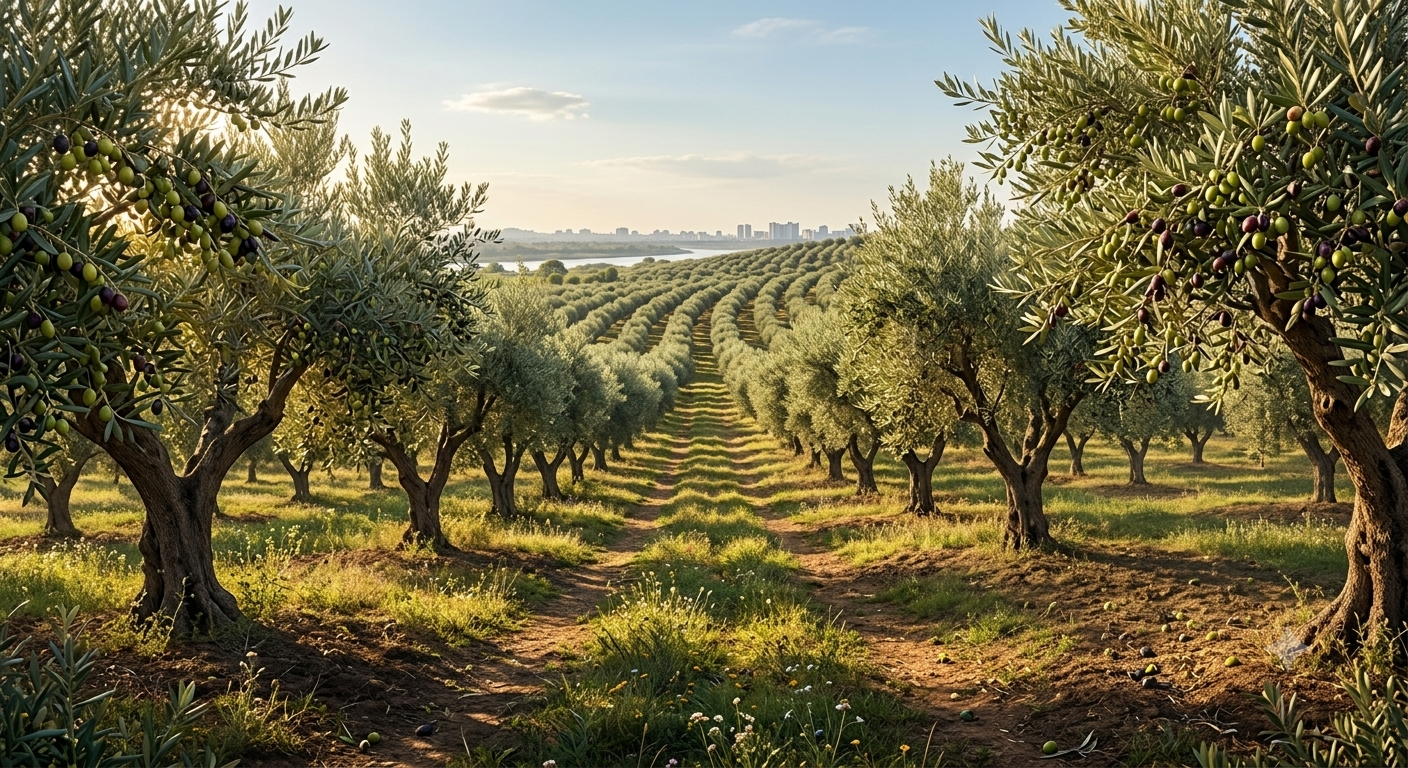
In Mendoza, Argentina, centuries-old olive trees are facing an unlikely threat, urban expansion. As former agricultural land is transformed for housing, commercial projects and other developments, many ancient trees are being cut down and sold as firewood. The Cicero family decided that some of them deserved a different fate. Over the past decade, the family has relocated more than 5,000 ancient olive trees, creating the Los Inmigrantes Sanctuary in Maipú. The project began with 3,000 trees growing on a property Emilio Cicero purchased for his almond business. Instead of removing them, he moved them to another part of the land and arranged them in circular formations. What started as an effort to save trees has since become a family mission to preserve Mendoza’s agricultural heritage and give these old trees somewhere to keep growing.
Get breaking news anytime, anywhere. Download the TOI app now!

Emilio Cicero could not bring himself to cut down 3,000 old trees
The rescue effort began in 2015, when Emilio Cicero bought a property in Maipú for his almond-producing business. The land contained 3,000 olive trees spread across 30 hectares, and instead of removing them, Cicero decided to move them. Using heavy machinery, he relocated the trees to three hectares and planted them in circular formations, giving each specimen room to continue growing. Speaking to Olive Oil Times, Cicero explained his motivation simply, “The olive tree is a very noble tree, and I developed a special affection for it.” The unusual arrangement also reflected his personal taste. He also said, “I got tired of the straight lines of almond orchards and vineyards.” That first relocation became the beginning of what is now Los Inmigrantes Sanctuary.
Why Mendoza’s ancient olive trees are disappearing
Mendoza was once Argentina’s leading olive-growing region, with more than 20,000 hectares planted with olive trees. Today, that figure has fallen to around 11,000 hectares, according to Argentine producer Miguel Zuccardi revealed much of the loss came as old olive-growing areas gained value for real estate development, while economic and industry changes also took their toll. That decline has put many century-old olive trees at risk. Some still stand in gated communities or along roads, but others are removed when agricultural land is redeveloped for housing and commercial projects, with many eventually ending up as firewood. Zuccardi is particularly concerned about the Arauco, an emblematic variety protected by a Geographical Indication in Mendoza. It is descended from trees introduced by Spanish colonists in the 16th century and is the only olive variety internationally recognised as originating in South America. Research published by the International Society for Horticultural Science also highlights the importance of conserving old olive trees, describing centuries-old specimens as valuable genetic and cultural resources. The research points to propagation and conservation as ways of preserving this heritage before these historic trees disappear.
The family has now saved more than 5,000 ancient olive trees
What began with those first 3,000 trees eventually grew into a much larger conservation effort. The Cicero family has now relocated more than 5,000 ancient olive trees, around half of them Arauco, from properties where they were at risk of being destroyed. The sanctuary currently covers nine hectares, with another three hectares being prepared. The original site eventually became too small, prompting Cicero to begin transforming a separate 23-hectare property known as El Paraíso into another sanctuary. That location already contains 500 rescued trees. The family is also developing another project in Cruz de Piedra, where an intensive olive grove will eventually surround a smaller reserve for rescued trees. Cicero hopes to establish a small olive mill there as the sanctuary develops.
Some of the rescued trees are hundreds of years old
The scale of the rescue becomes clearer when individual trees are considered. On one occasion, Cicero discovered 15 olive trees that were more than 300 years old. After lengthy negotiations, he managed to save every one of them. Moving these trees is far from simple. Each specimen has to be carefully extracted with specialised machinery before being transported to its new home, sometimes along difficult rural roads. One tree was moved 16 kilometres using a front loader travelling just above the ground, while people walked alongside to protect and support its branches. Another particularly large specimen required three cranes to relocate it. The effort is also expensive. Yet Cicero continues to invest heavily in the project because of what it means to him. “I feel like a painter, my brush is the machinery, and my paint is the olive trees,” he said.
The Cicero family turned tree rescue into a generational mission
The sanctuary is no longer Emilio Cicero’s project alone. Over the past decade, his four children, Emilia, Valentina, Luciano and Franco, have become involved in the family business and the rescue work. Emilia, the eldest, works as the company’s accountant. Speaking to Olive Oil Times, she described being part of her father’s work as “priceless”, saying she has been able to watch him work, learn from him and accompany him throughout the project. Her sister Valentina also spoke about the emotional side of the family’s mission. “It’s a great honor to rescue olive trees alongside him and my family,” she said describing the trees as living beings carrying “life, history and time in every branch.”