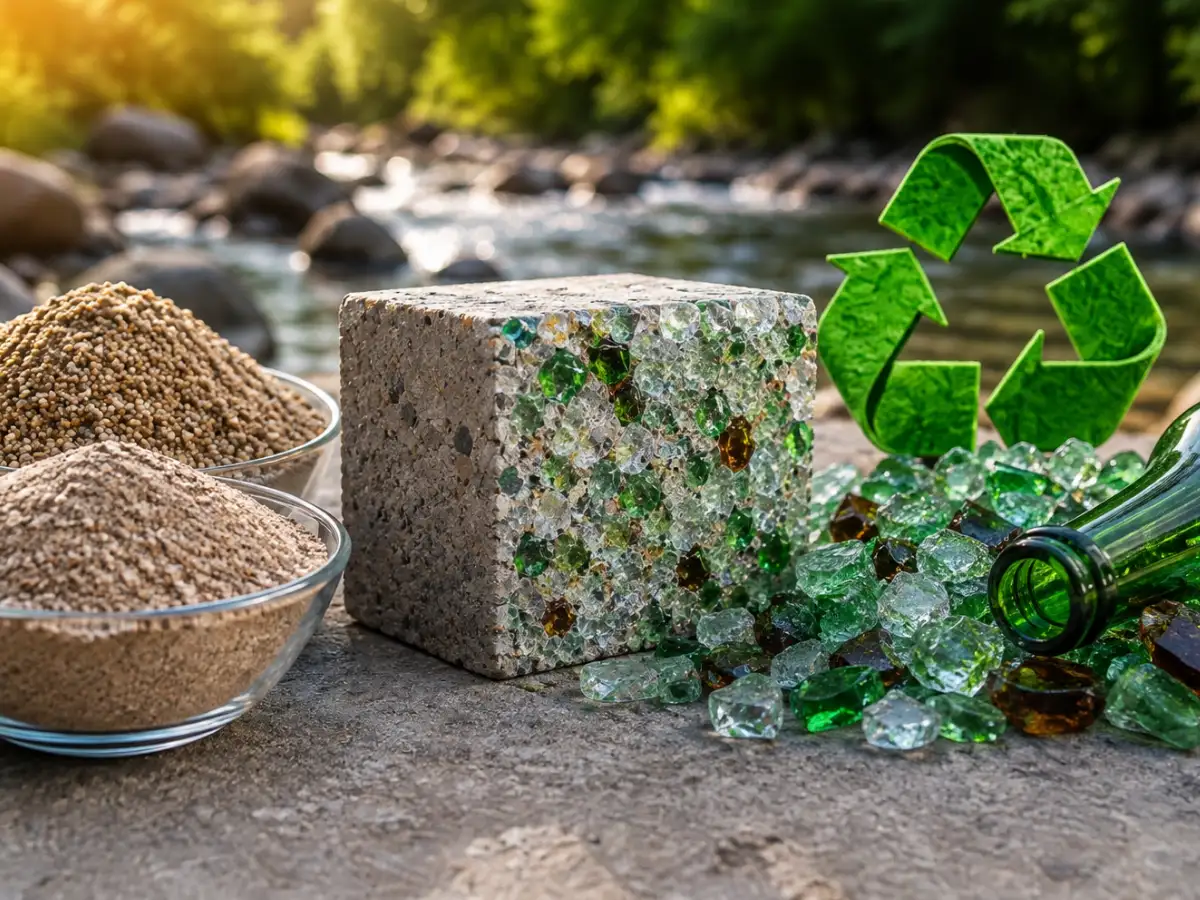
A group of engineers in Australia found that, in lab tests, a substantial share of that sand can be replaced with waste glass without weakening the concrete. In some tests, it became stronger instead. According to Tamanna, Tuladhar, and Sivakugan's 2020 study, "Performance of recycled waste glass sand as partial replacement of sand in concrete," published in Construction and Building Materials, replacing up to 60 percent of natural river sand with recycled glass sand made the concrete stronger. It also helped it resist chloride ion penetration, one of the main causes of corrosion in reinforced concrete structures. Chloride damage is one reason parking garages, bridges, and highway barriers break down sooner than they should.
Why America is quietly running low on the right kind of sand
Sand feels endless, but the kind that goes into concrete cannot be grabbed from any spot. It requires a specific type of coarse river or pit sand, and that type is becoming harder to find near expanding U.S. cities. The U.S. Geological Survey's 2026 mineral summary reports that the United States produced about 870 million tons of construction sand and gravel in 2025, of which an estimated 42 percent went into Portland cement concrete. This creates heavy demand for river and pit sand deposits near growing metro areas, from Phoenix to Austin to the outskirts of Atlanta. Local sand pits in some of these areas are running short, and hauling sand long distances by truck raises both costs and emissions. That is why a substitute material that works as well as, or better than, sand matters to builders and city planners alike.