Get all your news in one place.
100’s of premium titles.
One app.
Start reading
The Guardian - AU
The Guardian - AU
Comment
Greg Jericho

In a world going to hell, investors are flocking to gold. Australia could have had much more of it

person inspecting gold bars
‘Australia is the third biggest producer of gold in the world. And, when gold prices rise, so too does value of Australia’s gold exports.’ Photograph: Bloomberg/Getty Images

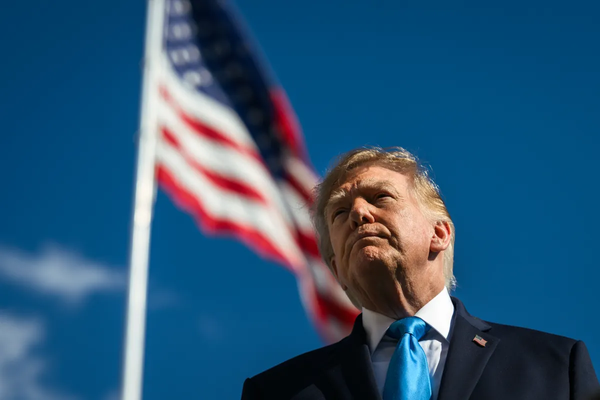
So far this month Donald Trump has ordered a military incursion into Venezuela and the capture of its leader, announced he is ready to “take” Greenland, warned Cuba, Colombia and Mexico they too are in his sights and told the New York Times that the only thing holding him back is his “own morality”. He’s now ordered the justice department to open an investigation into the head of the Federal Reserve, Jerome Powell, all the while appearing to fall asleep during meetings.
What a year, huh?

Unsurprisingly this has led to a fair degree of investor skittishness. Uncertainty is the watchword, given the biggest economy in the world is being run by a somnolent autocrat who is the pettiest grudge holder in world history.

Sign up: AU Breaking News email

As a result, despite the level of economic policy uncertainty in the US falling since the madness of last year’s tariff announcements, it remains three times higher than when Trump won the election in November 2024. Essentially, investors and anyone trying to work out what could happen to US policy might as well consult a magic 8-ball:

If the graph does not display click here

When things get uncertain, investors look for safety, and gold is generally regarded as the safest bet. Earlier this week the price of gold surpassed US$4,600 an ounce for the first time. That is about 73% higher than it was when Trump took office 14 months ago:

If the graph does not display click here

That price increase is faster than during the pandemic when the global economy shut down, faster than during the GFC when the US banking sector collapsed, and faster than after September 11. The only time the price of gold has risen quicker than during Trump’s first 14 months in power is during the 1973 Opec crisis and the 1979 oil crisis after the Iranian revolution:

If the graph does not display click here

Somewhat ironically, this uncertainty has indirectly benefited the Australian government.

Australia is the third biggest producer of gold in the world. And, when gold prices rise, so too does value of Australia’s gold exports:

If the graph does not display click here

So great has been the increase in the gold price that it is close to becoming Australia’s second biggest export – likely to overtake LNG and coal:

If the graph does not display click here

That means gold companies in Australia are paying much more corporate tax than expected.

This was noted in last month’s mid-year economic and fiscal outlook. The Myefo increased corporate tax revenue by $4.3bn in 2025–26. A big reason was “a near-term increase in mining profits reflecting higher bulk commodity and gold prices”.

So indirectly the government is better off through higher taxes, but directly as well because the Reserve Bank holds a lot of gold – about 80 tonnes of it. As a result, the value of its gold reserve assets has risen from $9.6bn in December 2024 to $15.7bn last month – a nice 64% increase. It makes the value of the RBA’s gold assets higher now than ever before.

If the graph does not display click here

But it could have been more – a lot more.

In 1997, the RBA, with then treasurer Peter Costello’s full support, sold two-thirds of its gold reserves – 167 tonnes of the 250 tonnes it held. The RBA argued that gold wasn’t really increasing in value much and a lot of other central banks were selling their gold, because the old gold standard was dead.

Costello was quite proud of this move, noting in an answer to parliament that “the reinvested proceeds should yield higher annual profits for the Reserve Bank than if they have been retained as gold”.

And for a while that would have been the case.

During the mining boom, as the value of other investments soared, it seemed that selling the gold was a smart idea. But once those gains were wiped away during the GFC it was clear any advantage gained from selling the gold was more to do with good luck than good management:

If the graph does not display click here

The value of 167 tonnes of gold in December was worth around A$33bn, much more than the roughly $2.5bn from the sale of the 167 tonnes of gold back in 1997. If they invested it on average across all the non-gold assets the RBA holds, that would now be worth $9.6bn.

That means the 1997 gold sale has left the RBA’s assets about $23.4bn worse off. Not the greatest decision ever made.

Now sure, neither Costello nor the RBA could have predicted Trump. But gold has always been about the safe long-term investment. And in a world going to hell, I suspect the RBA, like other investors, would like to have a bit more safety.

  • Greg Jericho is a Guardian columnist and chief economist at the Australia Institute

Sign up to read this article
Read news from 100’s of titles, curated specifically for you.
Already a member? Sign in here
Related Stories
Top stories on inkl right now
Our Picks
Fourteen days free
Download the app
One app. One membership.
100+ trusted global sources.