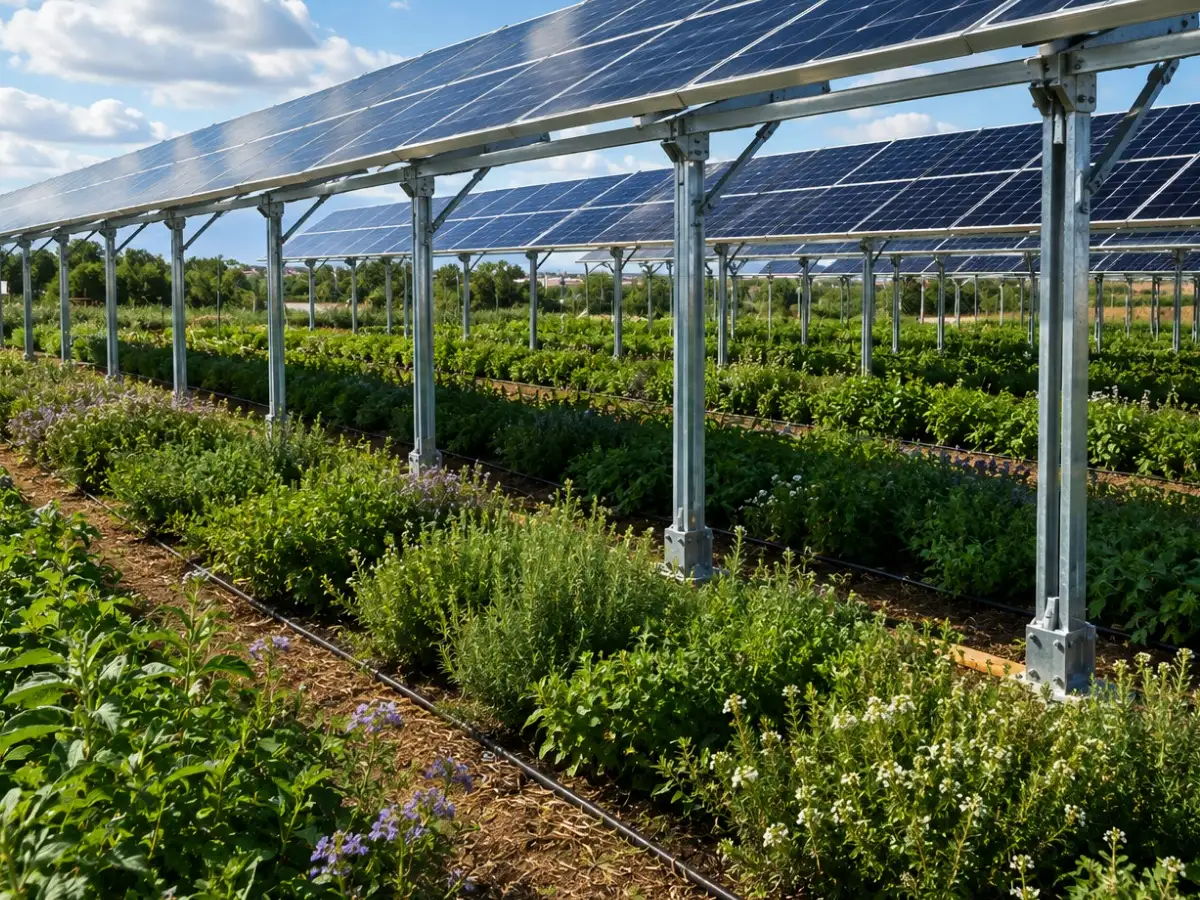
During a 2023 field trial in San Severo, Italy, researchers grew six crops under solar panels that tracked the sun. The results were mixed. The deep shade helped stop water loss from evapotranspiration by 81.1%. However, that same shade also reduced fresh plant biomass by as much as 48.8%. If you have ever wondered whether solar farms and farmland must compete for the same land, this study offers a clear answer. The study is relevant because it connects crop production, water use, and solar energy.
Why a herb farm in southern Italy is suddenly relevant to your grocery bill

Researchers at the University of Foggia conducted a study at a working site near San Severo in Italy's Puglia region. Solar panels rotate up to 45 degrees to follow the sun. Six perennial medicinal species: lavender (Lavandula angustifolia 'Royal Purple'), lemon thyme (Thymus citriodorus), common thyme (Thymus vulgaris), rosemary (Rosmarinus officinalis), spearmint (Mentha spicata 'Moroccan'), and sage (Salvia officinalis) were planted in three zones: ground that was always shaded by panels, ground shaded only between the rows of solar panels, and a full-sun control plot. Researchers tracked radiation, temperature, water use, biomass, and essential-oil content throughout the growing season from April to August 2023, publishing their results in the peer-reviewed journal Plants. The study took place on a working solar farm, which makes the results relevant to anyone considering how U.S. farmland might handle solar development.