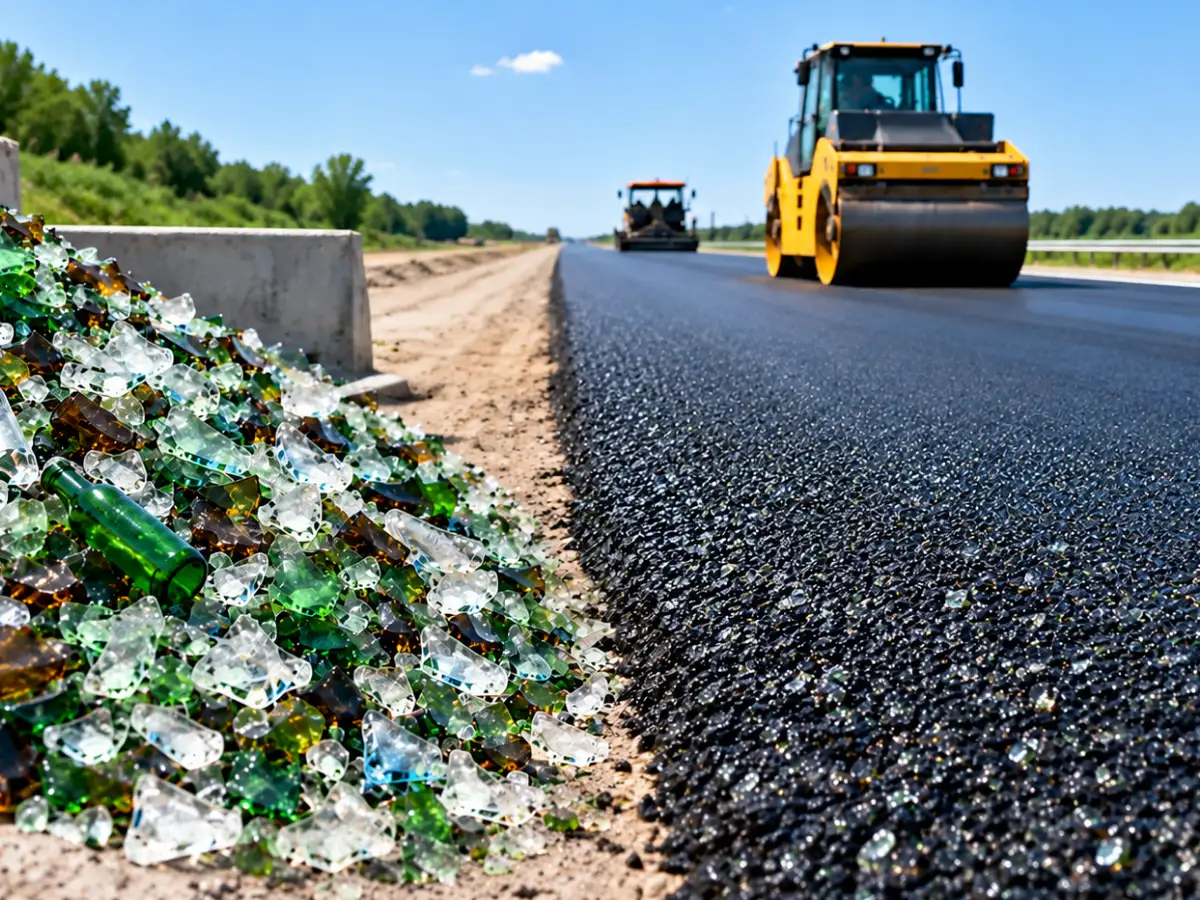
Most glass bottles placed in U.S. recycling bins ultimately end up in landfills, largely because separating colors is costly and glass is heavy. As the journal Case Studies in Construction Materials reported, an international team of engineers, including researchers at Michigan Technological University, found a novel use for the glass: in roadways. Asphalt concrete mixtures containing 6 percent surface-treated waste glass had dynamic stability 42.3 percent higher and an anti-skid value 38.6 percent higher than traditional asphalt mixtures, after testing in a controlled lab environment. Since a handful of U.S. cities have already experimented with glass-infused asphalt in past decades, this research could give road builders a more reliable, better-performing method for putting old glass bottles to use in future paving projects.
US glass recycling rates lag behind other materials

Glass recycling in the United States has never matched the levels of paper, metals, and plastics recycling. Data from the United States Environmental Protection Agency (EPA) show that 12.3 million tons of glass were generated in the country in 2018, the most recent year for which the agency has published comprehensive figures, and that this constituted 4.2 percent of all garbage. Still, only 31.3 percent of glass containers were recycled in 2018. One reason for the lack of glass recycling is not demand, but logistics. Glass is heavy; it shatters during collection, and glass of different colors cannot be resold to the same manufacturers, which makes it challenging to recycle. Asphalt solves some of these issues. Roads do not distinguish between clear and green glass, and state roadways are resurfaced regularly regardless of local demand for glass products.
Inside the Michigan Tech asphalt glass study
The researchers did not simply crush glass and mix it into asphalt. They focused on surface treatment, coating the waste glass with a silane coupling agent before mixing it into the asphalt, since untreated glass doesn't bind well with asphalt binder and can create weak points in the pavement. This extra treatment step adds cost and effort compared to simply crushing glass, but it is still far simpler and cheaper than sorting bottles by color for traditional recycling, since asphalt production doesn't care what color the glass was to begin with. Using techniques such as energy-dispersive X-ray spectroscopy, boiling water resistance tests, and contact angle measurements, they found that silane-treated glass adhered to the asphalt much better than untreated glass. Mixing in 6% glass by weight resulted in a 42.3% increase in dynamic stability, a measure of a pavement's resistance to rutting under repeated traffic load, and a 38.6% improvement in anti-skid performance, a measurement of tire grip on the road surface. Day to day, that means less rutting from your daily commute and more consistent traction in the rain, the kinds of problems most drivers are not really aware of until they become major issues.
Federal research already leaves room for glass in asphalt
Federal Highway Administration research has already documented satisfactory performance in hot-mix asphalt pavements incorporating 10% to 15% crushed glass in the wearing surface mix, also known as glasphalt. The same FHWA guidance notes that surface-course pavements with more than 15% waste glass can deteriorate as the asphalt binder strips off the glass, and that most highway departments currently allow 5 to 10% glass in their asphalt mixes. The Michigan Tech study used a 6% ratio, within the federal range, but added silane surface treatment to improve performance at a lower glass content.