Freshwater environments contain a wide array of fish species found nowhere else in the world. These ecosystems have taken millions of years to develop, and predators and prey exist in a delicate balance. The introduction of a new predator species in these waters may upset this balance.
Get breaking news anytime, anywhere. Download the TOI app now!

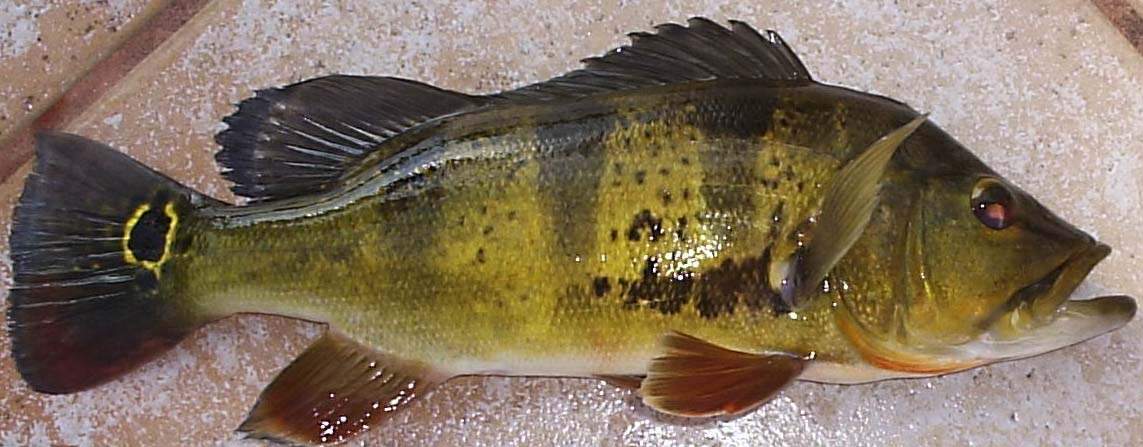
A study published in Global Ecology and Conservation examined the future invasion risk posed by the yellow peacock bass ( Cichla ocellaris ) across freshwater ecoregions in the Neotropics. Rather than simply mapping where the fish already occurs, the researchers developed a risk assessment framework that combined climate suitability, native fish diversity, peacock bass occurrence records and dam density. Their analysis identified freshwater ecoregions that may be more vulnerable to future invasions and could therefore benefit from earlier conservation and management efforts.
The study found that several ecoregions in southern and north-eastern Brazil, as well as in Central America and the Caribbean, remain at the highest invasion risk. According to the researchers, identifying such areas before new species are introduced would help direct monitoring efforts more effectively.
Yellow peacock bass as a conservation problem
The yellow peacock bass is indigenous to the Amazon, Orinoco, Essequibo and Tocantins-Araguaia river basins. Because it is popular for recreational fishing and valued as both a game fish and an aquarium species, it has been introduced to many freshwater environments.
Although the species is prized by anglers, its introduction into new environments has raised ecological concerns. As a large predatory fish, it feeds mainly on other fish and can alter predator-prey relationships within freshwater ecosystems. Previous studies have documented reductions in some native fish populations following its establishment in reservoirs and other water bodies, prompting researchers to investigate where similar invasions could occur in the future.
Instead of measuring ecological damage directly, the new study focused on identifying where invasions are most likely to happen. According to the study, the researchers assessed environmental conditions across 73 freshwater ecoregions outside the peacock bass's native range in the Neotropics and modelled how suitable each region would be for the species under present-day conditions as well as future climate scenarios.
Their results suggest that climate alone does not explain the risk of invasion. The team also took into account the number of dams in each ecoregion, records of yellow peacock bass, and the diversity of the native fish community.
Invasion risk under climate change and the presence of dams
One key finding is that climate change can expand the area of suitable habitat for the yellow peacock bass. Based on future projections of climate change, the researchers predict that suitable climatic environments can increase by 5 per cent under one greenhouse gas emissions scenario and by about 6.5 per cent under another.
The projected expansion is expected to be concentrated mainly in southern Brazil and Uruguay, although some parts of north-eastern Brazil may become less suitable than they are now. The study therefore suggests that climate change is likely to shift invasion risk rather than increase it uniformly across the region.
Another important factor identified by the researchers is the growing number of dams. Peacock bass tend to establish in reservoirs and other slow-moving freshwater habitats because these environments provide favourable breeding and feeding conditions.
The study found that many existing and planned dams are located within areas environmentally suitable for the species. Dams may not cause invasions by themselves, but they can create habitats that support establishment after fish are introduced. They can also help populations spread through connected freshwater systems over time.
The study found that future invasion risk depends not only on climate conditions but also on the construction of dams, suggesting that both factors should be considered when assessing where peacock bass may spread.
The analysis also showed that invasion risk varies considerably among freshwater ecoregions. Paraguay, Upper Paraná, Magdalena-Sinú, Paraíba do Sul and Maracaibo ranked among the highest-risk ecoregions under the study's framework. Some of these regions already have documented introductions and ecological impacts, while others were flagged as priorities because they combine suitable environmental conditions with factors that could favour future establishment.
The authors do not suggest that every high-risk ecoregion will inevitably experience an invasion. Instead, the framework is intended to help managers identify where preventive action is likely to have the greatest value.
The researchers argue that preventing introductions is far more practical than trying to remove invasive fish after populations become self-sustaining. In connected freshwater systems, early detection and eradication can be difficult, making surveillance and prevention particularly important.
They also recommend that management strategies address the pathways by which peacock bass are moved between water bodies. This includes stronger oversight of intentional introductions for sport fishing, better regulation of the aquarium fish trade and greater public awareness of the ecological consequences of releasing non-native species into the wild.
Rather than predicting certain ecological disruption, the study provides a practical tool for identifying where it is most likely if introductions continue. By combining climate projections with ecological and human-related factors, the researchers created a framework that can help conservation agencies prioritise monitoring, allocate resources more effectively and reduce the likelihood of future invasions.
The researchers conclude that identifying freshwater regions with high environmental suitability can help prioritise monitoring and management efforts before peacock bass become established, particularly as climate change alters habitat conditions. Knowing where the risk is greatest may help policymakers and conservationists target prevention efforts more effectively.