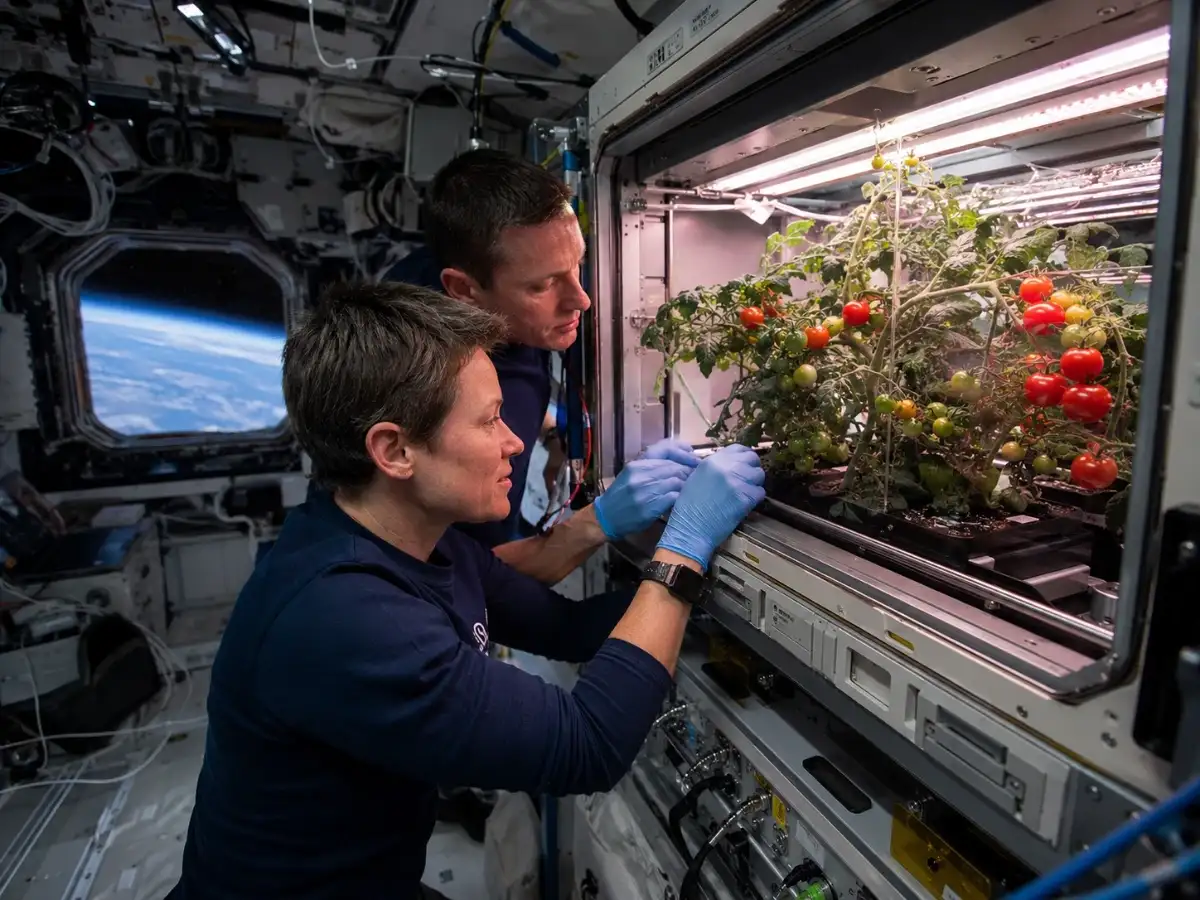
NASA wanted a garden in orbit. What it got was a very expensive lesson in why Earth is so good at being Earth. In 2023, the NASA crew conducted a costly, public experiment growing cherry tomatoes on the International Space Station, but the harvest by the end was so meager that not even one piece could be tasted. Dr. Gioia Massa, a life sciences project scientist at Kennedy Space Center who has spent years working on ways for astronauts to grow fresh food on the way to Mars, was the principal investigator behind the project, called VEG-05.
However, it turned out to be quite the space gardening tragedy. The ground-based plants yielded more than 100 tomatoes, whereas the plants grown aboard the ISS managed to ripen only 12 tomatoes. There was a little hitch: astronauts were not allowed to eat any of the space-grown tomatoes because of the small quantity of the samples and fears about fungal contamination in them.