Get all your news in one place.
100's of premium titles.
One app.
Start reading
The Times of India
The Times of India
World
TOI World Desk

In 2021, Ted Turner gave nearly 80,000 acres of prairie to his ecoagriculture institute; it is now a living laboratory for bison and wetlands

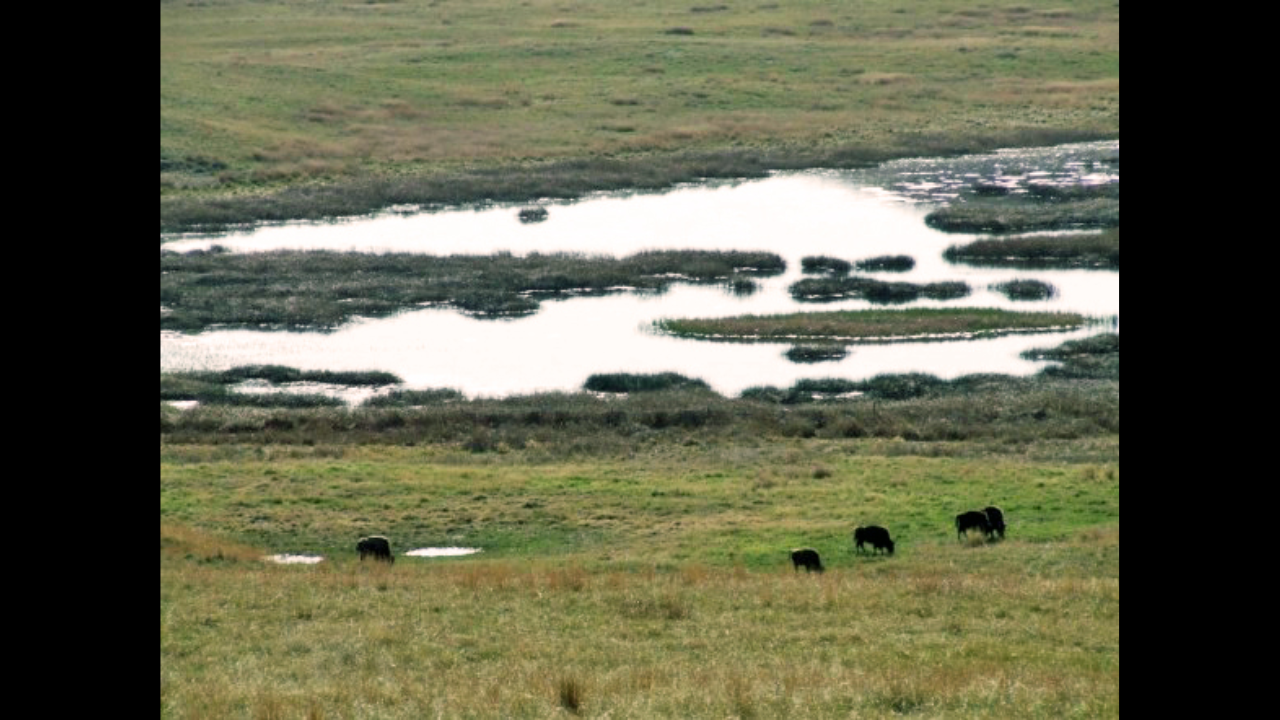
In 2021, Ted Turner handed nearly 80,000 acres of prairie in Nebraska and South Dakota to the Turner Institute of Ecoagriculture, turning McGinley Ranch into a vast testing ground for conservation and sustainable land management. The 79,292-acre property lies in the Northern Sandhills, where rolling dunes, native grasslands, wetlands and shallow lakes form one of North America’s most distinctive prairie landscapes. Today, about 4,000 American plains bison roam the ranch, helping managers study how native grazing can influence vegetation, soils and biodiversity. More than 60 lakes and ponds, along with streams and wet meadows, provide habitat for a wide range of wildlife while sitting above the Ogallala Aquifer. Rather than simply preserving the land, the Turner Institute uses McGinley as a living laboratory, bringing researchers and land managers together to examine soil health, water systems, wildlife, grazing and sustainable food production on a landscape scale.

Get breaking news anytime, anywhere. Download the TOI app now!

The research also explores how regenerative grazing, habitat restoration and adaptive land management can work together, with findings intended to provide practical lessons for ranchers, conservationists and land managers managing large working landscapes elsewhere.

How is McGinley a living laboratory for bison and wetlands

McGinley lies within the Sandhills, a landscape shaped by rolling dunes, native grasses, wet meadows and shallow lakes. According to the Turner Institute of Ecoagriculture, the region is the largest grass-stabilised dune system in the Western Hemisphere, giving it an unusual ecological character. More than 60 natural lakes and ponds, along with headwater streams and wet meadow complexes, are spread across the property. Beneath the grasslands is the Ogallala Aquifer, one of the most important groundwater systems in the United States and a key resource for communities and agriculture across the Great Plains. These water features make McGinley important for wildlife while also providing researchers with an opportunity to study how land management influences water systems.

The institute’s management approach focuses on maintaining the ecological processes that have long shaped the Sandhills. Its work recognises grazing, fire and climate as important forces in the development of grassland ecosystems. Rather than removing these natural influences, managers are examining how they can be incorporated into modern land management. This allows the property to be used for studying the links between grazing patterns, vegetation, soil health, water infiltration and biodiversity. Wildlife including migratory waterfowl, shorebirds, birds of prey, songbirds, elk, deer, pronghorn, reptiles and small mammals also depend on habitats found across the ranch. McGinley is therefore being managed as an active working landscape where conservation methods can be tested and adjusted over time.

Why are 4,000 bison central to McGinley’s conservation

American plains bison are at the centre of McGinley’s grassland management. The property manages approximately 4,000 bison, using grazing systems intended to restore the ecological role once played by large native grazers across North America’s prairies. The Turner Institute uses adaptive multi-paddock grazing, rotational grazing and rest periods, alongside the strategic use of fire. Other practices include native grass and pollinator restoration, low-stress animal handling, limited supplemental feeding and reduced dependence on synthetic inputs and fossil fuels. These methods can support healthier soils, improve water infiltration, encourage biodiversity, limit invasive species and strengthen the resilience of native grasslands.

Bison management also emphasises animal welfare and natural herd behaviour. The ranch allows calves to remain with their mothers through natural weaning, while management practices are designed to encourage varied grazing patterns and help the animals adapt to the environments in which they evolved. This approach reflects the institute’s broader aim of bringing agricultural production and conservation together rather than treating them as separate objectives. The Turner Institute considers bison an important part of the ecological processes being studied at McGinley, with their grazing helping managers understand how native herbivores can influence plant communities, soils and wider grassland health. Their presence also provides an opportunity to examine how livestock management can contribute to ecological restoration.

What makes McGinley a model for environmental sustainability

McGinley’s size and relatively intact ecosystems provide researchers with a large-scale setting for studying ecoagriculture. The Turner Institute works with scientists, land managers, universities, industry partners and conservation organisations on questions involving soil health, carbon dynamics, grazing, grassland resilience, water systems, wetlands, native species, pollinators, animal nutrition, animal welfare, climate adaptation and sustainable food production. The aim is not simply to observe ecological changes but to develop practical approaches that could be applied to other working landscapes. Research carried out at McGinley can therefore connect scientific findings with the day-to-day realities of managing large areas of agricultural and natural land.

The institute was established with a mission centred on developing, testing and sharing sustainable approaches to ecosystems, agriculture and rural communities. Turner’s wider conservation philosophy has also shaped the project, with an emphasis on finding ways for economic activity and ecological protection to operate together. The institute has worked towards research partnerships with land-grant universities and other agricultural institutions, including South Dakota State University’s Centre of Excellence for Bison Studies. With its combination of thousands of bison, extensive wetlands, native prairie and ongoing research, McGinley functions as both a conservation landscape and a large-scale field laboratory. Its work is focused on understanding how healthier ecosystems can support productive agriculture and long-term stewardship.

Sign up to read this article
Read news from 100's of titles, curated specifically for you.
Already a member? Sign in here
Related Stories
Top stories on inkl right now
One subscription that gives you access to news from hundreds of sites
Already a member? Sign in here
Our Picks
Fourteen days free
Download the app
One app. One membership.
100+ trusted global sources.