
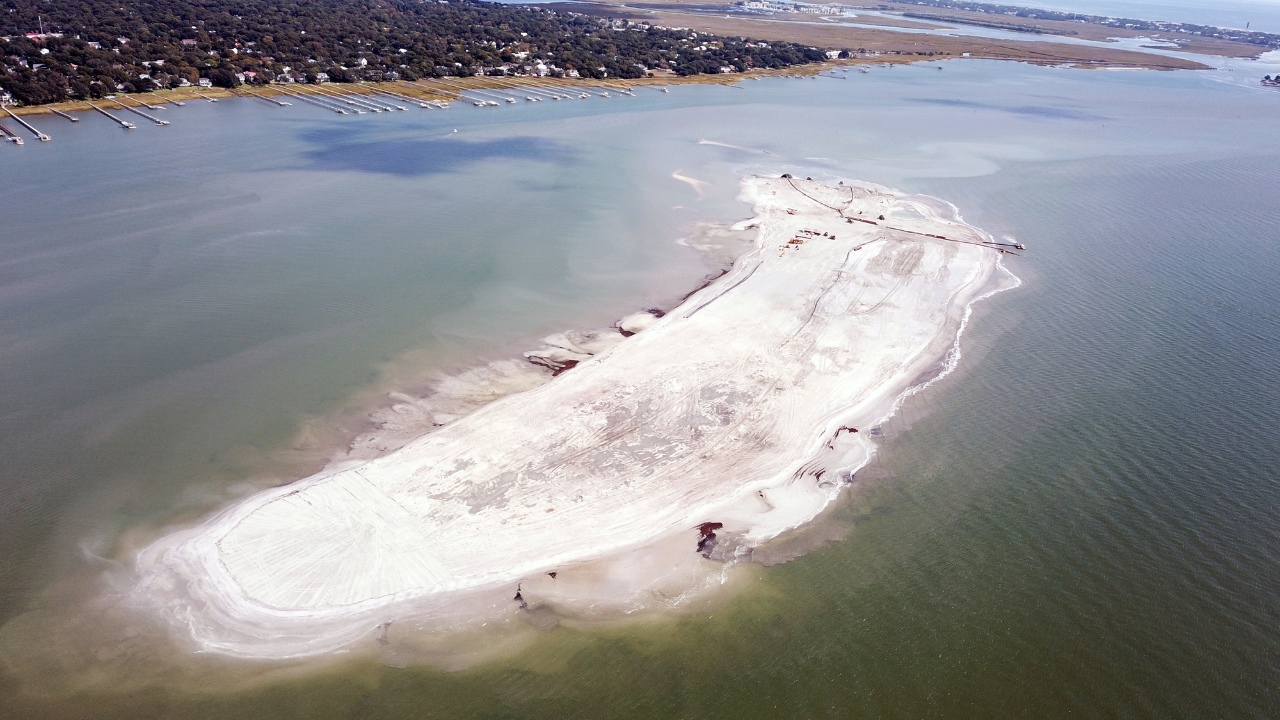
Crab Bank had almost disappeared from Charleston Harbor by 2021. The South Carolina island was once a nesting ground for shorebirds and seabirds, but storms and erosion gradually stripped away its high ground. After Hurricane Irma in 2017, the remaining nesting habitat was lost, and birds stopped nesting there. That year marked the last breeding season before the island effectively vanished as a functioning bird rookery. Four years later, South Carolina and federal agencies attempted an unusual restoration: instead of simply protecting what remained, they rebuilt the island with sand dredged from Charleston Harbor.
Get breaking news anytime, anywhere. Download the TOI app now!

The work began in September 2021 as part of the Charleston Harbor Deepening Project. The South Carolina Department of Natural Resources and the U.S. Army Corps of Engineers used approximately 660,000 cubic yards of compatible dredged material to restore Crab Bank. Officials said the project was designed to recreate about 32 acres of nesting habitat above mean high water. The material came from the harbor's Post 45 deepening project, where sediment was being removed to deepen the shipping channel. Rather than placing all of that material offshore, a portion was redirected to the former sanctuary.
The project was completed in November 2021. The South Carolina Department of Natural Resources' December 1, 2021 restoration announcement reported that the contractor began placing the material in mid-September and that officials inspected the completed project on November 16. The reconstructed island was shaped to provide suitable nesting areas rather than being treated like a conventional beach-renourishment project. The return of the island also gave biologists a chance to see how quickly birds would respond to habitat that had been absent for several years.
Storms had erased the island's nesting ground
Crab Bank's decline was gradual, but the loss of usable nesting ground became complete after the 2017 storm season. The island sits in Charleston Harbor near the mouth of Shem Creek, an area surrounded by busy waterways and development. Before its erosion, it was an important breeding site because coastal birds need relatively isolated areas above the reach of regular tides and with limited disturbance during nesting season.
The U.S. Army Corps of Engineers identified Crab Bank as a possible beneficial-use site for dredged sediment during planning for the Charleston Harbor deepening project. The idea was later developed with SCDNR as the non-federal project sponsor. There were also discussions about the placement and footprint of the restored island, including concerns about its proximity to Shem Creek. The U.S. Army Corps of Engineers' Crab Bank restoration project page explains that construction began in September 2021 and that the project used roughly 660,000 cubic yards of compatible material from the harbor deepening project. The agency said the restored site would provide about 32 acres of nesting habitat. The operation involved pumping sediment through pipelines and then shaping the deposited material into the new island footprint.
That distinction mattered, since Crab Bank was not simply repaired by adding a thin layer of sand to an existing beach. Most of the nesting ground had already been lost. The restoration rebuilt sufficient elevation and land area for birds that had previously used the site. By the end of November, the physical construction was complete. The more important test, however, would come with the next nesting season.
The first nest appeared in April 2022
On April 1, 2022, SCDNR biologists documented the first nest of the season, belonging to a pair of American oystercatchers. The island had gone without successful nesting activity since 2017. Now, only months after the construction work ended, the restored ground was being used again. The oystercatchers were followed by other species. Least terns colonized the island later that April, while other shorebirds and seabirds also established nests during the breeding season. SCDNR monitored the sanctuary and recorded the results over the following months.
The South Carolina Department of Natural Resources' October 11, 2022 nesting-season report documented more than 500 nests at Crab Bank during the 2022 season. The agency said it was the first time coastal birds had nested on the island since the erosion-driven loss of its breeding habitat. Eight pairs of American oystercatchers nested there, and the sanctuary also supported species including least terns.
Crab Bank had lost its usable nesting habitat completely. The restoration then created a new 32-acre island from dredged sediment, and birds began occupying it during the first full breeding season after construction. SCDNR described 2022 as an opportunity to study how birds respond when suitable habitat becomes available again after several years of absence.
A rebuilt island became habitat again
Charleston Harbor's shipping channel needed dredging for the Post 45 deepening project. The sediment used at Crab Bank was suitable for the restoration, so it could be placed at the sanctuary instead of being sent entirely to an offshore disposal site.
The island is closed to public landing during the main nesting season, when birds are establishing territories, laying eggs and raising chicks. Its future will also depend on the same coastal forces that caused the original island to erode: storms, tides and changing sediment patterns remain part of life along South Carolina's coast. In late 2021, workers finished rebuilding an island that had lost its last usable nesting ground. By the end of the following breeding season, SCDNR biologists had documented more than 500 nests there. The sand came from a harbor deepening project, and within months, it had become a breeding site for coastal birds again.







