Get all your news in one place.
100's of premium titles.
One app.
Start reading
The Times of India
The Times of India
World
TOI World Desk

In 2021, Johnston Atoll eradicated invasive yellow crazy ants after an 11-year effort; the refuge is home to nearly 13,000 red-tailed tropicbird nesting pairs

After more than ten years of eradication work, the U.S. Fish and Wildlife Service declared Johnston Atoll free of yellow crazy ants, allowing red-tailed tropicbirds to nest again on land that had been unusable for years. The announcement, made in 2021, was the first time an invasive ant species had been fully eradicated from such a large area of land anywhere in the United States.

Get breaking news anytime, anywhere. Download the TOI app now!

Johnston Atoll sits roughly 1,320 kilometres southwest of Honolulu and forms part of the Pacific Remote Islands Marine National Monument, one of the most isolated stretches of land on the planet. According to the refuge's own page on the US Fish and Wildlife Service website , the atoll is home to one of the largest known nesting populations of red-tailed tropicbirds anywhere in the world, alongside more than 300 species of fish and a shallow coral reef spanning roughly 32,000 acres. That isolation, which normally protects the atoll's wildlife, became a liability when yellow crazy ants arrived sometime before 2010; they may have been carried in on cargo or equipment from elsewhere in the Pacific.

How a tiny ant nearly wiped out a seabird colony

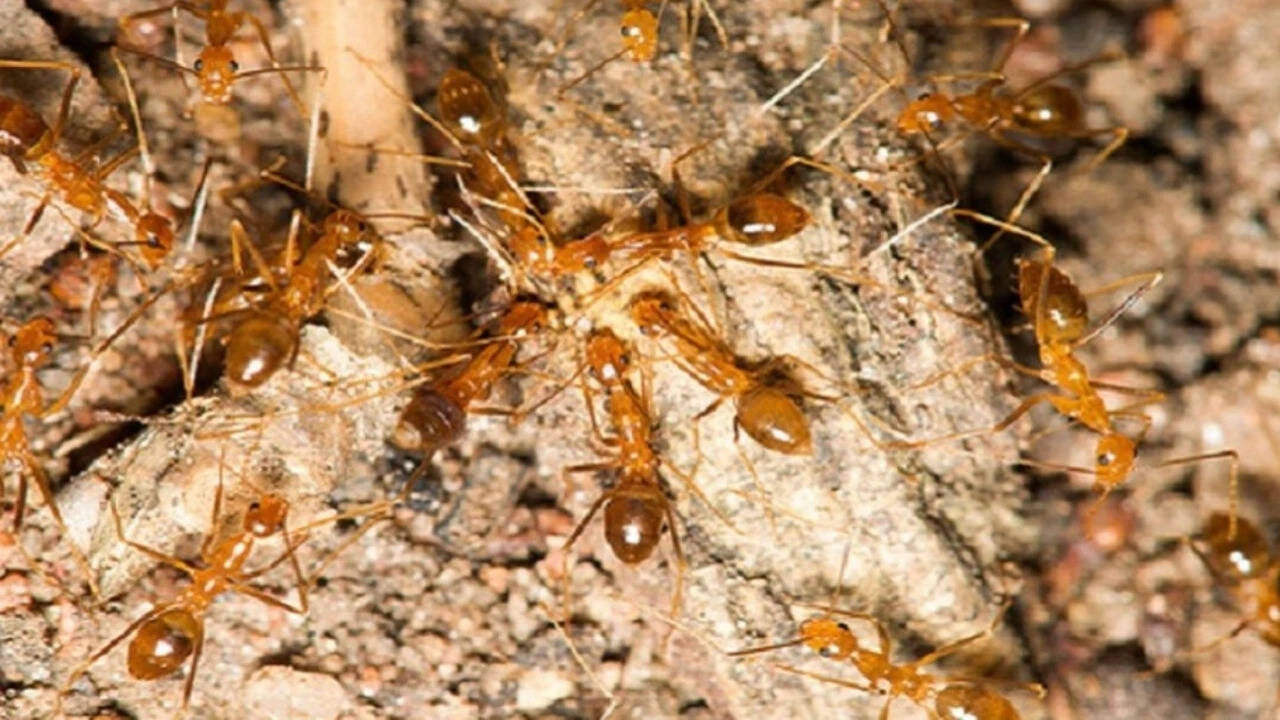
Yellow crazy ants do not bite or sting in the way many people expect from ants, but their real weapon is even more disruptive. When threatened or present in large numbers, the ants spray formic acid on nearby animals, causing blindness, injuries and, in many cases, death among ground-nesting seabirds on Johnston Atoll. As the infestation spread across roughly 70 acres of the 640-acre refuge, it effectively wiped out red-tailed tropicbird nesting across that entire zone, since the birds could not raise chicks on ground regularly swarmed by ants spraying acid on anything that moved.

The scale of the threat pushed the Fish and Wildlife Service to launch what became known as the Crazy Ant Strike Team, a rotating volunteer operation that ran continuously for a decade. The agency's own account of the project says nearly 100 staff and volunteers worked across 20 separate crews, each deployed for six-month stretches, and collectively logged more than 130,000 field hours battling the ants across the atoll. Crews experimented continuously with different bait formulations to find a treatment potent enough to eliminate the ants without causing wider harm to the atoll's other wildlife, then followed every round of bait treatment with repeated hand searches of the island to track down any ants that had survived.

Bringing in dogs to catch what humans could not

In the final stretch of the eradication campaign, crews used a surprising tactic borrowed from customs and search-and-rescue work rather than traditional pest control. In December 2020, the refuge brought in two conservation detection dogs specifically trained to sniff out yellow crazy ants, giving crews a far more sensitive tool than the human eye for confirming whether any pockets of the ants remained hidden in vegetation or debris after years of bait treatments. Using bait treatments, hand searches and canine detection over a decade, the Fish and Wildlife Service eventually confirmed the ants were gone.

Kate Toniolo, superintendent for the Pacific Remote Islands Marine National Monument, said the eradication marked the first time an invasive ant species had been removed from such a large land area anywhere in the United States, crediting the result to the volunteers, staff and partners who carried out the decade-long effort.

What happens next for the recovering colony

With the ants gone, attention on Johnston Atoll has shifted from eradication to recovery and long-term prevention. Officials have said the eradication ranks among the most significant invasive ant removals ever completed on a tropical island, given the scale of the 640-acre refuge involved. At the time, the Fish and Wildlife Service said its focus would shift to restoring habitat across the previously infested zone and preventing any future introduction of invasive species, since a single new arrival could undo more than a decade of painstaking work.

For the seabirds, the change is already visible on the ground. Areas that were once too dangerous for chicks to survive are gradually reopening to nesting, and biologists monitoring the refuge expect the tropicbird colony, counted at nearly 13,000 nesting pairs in 2021, to keep expanding into that reclaimed territory in the seasons ahead. It is a gradual victory, measured in each patch of ground where chicks can now hatch safely.

Sign up to read this article
Read news from 100's of titles, curated specifically for you.
Already a member? Sign in here
Related Stories
Top stories on inkl right now
One subscription that gives you access to news from hundreds of sites
Already a member? Sign in here
Our Picks
Fourteen days free
Download the app
One app. One membership.
100+ trusted global sources.