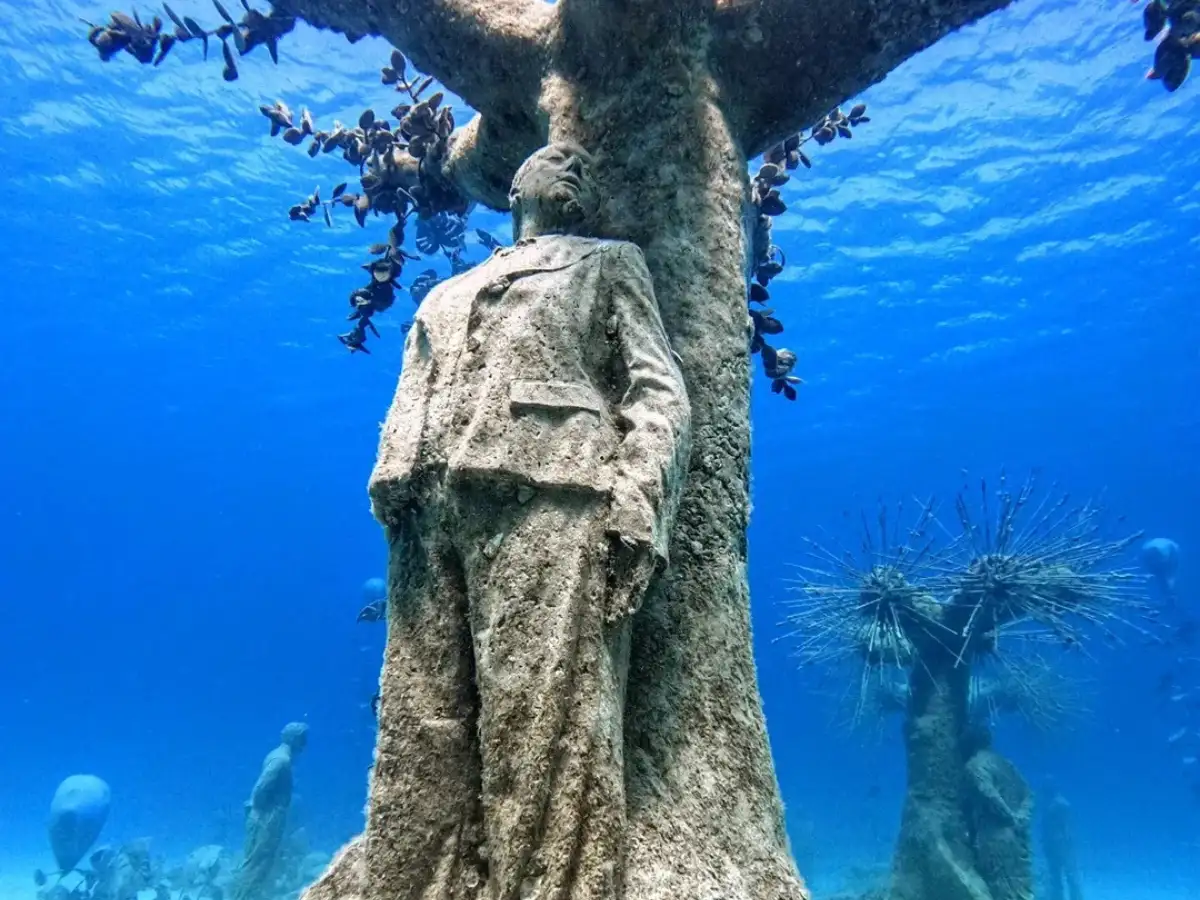
There is a forest off the coast of a quiet beach town in Cyprus that no one will ever walk through on foot. It lies eight to ten meters underwater and forms a concrete forest of trees, human figures, and silent faces looking up toward the light. This is the Museum of Underwater Sculpture Ayia Napa, MUSAN, which opened in August 2021 with 93 sculptures, some weighing up to 13 tons, dotted across the seafloor near Pernera beach. Artificial reefs, of which MUSAN is an unusual, art-driven example, have been used for marine restoration and conservation purposes for decades, according to a 2022 systematic review in PLOS ONE by researchers Emily Higgins, Anna Metaxas and Robert Scheibling, who examined artificial reef deployments across the globe. MUSAN is that effort made into art you can swim through.
A million-dollar forest with no leaves