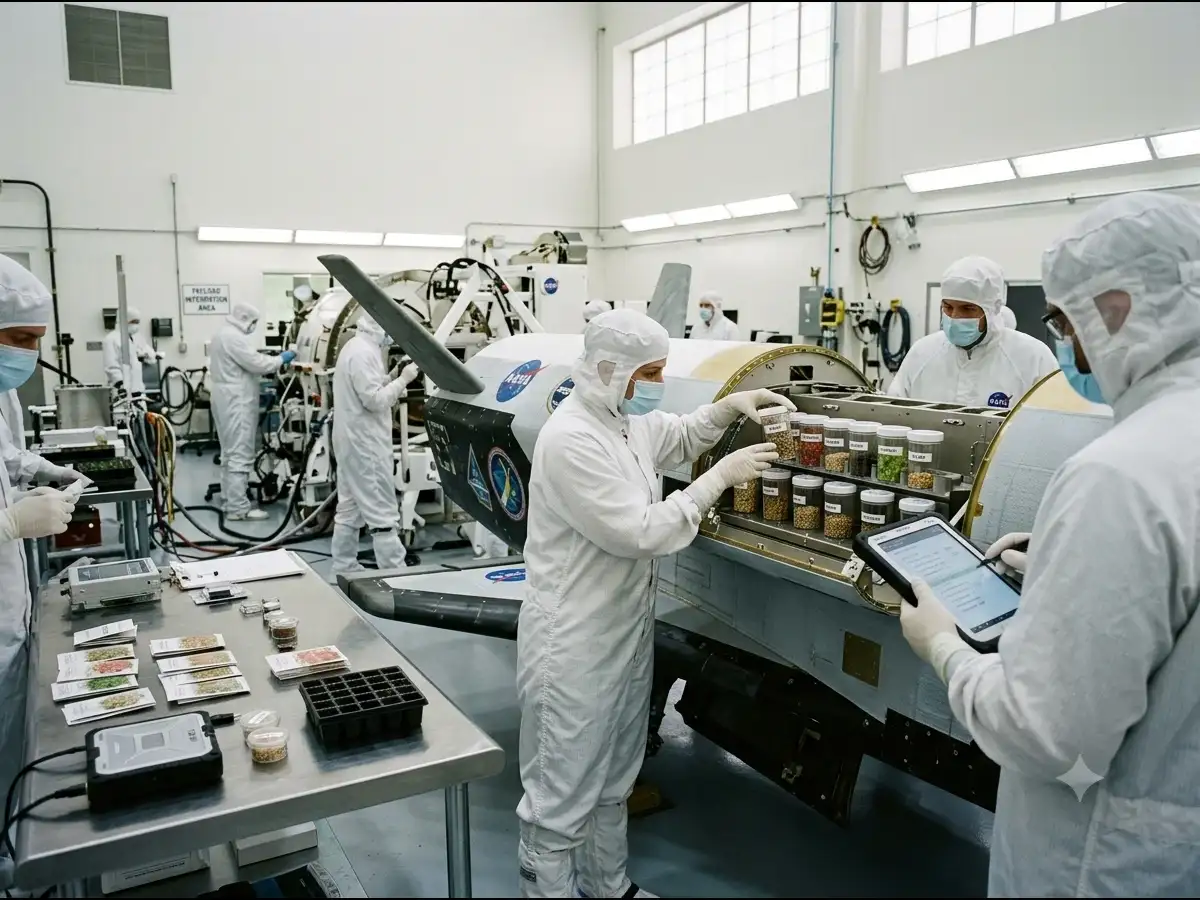
In 2020, NASA put seeds from 11 crops aboard an experimental spaceplane ; after months in orbit, scientists brought them back to test whether they could still grow. The experiment was designed to study what happens to plant seeds when they remain in the space environment for a long period. Researchers wanted to examine the effects of microgravity and space radiation on seed viability, germination, plant development and molecular changes. The research was carried out through two experiments called RAD-SEED 1 and RAD-SEED 2. The experiments used the X-37B Orbital Test Vehicle-6, or OTV-6. The reusable vehicle is operated by the United States Space Force. It launched on May 17, 2020.
The research involved NASA Kennedy Space Center scientists and collaborators. The team included principal investigator Ye Zhang, Ph.D., along with Howard G. Levine, Ph.D., both from NASA Kennedy Space Center. Jeffrey T. Richards from LASSO Contract, Amentum, at NASA Kennedy Space Center, was also part of the team.