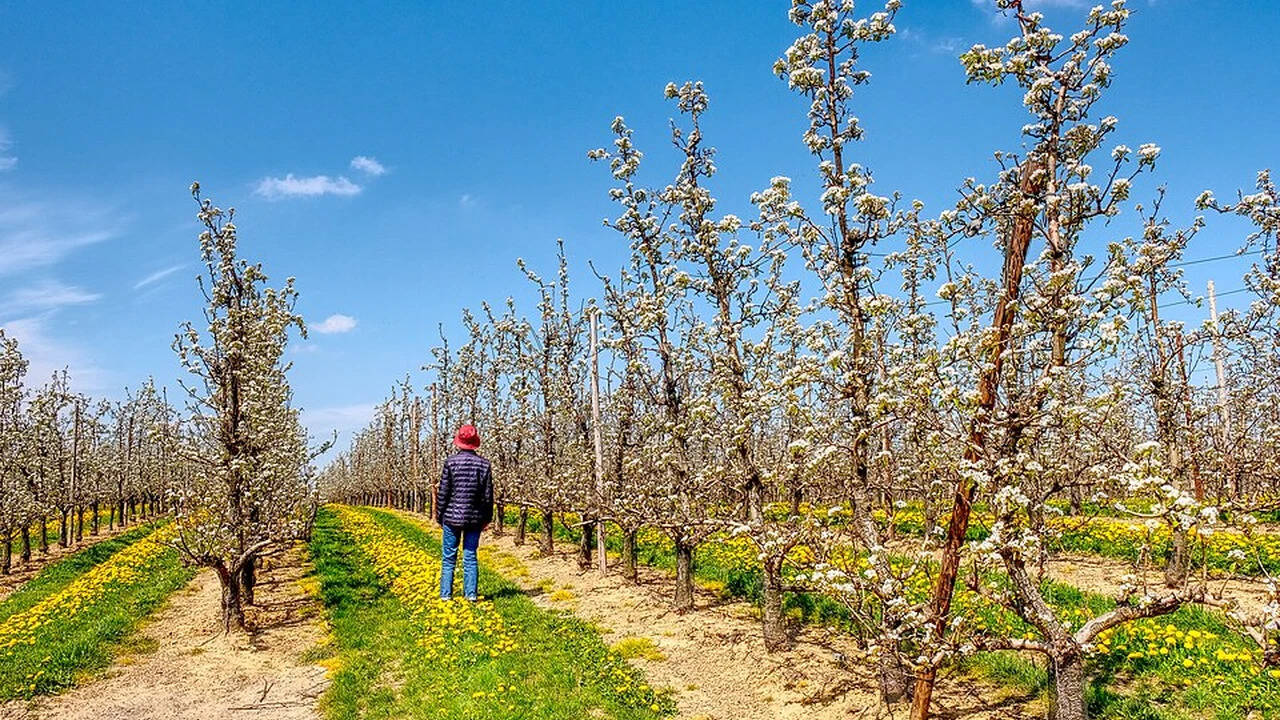
In 2020, researchers in Belgium installed a row of semi-transparent solar panels above a working pear orchard in Bierbeek, near Leuven. The experiment was designed to test whether the same land could produce both food and electricity without sacrificing too much of either. Three years of harvest data now offer a clearer picture of the trade-off. Pear production fell by about 15% under the panels, but the combined use of the land achieved a land-equivalent ratio of 1.44, indicating that the agrivoltaic system made more productive use of the land than separate food and electricity production.
Get breaking news anytime, anywhere. Download the TOI app now!