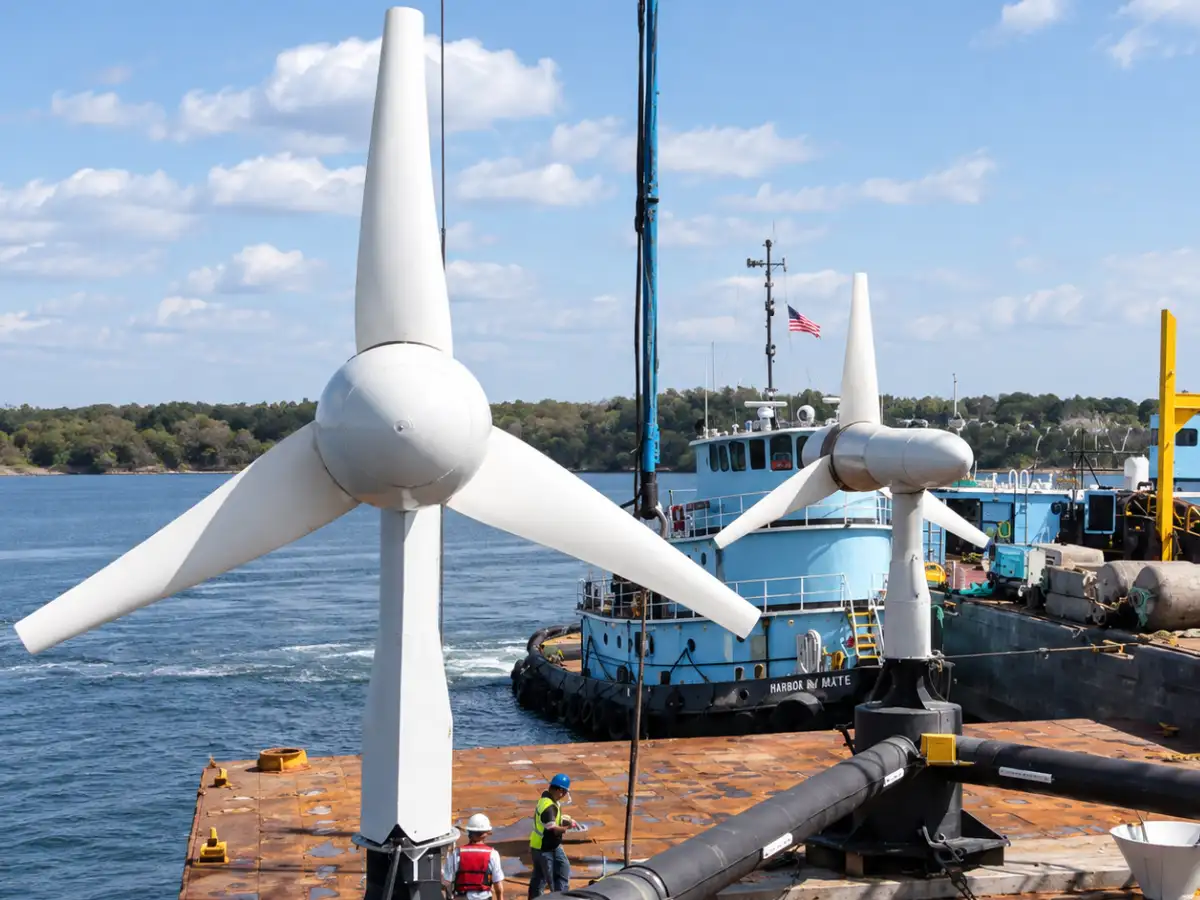
In October 2020, workers lowered a strange metal frame into New York City's East River. It held three underwater turbines, each shaped a bit like a boat propeller. Six months later, the turbines had produced 210 megawatt-hours of electricity. According to the U.S. Department of Energy, this was a new U.S. record for production of marine energy. It also showed something bigger: the ocean’s tides can quietly help power a modern city.
How three turbines turned water into power

The project is known as RITE, which stands for Roosevelt Island Tidal Energy Project. It is located in the East River, a tidal strait that separates Manhattan from Queens. What makes the East River special is that its currents flow in the opposite direction four times a day due to the tides. The company behind it is Verdant Power, which came up with a system called the TriFrame. It consists of three turbines on one metal frame, which allows all three turbines to be removed or installed at the same time. If the water flow is strong enough, the blades rotate like an underwater mill. Whenever there is a change in the direction of the flow of water, the turbines change their direction. The Department of Energy states that the plant operated above 99 percent availability within the first six months, with water-to-wire efficiency exceeding 46 percent. The department also notes that RITE operated under the very first hydrokinetic pilot license FERC ever issued for a tidal energy project, a milestone that made it, by regulatory definition, both a licensing first and a demonstration-scale pilot. The electricity generated here did not remain in the laboratory; it instead found its way into the Con Edison local network grid, which powered the area of Roosevelt Island and Manhattan itself.