Get all your news in one place.
100's of premium titles.
One app.
Start reading
The Economic Times
The Economic Times
Debjit Sinha and ET Science Desk

In 2019, Aidan Gallagher linked fan pledges to mangrove planting in Madagascar. 6 years later, the campaign had planted 113,706 trees and removed 38 million kg of carbon

In an era when climate messages can easily disappear into the constant stream of social media, Aidan Gallagher found a way to turn environmental awareness into a measurable action. The actor and climate advocate became closely associated with an initiative that connected individual sustainability pledges with mangrove restoration in Madagascar. The concept was straightforward: when people made a climate-related commitment, a mangrove tree could be planted on their behalf. By the time the campaign's impact was reported years later, the initiative had reached a striking milestone of 113,706 mangrove trees planted and 38,077,841 kilograms of carbon removed. The figures demonstrate how thousands of relatively small individual actions can be connected to a large-scale nature restoration effort.

Gallagher's environmental advocacy extends beyond his acting career. The United Nations Environment Programme identifies him as an actor, musician and former Goodwill Ambassador for North America, noting that his youth climate work included efforts with organizations focused on water, wildlife and ocean conservation.

At age 14, he became the youngest Goodwill Ambassador ever designated within the UN system at that time. His environmental profile subsequently grew through public speaking, social media campaigns and partnerships designed to make climate action more accessible to younger audiences. UNEP reported in 2022 that Gallagher was working with Envision Racing to encourage climate pledges through its Race Against Climate Change campaign, with trees planted through a partnership with Eden Reforestation.

READ ALSO: Nokia began in 1865 as a paper mill, expanded into rubber and cables, launched its first handheld in 1987 and led mobile phones by 1998; after 149 years, its handset business was sold to Microsoft in 2014

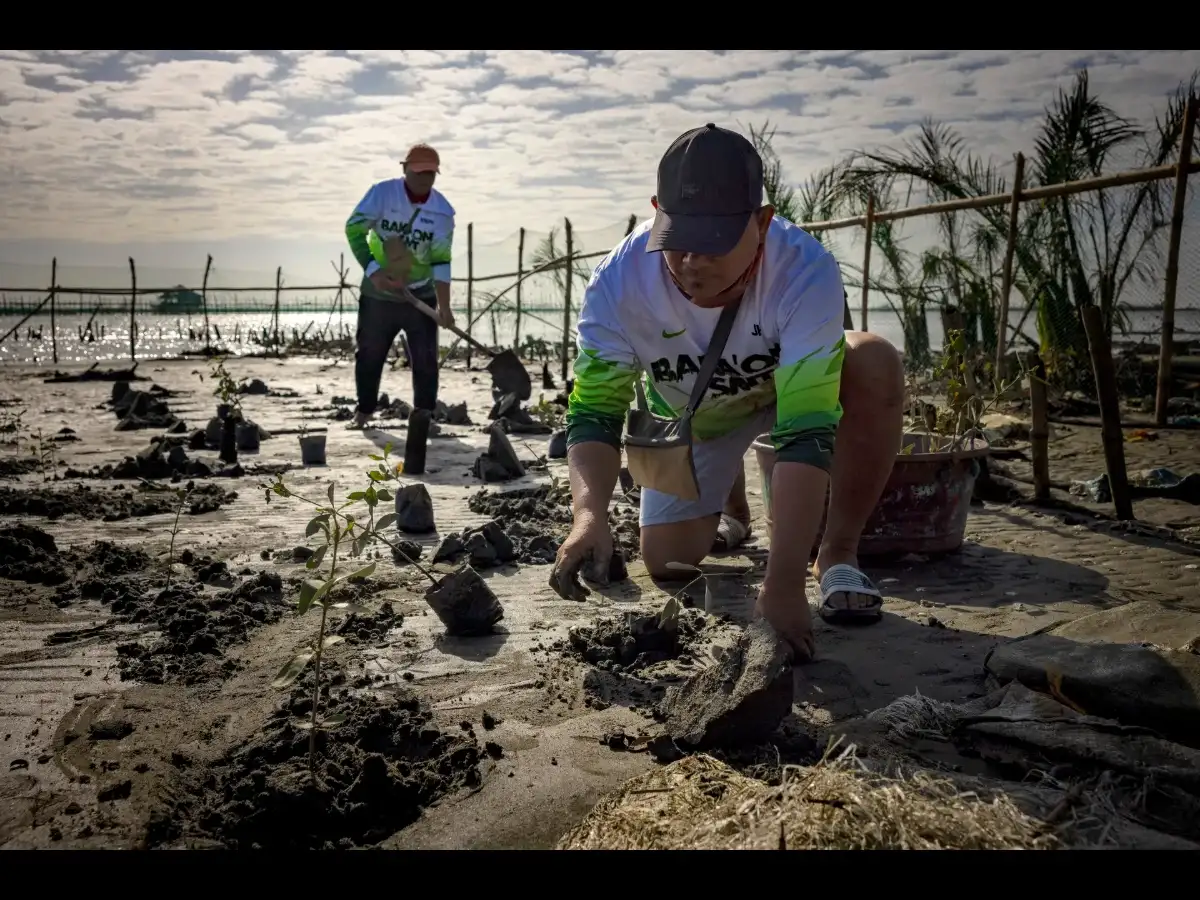
The campaign's central idea was particularly powerful because it transformed a pledge into something tangible. Instead of asking supporters simply to share a climate message, the initiative encouraged them to commit to actions such as greener transportation, reducing waste, choosing more plant-based food and making more sustainable energy choices. For every qualifying pledge, Envision Racing arranged for a mangrove tree to be planted, primarily along Madagascar's coastline.

A campaign report subsequently recorded more than 110,000 pledges and 113,706 mangrove trees planted, while its carbon calculator recorded more than 38 million kilograms of carbon removed or associated with the campaign's climate impact. The model effectively connected digital participation with an on-the-ground restoration project.

Mangroves were an important choice because these coastal forests provide benefits extending far beyond carbon storage. Their tangled root systems help stabilize shorelines, reduce erosion and provide habitat for fish and other wildlife. UNEP describes mangroves as important coastal ecosystems whose waterlogged soils can store substantial amounts of carbon. The organization has highlighted their role as natural buffers against flooding and as nurseries for aquatic species.

READ ALSO: In 2017, Gloucestershire processed 35,000 tonnes of food and farm waste into biogas; the result generated 4.56 GWh of power for 1,400 homes at Rose Hill Recycling

In Madagascar, these ecosystems are particularly significant because coastal communities depend on marine resources and fisheries. Blue Ventures reports that Madagascar's mangroves support marine biodiversity and traditional livelihoods while facing pressure from activities including timber and charcoal harvesting.

The Madagascar connection also reflects a broader movement toward community-led blue-carbon conservation. In 2019, Blue Ventures launched the Tahiry Honko project, a community-based initiative designed to conserve and restore more than 1,200 hectares of mangroves in southwestern Madagascar.

The project combines mangrove conservation with sustainable livelihood opportunities and carbon finance, demonstrating why restoration can be about both environmental protection and community resilience. Blue Ventures says the project is designed to avoid more than 1,300 tonnes of carbon dioxide emissions annually while generating income that supports local conservation and community development. These efforts illustrate why mangrove restoration has become an increasingly important part of climate and coastal resilience strategies.

The scale of the tree-planting campaign becomes even more striking when viewed against the global threats facing forests and coastal ecosystems. UNEP has warned that forest loss and ecosystem degradation remain major challenges, while its research on mangroves emphasizes their importance for climate mitigation, biodiversity and coastal protection.

Mangrove ecosystems have historically experienced significant losses worldwide, even though they can provide several environmental benefits simultaneously. Restoration therefore represents more than adding trees to a landscape: when appropriately planned and maintained, it can rebuild habitat, strengthen coastlines and support communities whose livelihoods depend on healthy coastal waters.

The campaign also offers an interesting lesson about the role of young audiences in environmental action. Gallagher has repeatedly emphasized the importance of making complicated climate issues understandable and giving people practical ways to participate. In his 2022 interview with UNEP, he argued that climate communication needs to explain both the problem and what individuals can actually do about it.

READ ALSO: In 2003, Mexico's Salinas Victoria used landfill methane to tackle waste pollution; the result made 7 MW, powering 25,000 homes and Monterrey’s public transport network daily

That philosophy is reflected in a campaign where a pledge becomes connected to a physical tree planted thousands of miles away. Rather than treating environmental responsibility as an abstract concept, the initiative created a visible link between personal behavior, collective participation and ecosystem restoration.

Six years after the campaign's early efforts, the reported total of 113,706 mangrove trees and more than 38 million kilograms of carbon removed provides a memorable example of how digital engagement can be connected to conservation on the ground. The numbers also show why restoration campaigns require credible measurement and long-term stewardship: planting a tree is only the beginning, while ensuring that restored ecosystems survive and continue delivering environmental benefits is the larger challenge. Madagascar's continuing investment in coastal resilience underscores that importance.

Sign up to read this article
Read news from 100's of titles, curated specifically for you.
Already a member? Sign in here
Related Stories
Top stories on inkl right now
One subscription that gives you access to news from hundreds of sites
Already a member? Sign in here
Our Picks
Fourteen days free
Download the app
One app. One membership.
100+ trusted global sources.