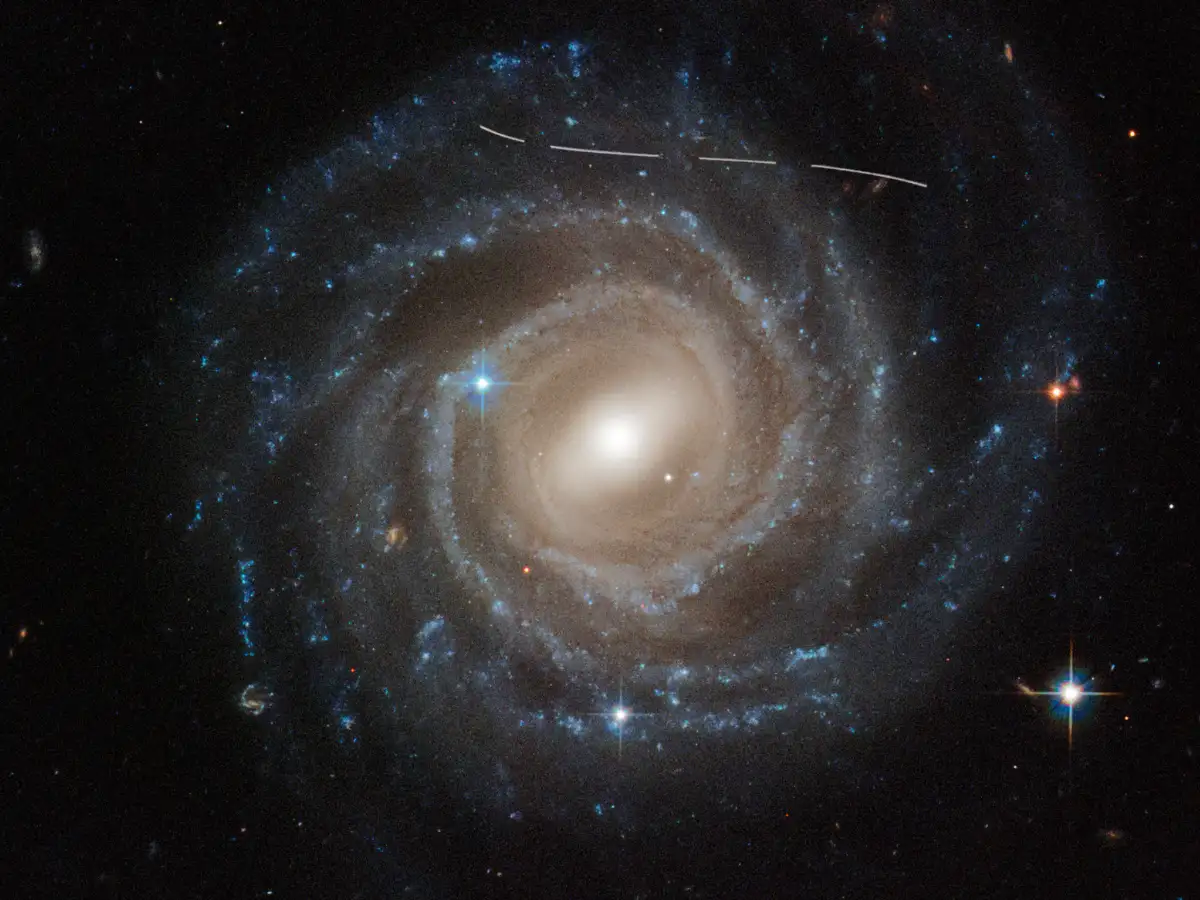
Major discoveries often begin with an accident. In 2019, a group of astronomers turned to ordinary citizens to help sort through old Hubble Space Telescope images, looking for asteroids that photobombed pictures meant for something else entirely. According to a 2024 study published in Astronomy & Astrophysics by astronomer Pablo García Martín and his team, that effort eventually found 1,701 asteroid trails, 1,031 of them objects never before recorded.
A photobombing asteroid gave the game away

Asteroids range in size from tiny pebbles to large rocks. Cataloging them is really difficult, the study explains, because they are faint and they keep moving in their orbits around the Sun. You can't just point a telescope at fixed coordinates and expect to find one there. Hubble was never designed to hunt asteroids anyway. Its usual targets are distant galaxies and stars, but one famous picture of the galaxy UGC 12158 features a curving white line that crosses the picture. Researchers note that the streak is a nearby asteroid that floated through Hubble’s sight while it was busy taking pictures of the galaxy. The curve appears because Hubble is in orbit around Earth during observations, and that changing viewpoint helped scientists determine the asteroid's distance.
Recruiting more than 11,000 citizen scientists
It was not feasible for a small research team to manually sift through Hubble's whole picture archive. So in 2019, researchers at the European Space Agency’s technology and science centers joined forces with Zooniverse, a popular citizen-science platform, and Google to launch the Hubble Asteroid Hunter project. According to the official statement on the project by the European Space Agency, 11,482 volunteers from all over the world searched through 37,000 images taken by Hubble over a period of 19 years, and together they recorded almost two million individual marks.