Get all your news in one place.
100's of premium titles.
One app.
Start reading
The Economic Times
The Economic Times
Team Global

In 2018, researchers used geophysical imaging beneath El Castillo: The discovery below the pyramid pointed to a hidden cenote

From the surface, El Castillo in Chichén Itzá is almost perfectly constructed. It sits at the centre of the plaza and rises into an excavation. Millions of tourists visit each year to see it and its famed equinox shadow, and their interest lies in its mathematical accuracy and iconic image. For years, the interest in this monument was largely limited to the physical structure that could be observed above ground.

However, as more research was done on the monument, the mystery only seemed to deepen.
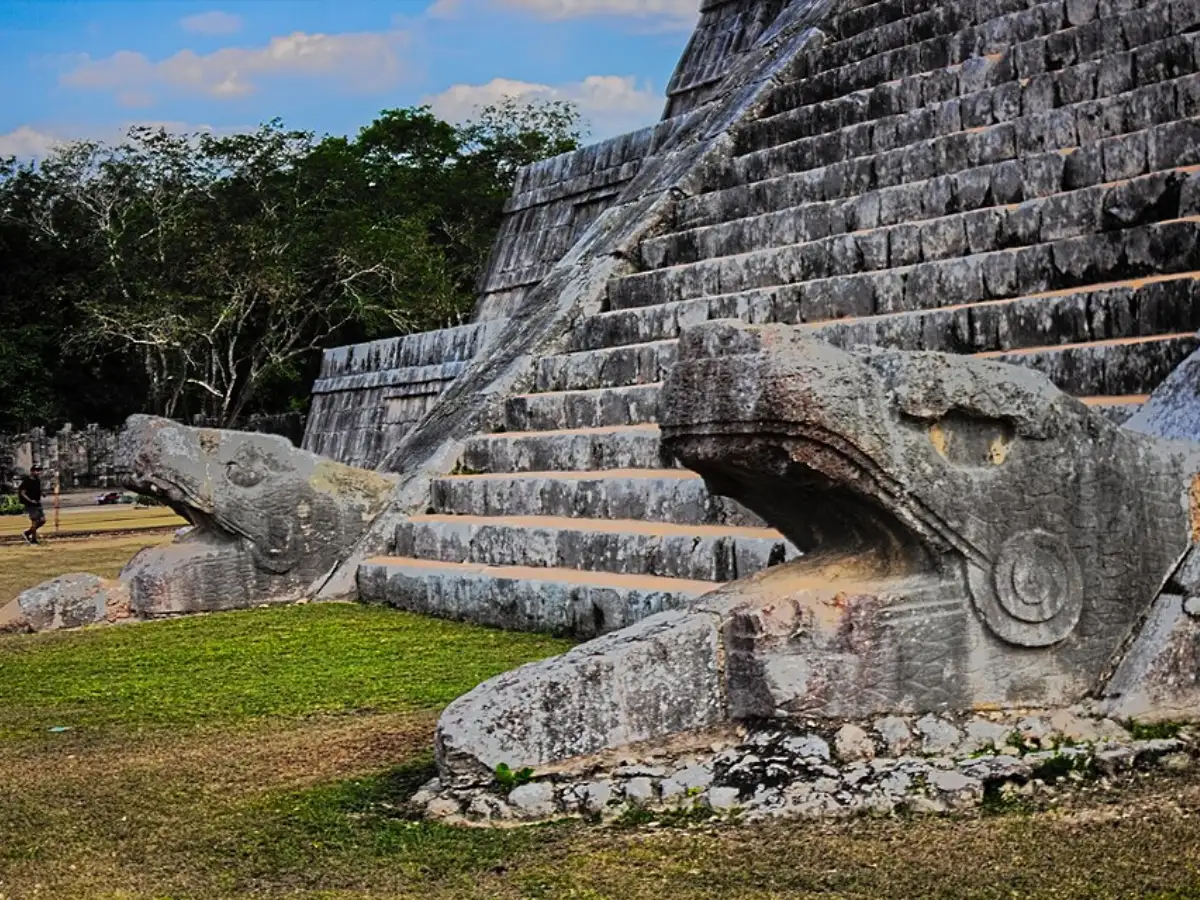
According to Britannica, El Castillo itself has other pyramidal structures underneath its existing construction, which means that the monument has undergone several phases of construction. However, even more startling is a discovery made in 2018, where a study published in Scientific Reports noted an enormous cave-like structure underneath the monument.

This discovery has shifted the course of the discussion. Instead of focusing on the physical structure above ground, experts now speculate on the underground structures and features of El Castillo.

The famous pyramid that became more complicated

El Castillo, also called the Temple of Kukulcan, is one of the most recognizable buildings created by the Maya civilization. This pyramid is located in Chichén Itzá, Yucatán State, Mexico, and has always attracted scientists who have studied its astronomical orientation and symbolism.

However, according to Britannica, archaeologists found out that the outer visible part of the pyramid wasn’t its original appearance. In fact, other layers of construction were built on top of the previous ones, covering their inner parts.

This revelation made the idea of a single and final building appear quite controversial. Instead, El Castillo was seen as a growing architectural work, which was being constructed over many centuries.

Scientists then decided to examine what lay under it.

What scientists found below the base

In 2018, a non-invasive geophysical study was conducted on the subsurface beneath El Castillo, published in Scientific Reports.

By using electrical resistance methods, the research team was able to uncover an anomaly which they concluded resembled a large karst cavity situated below the pyramid's foundation. Based on their description, this anomaly is characteristic of a cenote, which is basically a natural sinkhole that usually contains groundwater.

Notably, no physical excavation was conducted by the team to explore the underground cavity. All information was gathered using geophysical analysis. Nonetheless, the significance of the findings cannot be underestimated.

Cenotes have long been known to be associated with the Yucatán Peninsula due to the presence of limestone rock formations. In addition to being useful sources of water, these geological structures held deep cosmological significance to the ancient Mayans. This explains why the findings at El Castillo gained wide recognition.

131114629

A pyramid linked to the underworld

For decades, the interpretation of El Castillo revolved around its outer appearance. Tourists were fascinated by the geometric structure, ceremonial steps, and the famous serpent shadow that occurs during the equinox period.

The discovery of the cenote opened another perspective in interpreting the structure. As stated by Britannica and Scientific Reports, the presence of a cenote under the pyramid structure gives rise to many other questions regarding the positioning of the monument relative to the surrounding landscape.

In addition to being an architectural monument pointing toward the skies, it may have been designed to be tied to another significant element present underground. Thus, the interpretation shifts toward a vertical aspect.

The structure ascends toward the heavens, while earlier constructions are located within the pyramid, and the cenote lies underneath. In such a manner, the architectural object takes on a new meaning, linking together heaven, earth, and the underworld in one place.

Nevertheless, researchers are still hesitant to make specific ritual interpretations of the cavity's use. Although the article does not state any evidence regarding how the Maya saw this space in their religious context, the idea is consistent with what is already known about their religious beliefs.

Why the story resonates so strongly

Part of the reason behind the fascination with this discovery lies in the intuition of its structure. At each point along the way, the narrative is pushed further downwards.

First, tourists become aware of the older pyramids contained within El Castillo. There follows the hypothesis that the soil beneath the monument harbors a cenote. What seemed an already discovered monument begins to appear more mysterious in the light of this discovery, defined by its buried depths.

This discovery marks a change in perspective towards Chichén Itzá itself.

According to UNESCO, this ancient city is still one of the most significant archaeological sites associated with Maya civilization. Nonetheless, such discoveries as the cenote hidden under the El Castillo monument prove that some of the best-known monuments could still hold some secrets to explore.

It could very well turn out that the most interesting feature of the structure under discussion does not relate to its staircase or the shadow effect but lies deeper, beneath the monument itself.

Sign up to read this article
Read news from 100's of titles, curated specifically for you.
Already a member? Sign in here
Related Stories
Top stories on inkl right now
One subscription that gives you access to news from hundreds of sites
Already a member? Sign in here
Our Picks
Fourteen days free
Download the app
One app. One membership.
100+ trusted global sources.