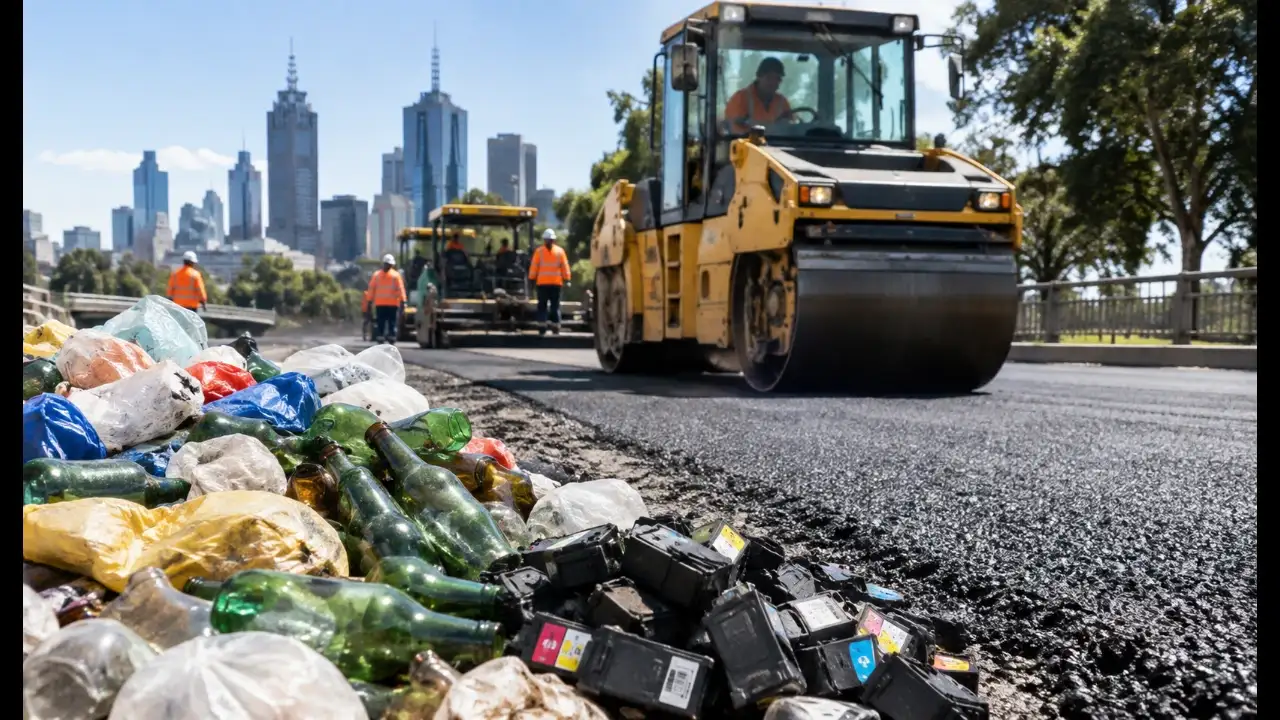
When road crews resurfaced Rayfield Avenue in suburban Melbourne back in 2018, the mix looked like standard black asphalt. Beneath the surface, however, laid a quiet experiment in civil engineering. Civil contractor Downer joined forces with the Hume City Council and recycling firm Close the Loop to lay 250 tonnes of a recycled pavement blend called Reconophalt. The mix diverted 200,000 soft plastic bags, 63,000 crushed glass bottles, and 4,500 discarded printer cartridges away from local landfills.
Instead of weakening the road, the discarded waste genuinely improved it. Soft plastics and printer toner melted into the bitumen binder, forming a flexible polymer network that absorbs heavy wheel loads. Performance testing showed a 60 percent boost in fatigue resistance compared to standard asphalt mixes, helping the street resist structural cracking and summer heat ruts. Encapsulating the polymers tightly inside the pavement matrix also prevents plastics from degrading into microplastics within surrounding soil. What began as a single local trial in Craigieburn has since turned into a practical model for durable, circular infrastructure.