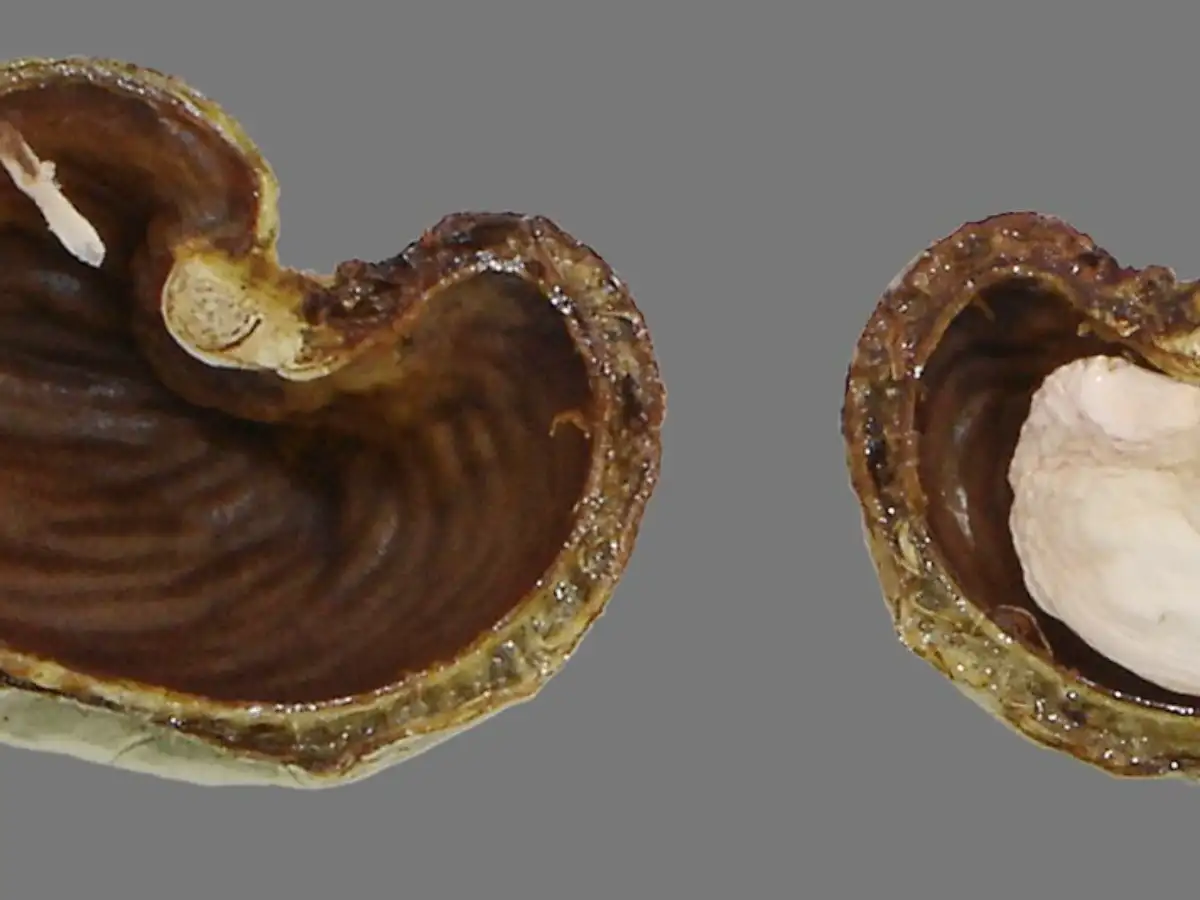
Not many people who purchase a bag of cashews consider the shell that encloses each nut. Understandably so: raw cashew shells contain highly caustic anacardic acids, related to the same compounds found in poison ivy, so the nuts almost never reach a store shelf still in the shell; the shell is removed and dealt with long before that point, usually at the processing plant. But that discarded shell may hold more value, in the aggregate, than the industry currently gets out of it. But that wasted shell could be worth more in the long run than the nut itself. According to a 2018 study titled “Cashew Nut Shell Liquid as a Fuel for Compression Ignition Engines: A Comprehensive Review,” published in the American Chemical Society journal Energy & Fuels, the thick dark oil that occurs in the cashew nut shell shares enough properties with petroleum diesel that researchers have studied it as a potential fuel for the same kind of compression-ignition engines that power trucks, tractors, and back-up generators.
Researchers Shiva Kumar, P. Dinesha and Marc A. Rosen analyzed years of laboratory work and engine testing of this material, called "cashew nut shell liquid" or CNSL, and found it to have real potential as an alternative to petroleum-based diesel. This is based on a synthesis of existing research on the subject, and it may be an eye-catching discovery for a waste product of food, which usually ends up in the trash.