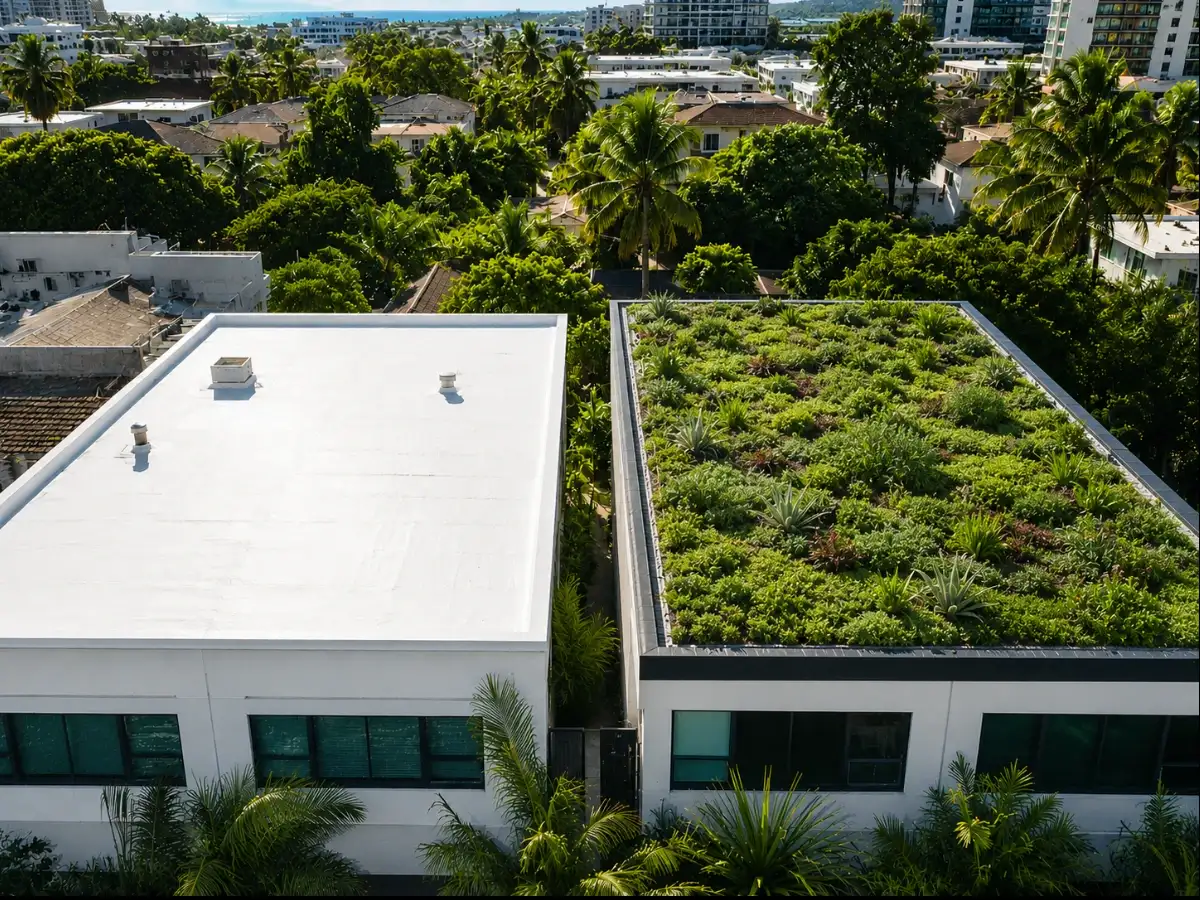
Honolulu gets pretty hot, and like most cities, much of that heat comes from rooftops absorbing sunlight all day. In 2018, Elizabeth Dionne, a graduate student pursuing a Master of Geoscience for Professionals at the University of Hawaii at Mānoa, had an idea and decided to put it to the test. She built a small green-roof test plot on the rooftop of the Equus Hotel in Waikiki, next to the building's existing white roof. What followed was a 36-day observation of the temperature difference between the two rooftops. Her thesis findings were striking: at the highest temperature point, the green roof was 18.5°F cooler than the white roof right next to it. At two feet above it, the air was 16.7°F cooler as well.
Why rooftops matter more than we think