
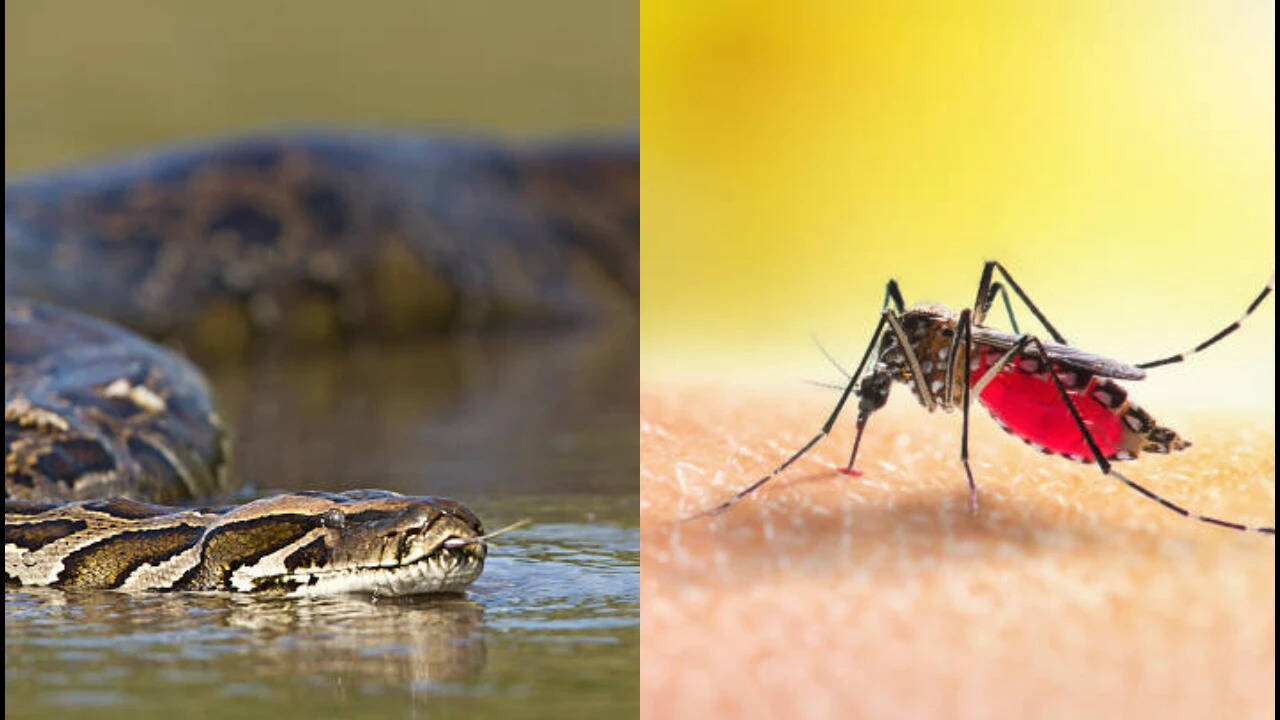
Soon a mosquito may be assigned the job of hunting one of the Everglades’ most elusive predators. For the uninitiated, Burmese pythons are one of the most concerning invasive species in South Florida, as they can hide in dense vegetation, wetlands, and remote areas, making them notoriously difficult to find. Now, researchers have examined a strange strategy: allowing mosquitoes to discover where the giant snakes may be lurking. In the journal PLOS ONE, a study by Lawrence E. Reeves called "Interactions between the invasive Burmese python, Python bivittatus Kuhl, and the local mosquito community in Florida, USA," appears to suggest something beyond imagination, where it is thought that mosquitoes might become python detectives. The idea was based on doctoral research by Lawrence Reeves, a post-doctoral researcher at the University of Florida Institute of Food and Agricultural Sciences Florida Medical Entomology Lab in Vero Beach. Reeves and his research team examined the interactions between Burmese pythons and mosquitoes, an ecological relationship that had been largely ignored. While the effects of pythons on the animals they eat are fairly obvious, we know much less about their interactions with animals that eat them or otherwise interact with them. The researchers collected mosquitoes from a Burmese python facility in Florida, where the snakes were housed in outdoor cages. And when they examined the blood within the mosquitoes, they found Burmese python DNA in the blood meals of three different species of mosquito. The discovery also opened up the unlikely possibility that mosquitoes could one day serve as biological trackers of hidden pythons. Scroll down for the details.
Get breaking news anytime, anywhere. Download the TOI app now!












