Get all your news in one place.
100's of premium titles.
One app.
Start reading
The Economic Times
The Economic Times
Team Global

In 2015, NASA astronauts ate space-grown lettuce in orbit for the first time; fresh food may also help support crew morale on long missions

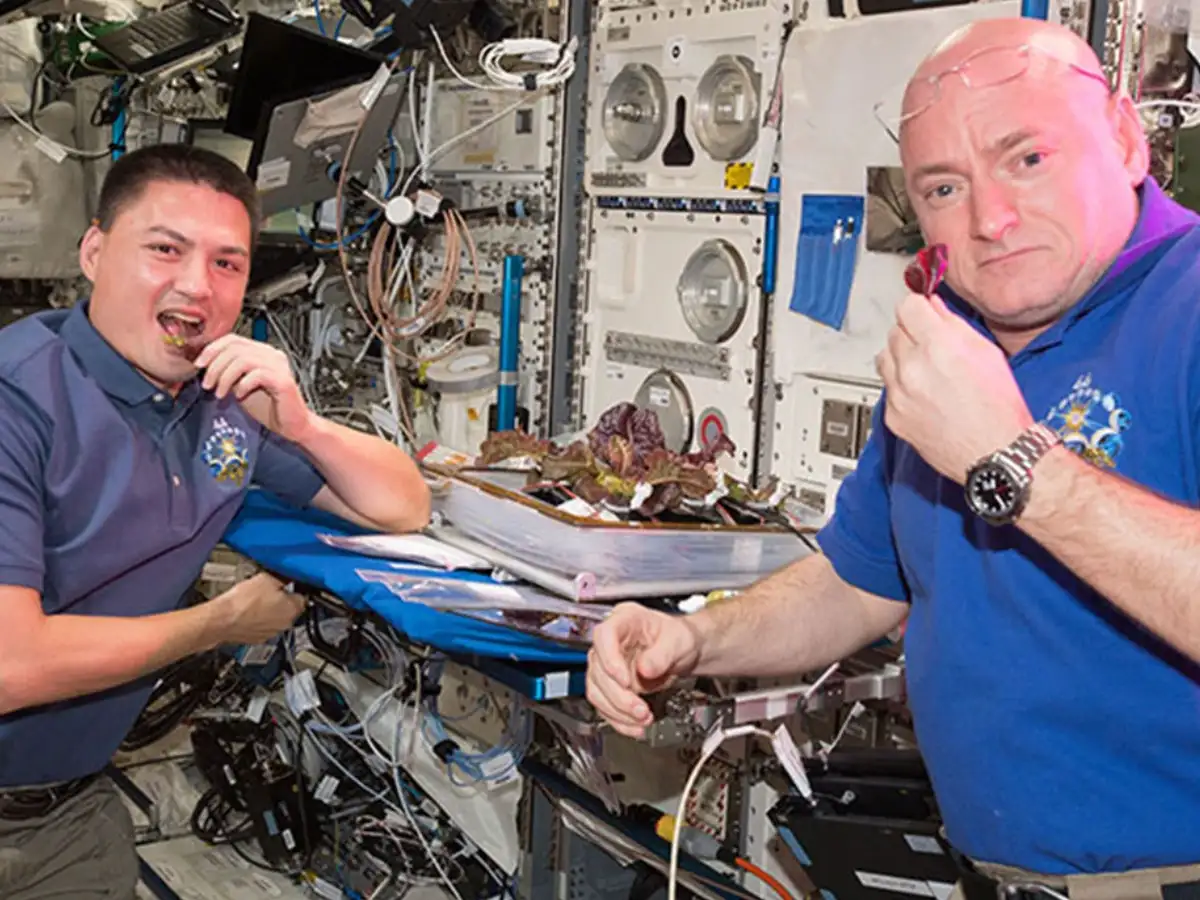
On August 10, 2015, three astronauts aboard the International Space Station ate lettuce they had grown themselves in space, about 250 miles above Earth. According to a peer-reviewed study by Massa and colleagues, published in the journal Open Agriculture, the crop was grown as part of an experiment called VEG-01, a hardware validation test designed to check whether the Veggie growth chamber could function properly in microgravity and grow food safe enough for the crew to eat. The astronauts picked red romaine lettuce, cleaned the leaves with sanitizing wipes, and ate them with a splash of olive oil and balsamic vinegar. That may seem like a small thing, but it answered a question NASA has been working toward for years: can a crew safely grow, harvest, and eat its own food while living off the planet?

A historic bite 250 miles above Earth

NASA astronaut Kjell Lindgren harvested the lettuce, a red variety called Outredgeous romaine, and shared it with Scott Kelly, who was about four months into what would be a nearly year-long stay on the station, and Kimiya Yui of Japan's space agency, JAXA. As nothing goes straight from plant to plate in orbit, the crew of Expedition 44 wiped down the leaves with citric acid-based sanitizing wipes before eating. Kelly said it tasted like arugula. Lindgren called it awesome. The two Russian cosmonauts, Gennady Padalka and Mikhail Kornienko, were out of the station on a spacewalk, and the crew reserved a couple of leaves for them later. This crop, grown under the VEG-01B round of testing, was the first space-grown food NASA cleared for its astronauts to eat in orbit. An earlier crop grown on the station back in 2014, VEG-01A, had never been tasted at all, since those leaves were frozen and sent home for food safety testing that ultimately cleared the way for this second harvest to be eaten fresh.

Growing salad without soil or gravity

Growing anything without gravity requires a different approach. There is no soil in the Veggie system. Instead, seeds are stored in small pouches, called plant pillows, filled with a clay-based growing medium and slow-release fertilizer, and wicks draw water up from a reservoir below. In weightlessness, you can't just pour water out, so this wicking system is what keeps the roots wet. Above the plants is a bank of red, blue, and green LED lights. This crop was activated on July 8, 2015, and grew for 33 days before it was ready to harvest.

Sign up to read this article
Read news from 100's of titles, curated specifically for you.
Already a member? Sign in here
Related Stories
Top stories on inkl right now
One subscription that gives you access to news from hundreds of sites
Already a member? Sign in here
Our Picks
Fourteen days free
Download the app
One app. One membership.
100+ trusted global sources.