Get all your news in one place.
100's of premium titles.
One app.
Start reading
The Economic Times
The Economic Times
Team Global

In 2014, Royal Society of Chemistry scientists extracted D-limonene from waste orange peels at 96% purity, turning citrus processing waste into bio-based asphalt modifiers

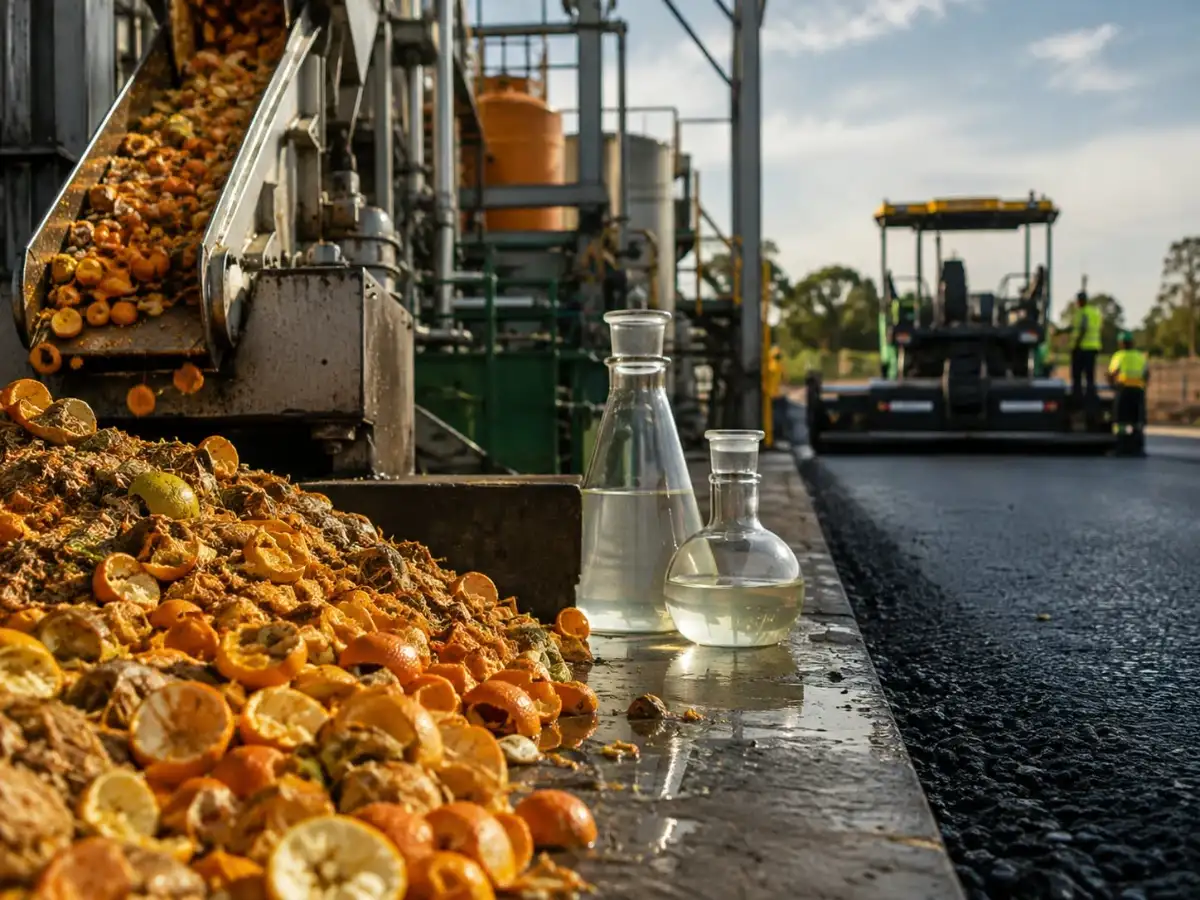
Few people think about what happens to the peel, pulp, and rind left over once fruit becomes orange juice. But that waste stream is industrial in scale. A widely cited 2014 paper, "Limonene: a versatile chemical of the bioeconomy," published in the Royal Society of Chemistry journal Chemical Communications, drew renewed scientific attention to the many industrial applications of d-limonene, the oil responsible for the characteristic smell of citrus peel, and a compound scientists have long known can be extracted from citrus waste. Food-grade d-limonene isolated from citrus waste already reaches 96 percent purity, a level pure enough for commercial use without further processing, notable for a compound still mostly obtained from agricultural waste.

Citrus waste itself is a significant by-product of Florida's juice industry. According to Biomass Magazine, the state's citrus processing produces up to five million tons of citrus waste annually, much of it dried and fed to cattle at reduced cost, or simply discarded.
The waste problem

Citrus waste is hardly a topic of discussion, even though it's a massive amount of waste that's concentrated in one area: Florida's juice belt. It is not simply a large volume of wet, fast-rotating, relatively cheap-to-process peel. When researchers claim this waste stream could be covertly diverted to a different product, perhaps one of value, rather than a dump or a low-value feed pellet, it's more than just a feel-good chemistry story. An actual logistics opportunity that can be found in an industry that is already run on a huge scale by the US.

From smoothie leftovers to street solvent

D-limonene is actually quite useful in the asphalt and road-paving industry. It is an effective bitumen solvent (which bonds asphalt together), helping to dissolve and separate old asphalt for testing, recycling and re-use. A 2020 literature review, "Extraction and recovery of asphalt binder: a literature review," published in the International Journal of Pavement Research and Technology, discusses a d-limonene-based solvent as a potential safer, more environmentally friendly alternative to the chlorinated solvents historically used to extract and recover asphalt binder from old road material, though the review notes such bio-based solvents remain little used, with considerable research potential still untapped.

Sign up to read this article
Read news from 100's of titles, curated specifically for you.
Already a member? Sign in here
Related Stories
Top stories on inkl right now
One subscription that gives you access to news from hundreds of sites
Already a member? Sign in here
Our Picks
Fourteen days free
Download the app
One app. One membership.
100+ trusted global sources.