
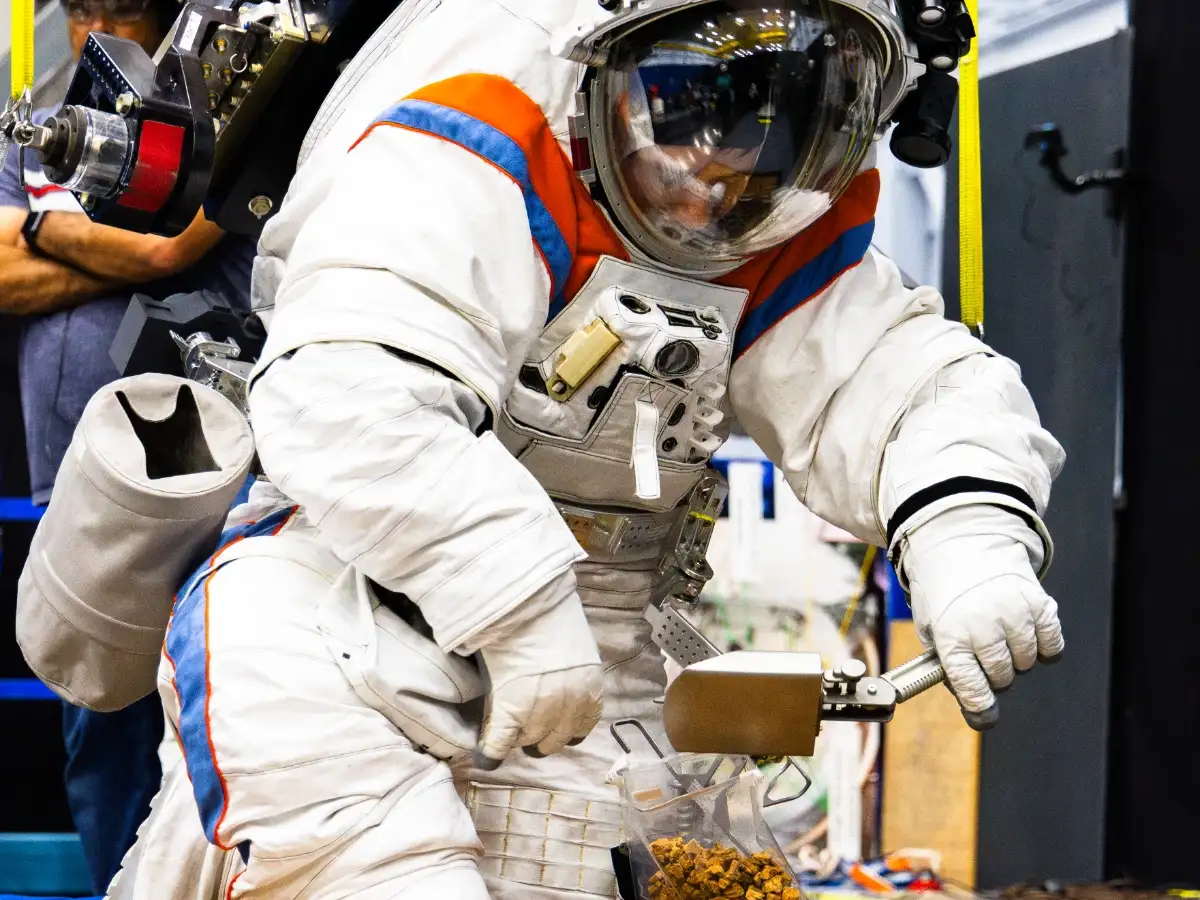
As opposed to putting a tape measure back in a drawer when it is not needed, NASA used one as part of the Body Measures experiment aboard the International Space Station in 2014. The study involved astronauts taking body measurements at different points during their missions to understand how the human body changes during extended exposure to microgravity. NASA's Integrated Extravehicular Activity Human Research & Testing Plan: 2019 lists a tape measure among the equipment used for the study, alongside an anthropometer and weight scale, with digital still photography, video imaging, and 3-D whole-body scanning also used to collect information about body shape, size, and posture. The same plan says that preflight, inflight and postflight anthropometry data from the completed Body Measures study were incorporated into the requirements for the Exploration Extravehicular Mobility Unit, or xEMU.
The experiment was not simply about finding out whether an astronaut's spine became longer in space. NASA was interested in changes in body dimensions, neutral posture, and spinal elongation during long-duration exposure to microgravity, because these factors can affect the way an astronaut fits inside a spacesuit. The 2019 plan describes the study as measuring changes in anthropometry that were important to suit-sizing parameters. That made the project less about one particular measurement and more about understanding how the human body changes as a mission progresses.

What astronauts were measuring in space
The Body Measures work appears repeatedly in NASA's 2014 International Space Station reports. During one session documented in August, Commander Steven Swanson and Flight Engineer Reid Wiseman carried out Body Measures sessions on different flight days. They set up body-marker instrumentation, took calibration and body-pose photographs, recorded circumference measurements and captured a video of neutral body posture. NASA's records show that the experiment was a recurring activity rather than a single measurement taken once during the mission.
NASA's November records show another example of the work. ESA astronaut Alexander Gerst measured his body shape and size aboard the station on Nov. 5, with NASA astronaut Reid Wiseman assisting him with the Body Measures study. Gerst was part of the Expedition 41 crew that returned to Earth on Nov. 9 after 165 days in orbit. These reports help put the experiment into context: the measurements were being collected from astronauts who were spending months in space, not from people making a quick demonstration for a laboratory experiment.
The equipment list in NASA's later technical plan should also be read as describing the broader study rather than as a claim that every instrument was simultaneously being carried around the station. The report identifies an anthropometer, tape measure, and weight scale for anthropometric measurements and separately describes digital photographs, video imaging, and a 3-D whole-body scanner. NASA says these methods were used to measure changes in body shape, size, and posture during spaceflight. This distinction matters because a 3-D scanner and a tape measure served very different purposes, while the Body Measures dataset brought their information together.
The timing of the changes was another important finding. NASA's analysis found that most anthropometric changes occurred within the first 15 to 20 days of a mission, with some circumference measurements following a different pattern. After this initial period of larger changes, the researchers observed smaller fluctuations through the remainder of the mission. For spacesuit designers, that meant body dimensions could not simply be treated as a fixed set of numbers measured before launch. NASA's report says future suits may need to be adjustable according to mission duration, and that predicting changes in anthropometry could help determine whether additional sizing adjustments would be necessary.







