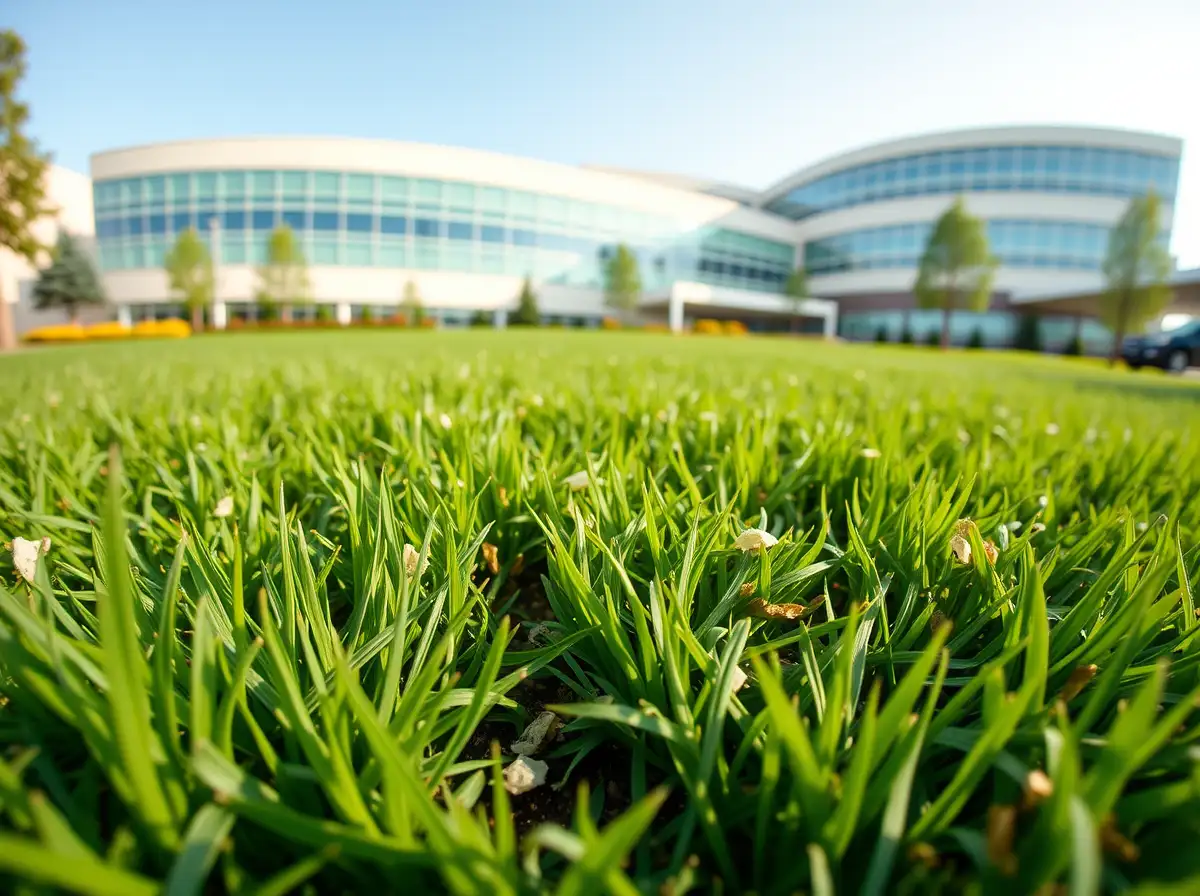
In 2014, the Captain James A. Lovell Federal Health Care Center in North Chicago, Illinois, demonstrated that an environmental breakthrough does not always require expensive equipment or complicated infrastructure. By using a simple practice known as cold composting, the healthcare center prevented 320 tons of lawn waste from entering landfills. The approach helped raise the facility’s overall landfill waste diversion rate from less than 18% to 39%, representing a 21-percentage-point improvement. The EPA documented the project as part of its Federal Green Challenge, highlighting how an ordinary lawn-care practice could become a meaningful waste-reduction strategy.
The idea behind cold composting is remarkably straightforward. Instead of collecting grass clippings after mowing and transporting them elsewhere, the clippings are left on the lawn, where they naturally decompose. As the organic material breaks down, nutrients return to the soil, helping support soil fertility. Unlike conventional composting, which generally involves collecting organic materials and managing them in a designated composting system, cold composting essentially allows the lawn to perform the decomposition process where the grass was originally grown. At Lovell, this approach was used throughout the seven-month lawn-mowing season, turning routine landscaping into an important waste-diversion activity.