
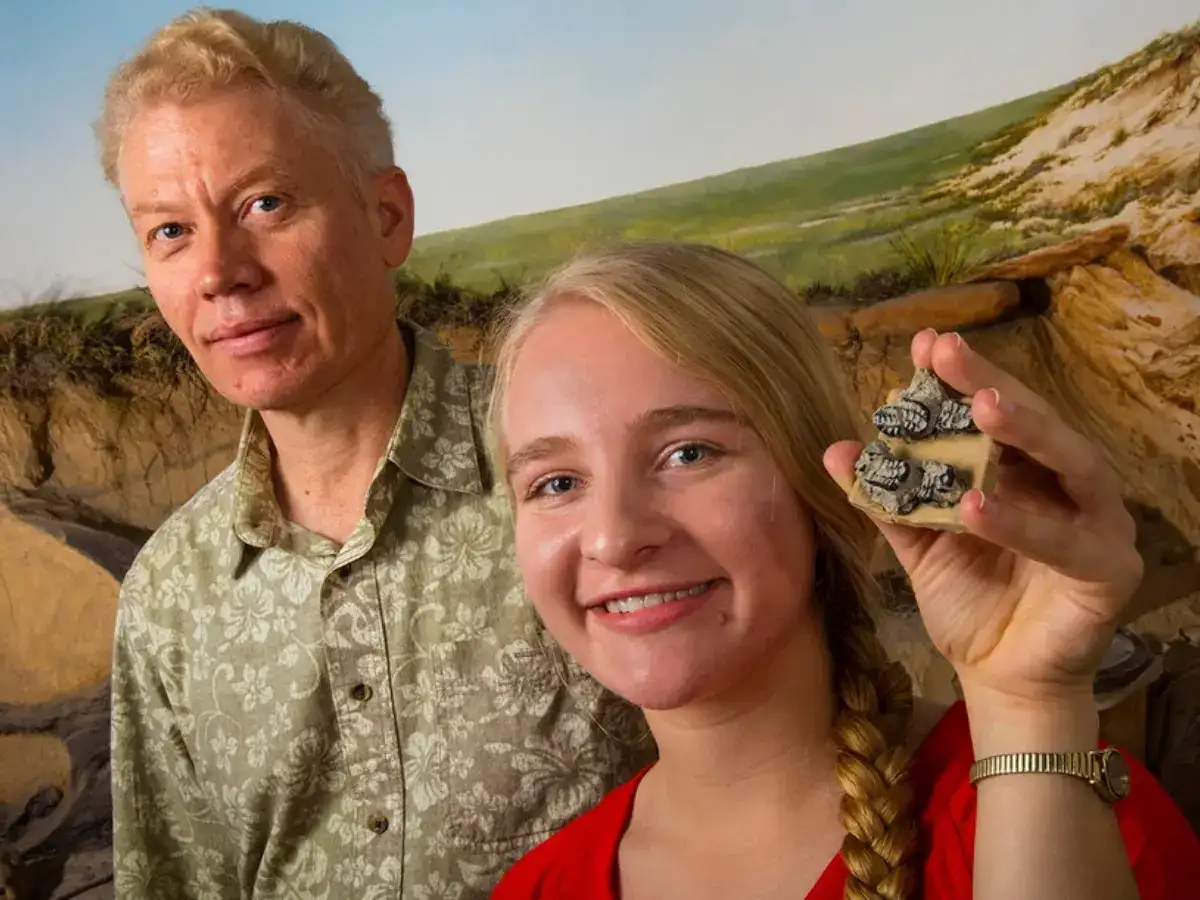
First-time fossil enthusiasts usually assume they will gain basic field experience. However, few think they could take part in finding an animal species that was not known to humans. This is precisely what happened to a first-year undergraduate student, Carissa Raymond of the University of Nebraska-Lincoln, who went on a fossil hunt in the San Juan Basin of New Mexico in 2014. In the process of the field activity, Raymond uncovered fossilized remains consisting of teeth and jaw fragments, which were later determined to be the fossils of a previously unidentified mammal species.
The animal was identified as a new species of the multituberculate mammal family, namely Kimbetopsalis simmonsae. What makes this discovery unique is the place it was made. Despite having been excavated for decades, the San Juan Basin yielded a species that was yet to be scientifically defined by researchers.













