
Get all your news in one place.
100's of premium titles.
One app.
Start reading
The Economic Times
The Economic Times
Team Global

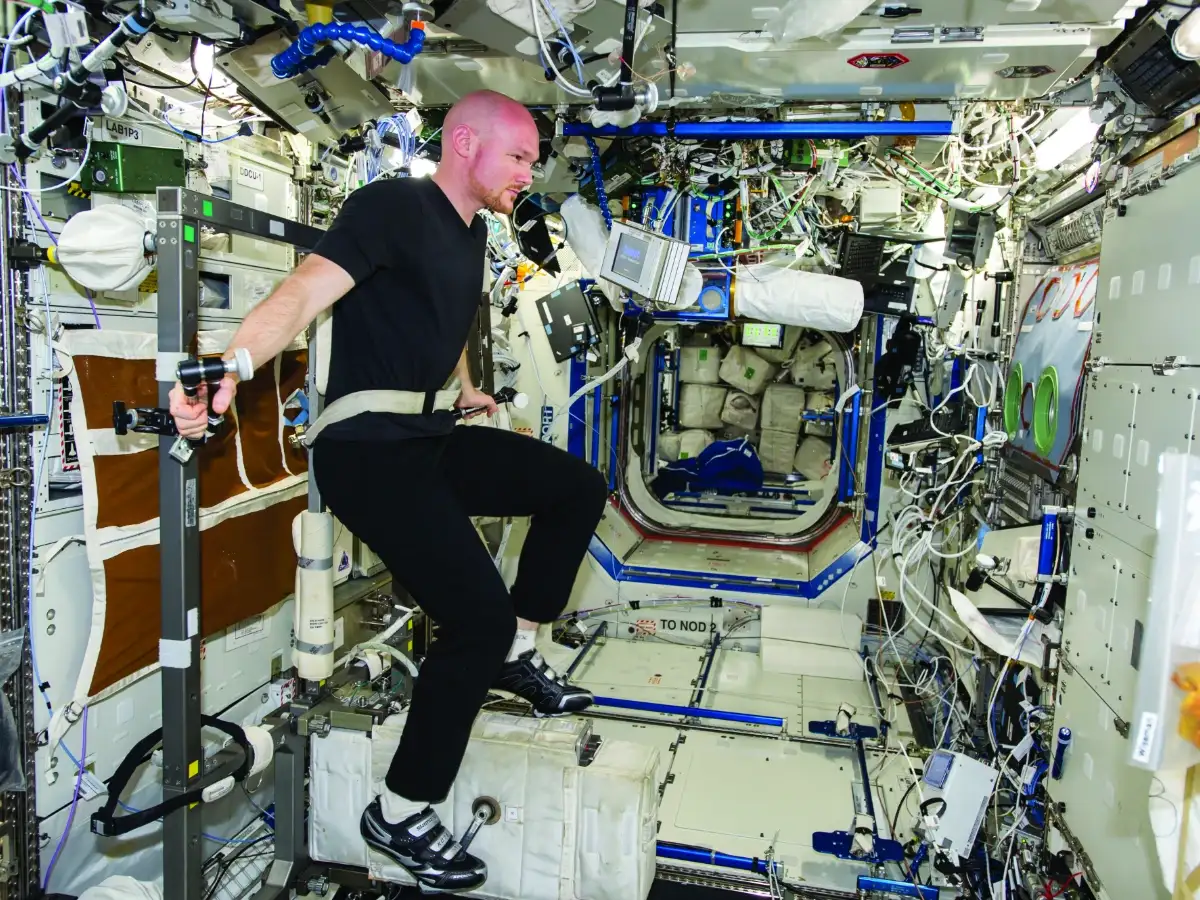
In 2014, ESA astronaut Alexander Gerst wore SpaceTex shirts on the ISS for six months; their fabric data helped inform clothes for future Mars crews

Sweat is already a nuisance enough to deal with while jogging on a treadmill at your local gym. Now try sweating while you are 250 miles above Earth, with no gravity to help drain it away. During his Blue Dot mission aboard the International Space Station in 2014, ESA astronaut Alexander Gerst wore specially designed shirts while exercising on the station's bike as part of SpaceTex, an experiment that investigated how clothing manages heat and sweat in microgravity. Gerst's mission lasted 165 days, from May 28 to November 10, rather than a full six months. On Earth, gravity pulls sweat downward, while airflow helps it evaporate. In microgravity, these processes work differently. NASA explains that the lack of natural convection in space affects how heat is transported and how clothing interacts with moisture. Astronauts have also reported sweating more during exercise in space than they do on Earth and have described the sensation of heat surrounding the body.

Why was fabric science more crucial in space than on Earth?

A warm, moist environment can provide favorable conditions for bacteria and other microorganisms to grow. In space, this can become a practical health concern because astronauts cannot simply wash their clothes whenever they become sweaty, while ventilation also works differently from that in a home environment. This is where the SpaceTex research became particularly relevant. The materials tested during the experiment were selected for properties including antibacterial performance, drying behavior, and their ability to help manage heat and moisture during physical activity. NASA describes SpaceTex as the first clothing physiology experiment conducted in microgravity.

For Gerst, the testing involved the Cycle Ergometer with Vibration Isolation and Stabilization, a stationary bicycle designed for use aboard the space station. The sessions allowed researchers to compare high-performance fibers with conventional cotton clothing in terms of comfort during exercise. The resulting information, together with physiological data gathered during the experiment, was later identified by NASA as useful for developing clothing for future long-duration missions, including possible crewed journeys to Mars.

Sign up to read this article
Read news from 100's of titles, curated specifically for you.
Already a member? Sign in here
Related Stories
Top stories on inkl right now
One subscription that gives you access to news from hundreds of sites
Already a member? Sign in here
Our Picks
Fourteen days free
Download the app
One app. One membership.
100+ trusted global sources.







