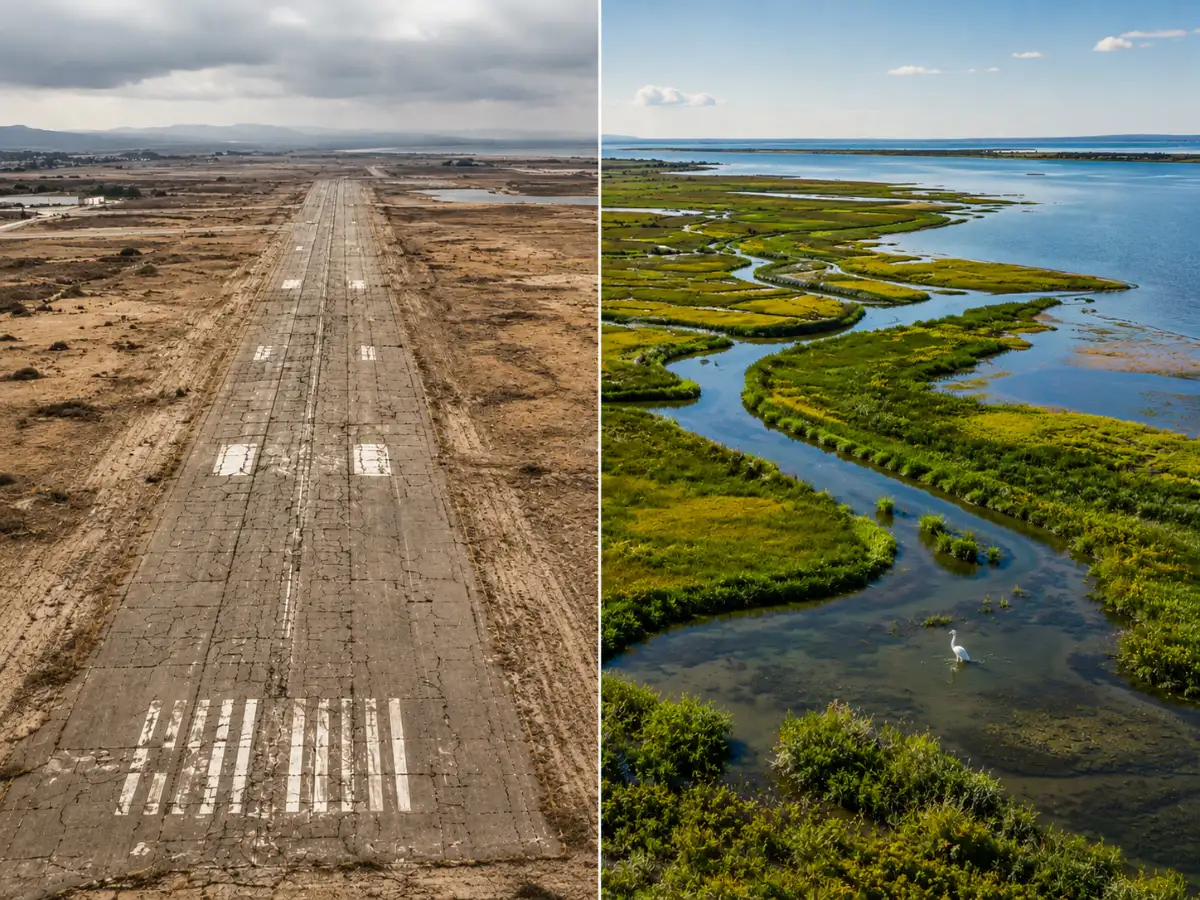
There is a stretch of shoreline in Marin County, California, that used to be a runway. Today, herons stand where fighter planes once landed. It took engineers more than ten years, millions of tons of harbor mud, and one deliberate breach in the levee to make this happen. The story matters beyond California. A peer-reviewed study published in PLOS ONE found that West Coast estuaries in the United States have lost about 85 percent of their original tidal wetlands to development and diking, with San Francisco Bay among the hardest hit. Hamilton is one way of clawing a little bit of that loss back.
From marshland to military runway, and back again