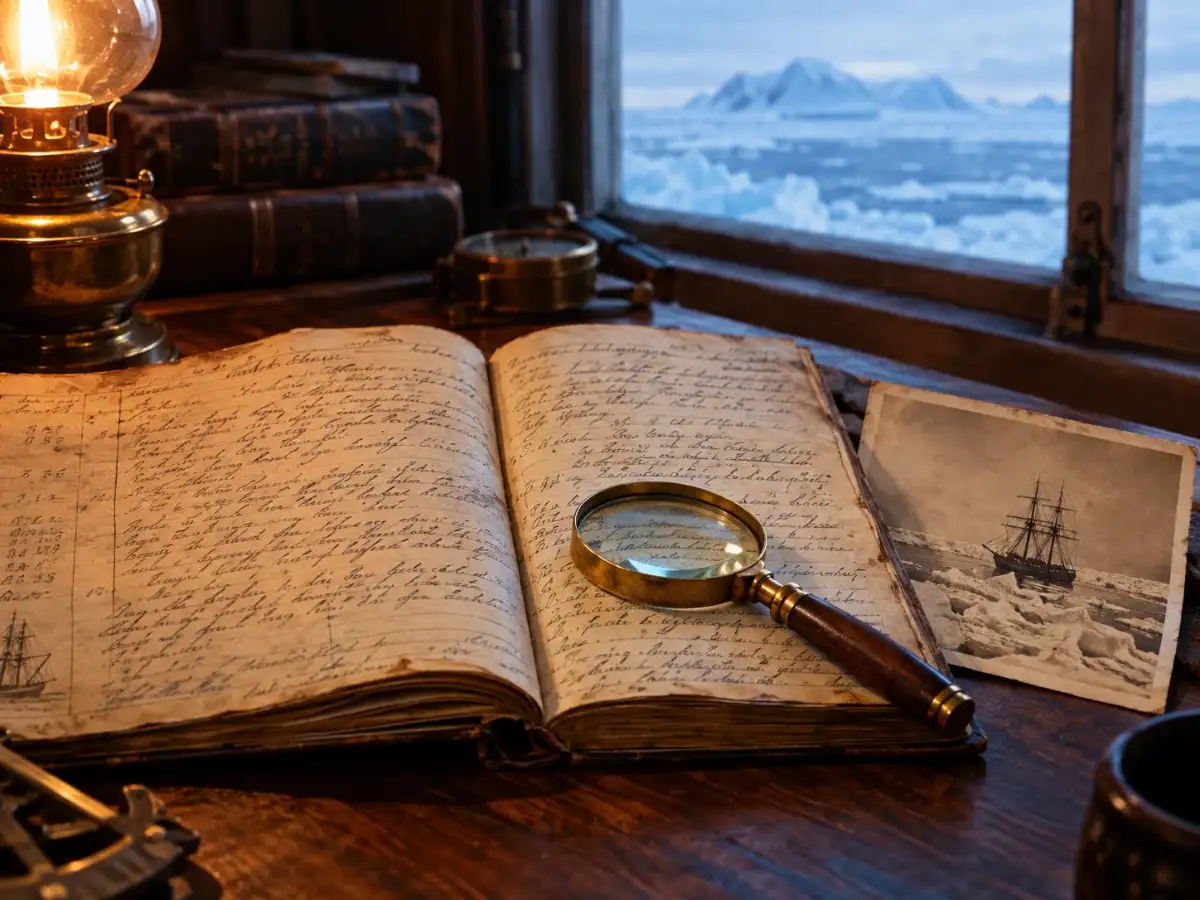
Imagine a retired teacher in Ohio and a university student in Manchester studying scanned images of 19th-century ship logs and trying to decipher a sailor’s messy handwriting. It may seem like just a hobby, but in reality, it was scientific work and it grew quickly. By March 2013, this crowdsourcing project called “Old Weather-Arctic” had become something huge. More than 16,000 volunteers were helping transcribe more than 275,000 handwritten pages from old ships of the U.S. Navy, Coast Guard and Coast Survey. Together, these pages contained almost 23 million weather and sea-ice observations. A 2019 Journal of Climate study, ‘Arctic Sea Ice Volume Variability over 1901–2010: A Model-Based Reconstruction,’ used just this kind of transcribed data to help reconstruct more than a century of Arctic sea ice history. That extended the record for sea ice thickness from 40 years to 110 years, giving scientists a much longer baseline to judge today’s melt
Why anyone cared about old ship logs