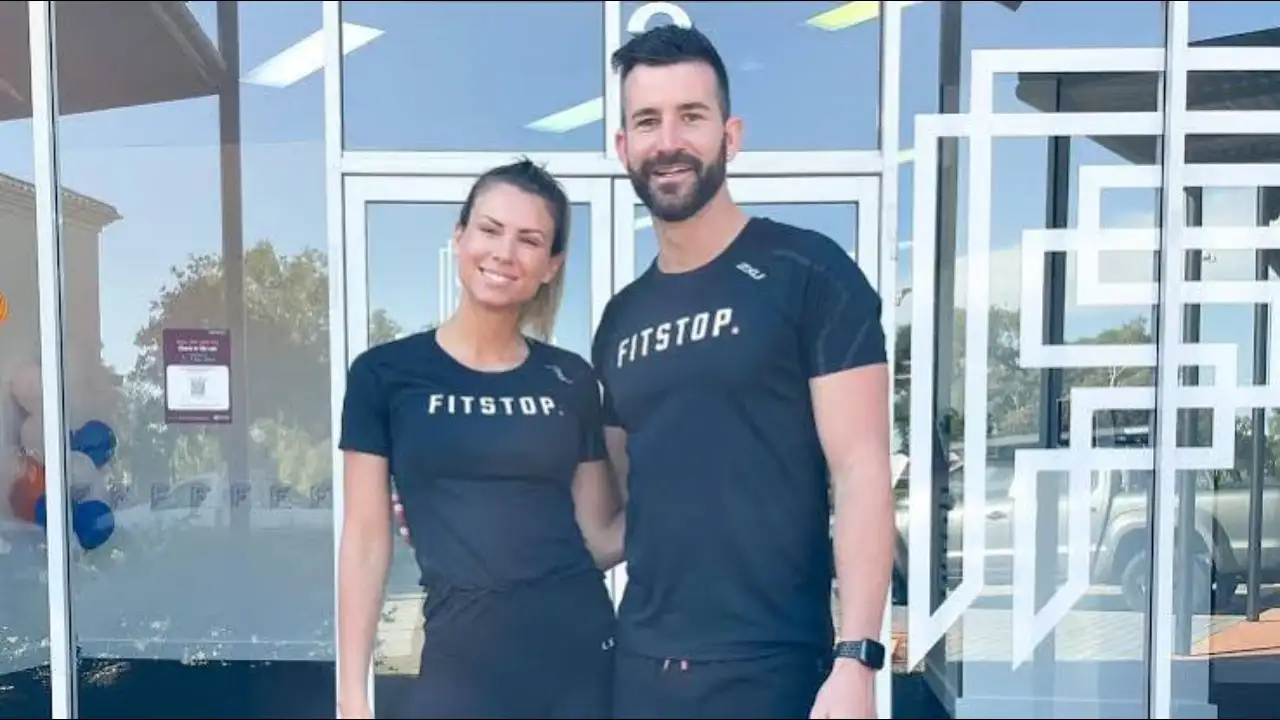
Peter Hull was training people in his parents’ garage in Brisbane. There was no large gym network behind him and no obvious sign that the idea would become a major fitness business. Hull had been working as a personal trainer after injuries ended his plans to pursue professional motocross, and he was testing a style of group training he believed could work for everyday athletes.
More than a decade later, that experiment has become Fitstop. The Australian functional fitness brand now has more than 160 locations across Australia, New Zealand, Singapore and the United States. In 2025, The Courier-Mail reported that the network was generating about $1.2 million a week in collective membership revenue.

Hull’s first fitness business was not built to last
The early business looked very different from the company Fitstop would become. Hull knew how to train people. He did not yet know how to build a business that could support itself and grow without depending on him personally.
His first location had about 30 members and around $50,000 in annual revenue, according to a case study published by The Entourage. Hull later described the problem plainly: he understood how to get results for clients, but had little experience getting results from the business itself.
That gap forced him to learn areas that had little to do with workouts. He worked on sales systems, cash-flow management and profit-and-loss reporting. He also began building a team instead of remaining the person responsible for every part of the operation. Within a year, membership had reached 120 and membership revenue had tripled to $150,000, according to the same account.
The second location showed Hull what could be repeated
By 2017, Hull had two locations, each with about 200 members. That was the point when the business had enough evidence for him to consider something bigger than operating his own gyms.
Fitstop moved into franchising that year. Hull's thinking was straightforward: if the training model worked, it needed to be turned into a system that other operators could follow. That meant developing the brand, technology, marketing, training and day-to-day processes before asking other people to run locations under the Fitstop name.
The change was significant. Fitstop was no longer limited by how many gyms Hull could personally open and manage. Franchise owners could build locations in their own markets, while the central business supplied the structure around them. By 2019, the network had reached 25 locations and had generated $8.5 million in total revenue over two years, according to Australasian Leisure Management.
Why the business kept changing as it got bigger
Fitstop's growth was not simply a matter of opening more doors. The company had to solve a different problem once the network became large: keeping the customer experience consistent across independently operated locations.
Hull told SmartCompany that Fitstop began building more of its own technology once the network reached roughly 20 to 25 stores.
Fitstop began developing proprietary technology to track the entire customer lifecycle, from initial online inquiries to long-term gym attendance. Replacing manual oversight with automated systems allowed the brand to expand internationally without losing quality control across individual sites.