Get all your news in one place.
100's of premium titles.
One app.
Start reading
The Times of India
The Times of India
World
TOI World Desk

In 2012, Swiss researchers fitted sheep with heart monitors to test whether collars could detect wolf panic, trigger a repellent and text the farmer

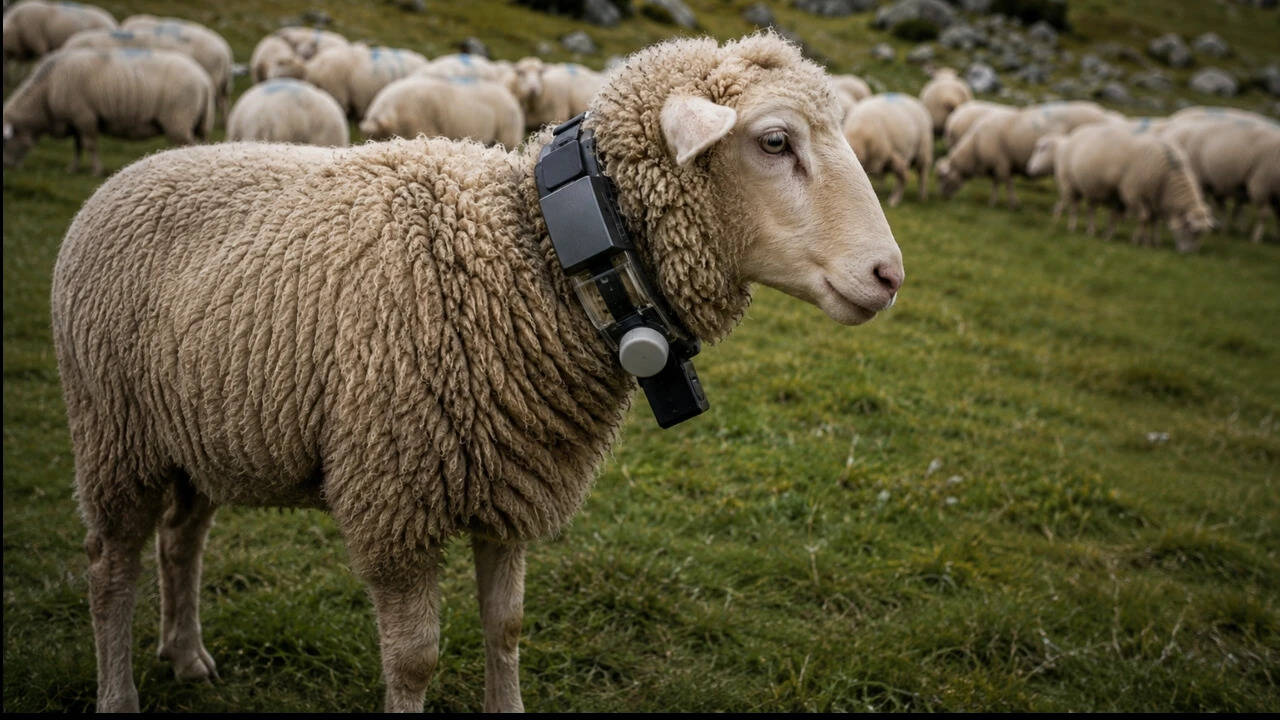
A flock of sheep sending text messages to its shepherd sounds like an idea from a science fiction film, but in Switzerland, researchers tested a prototype system that came surprisingly close to this. In 2012, Swiss biologists fitted sheep with heart-rate monitors capable of detecting a surge in stress that usually occurs when predators approach. The long-term ambition behind this prototype was that if the collar sensed the distinctive panic associated with a wolf attack, it would automatically release a wolf repellent while simultaneously sending a text alert to the farmer, giving them time to respond. According to the BBC, the project was designed to offer a non-lethal and technology-driven way of protecting livestock as wolves gradually returned to parts of Europe after decades of conservation efforts.

Get breaking news anytime, anywhere. Download the TOI app now!

Turning sheep’s heartbeat into a warning system

Jean-Marc Landry, who is a wolf specialist, led the project and conducted the first outdoor field trials near the Alpine resort of Les Diablerets. Wired reported that researchers equipped 12 sheep with commercially available heart-rate monitors similar to those used by athletes before releasing two muzzled Czechoslovakian Wolfdogs into the area. The scientists observed that sheep’s heart rates, which normally ranged between 60 and 80 beats per minute, surged to around 225 beats per minute when the wolfdogs attempted to attack. This distinct spike in heart rate suggested that a wearable device could reliably distinguish a genuine predator encounter from normal grazing behaviour.

The next phase, as cited by the BBC, involved developing an algorithm capable of recognising the unique cardiac signature of a wolf attack; that is, once the preset threshold was reached, the collar would activate automatically. The team envisioned integrating either a chemical spray or an acoustic deterrent which would be powerful enough to startle the approaching predator without severely harming it. At the same time, the collar would transmit an automated text message to the shepherd, allowing rapid intervention before livestock suffered major losses. The technology was intended as an affordable alternative for farmers with small flocks who could not afford livestock guardian dogs or extensive fencing systems.

A response to returning wolves in Europe

The experiment emerged against the backdrop of the grey wolf’s gradual return to Western Europe. Notably, grey wolves had largely disappeared from Switzerland for nearly a century before naturally recolonising the country from neighbouring countries like France and Italy under legal protection. While their comeback was considered good news for conservationists, it also created fresh challenges for livestock farmers, especially in Alpine grazing areas. Wired reported that just days before the trial of the prototype was unveiled, a wolf had killed two sheep in the Swiss canton of St. Gallen, thus underscoring tensions between wildlife conservation and pastoral farming. Similar instances of increases in wolf-related livestock damage had also been reported in the neighbouring country of France as protected wolf populations expanded.

However, instead of relying on lethal predator control, Landry’s crew focused on deterrence. As per Wired, Landry had previously researched non-lethal methods for reducing wolf predation, and the smart collar reflected that philosophy. The envisioned repellent could reportedly consist of an unpleasant odour, an intense sound, or any other stimulus that would likely interrupt the attacking wolf without injuring them. It is worth noting that this approach aligns with broader conservation strategies across Europe, where governments increasingly encourage coexistence measures, including livestock guardian dogs, electric fencing and behavioural deterrents, to reduce conflict while maintaining recovering wolf populations.

Although the texting collar never became a widely adopted commercial product, the 2012 trial showed how wearable technology and animal behaviour could be combined to safeguard livestock. The BBC reported that following the initial tests, the research team advanced to multi-country field trials in Switzerland and France throughout 2013. While that specific iteration remained confined to the prototyping stage, it served as an early pioneer for modern precision-livestock systems. Additionally, Norway also expressed its interest in the concept as it sought new ways to manage predator conflict. It is worth noting that while today’s precision-livestock systems increasingly rely on GPS tracking, accelerometers and artificial intelligence to monitor animal health and behaviour, Landry’s team had anticipated many of these developments more than a decade ago.

Sign up to read this article
Read news from 100's of titles, curated specifically for you.
Already a member? Sign in here
Related Stories
Top stories on inkl right now
One subscription that gives you access to news from hundreds of sites
Already a member? Sign in here
Our Picks
Fourteen days free
Download the app
One app. One membership.
100+ trusted global sources.