Get all your news in one place.
100's of premium titles.
One app.
Start reading
The Times of India
The Times of India
World
TOI World Desk

In 2012, New York pumped 375,000 cubic yards of harbor sand onto a vanishing Jamaica Bay island; 44 acres of salt marsh returned

For decades, Jamaica Bay in New York had been losing one of its vital natural defenses. The region’s salt marsh islands had been shrinking because of urbanization, erosion and changing environmental conditions. In response, scientists and government agencies used dredged sand to restore the eroding island.

Get breaking news anytime, anywhere. Download the TOI app now!
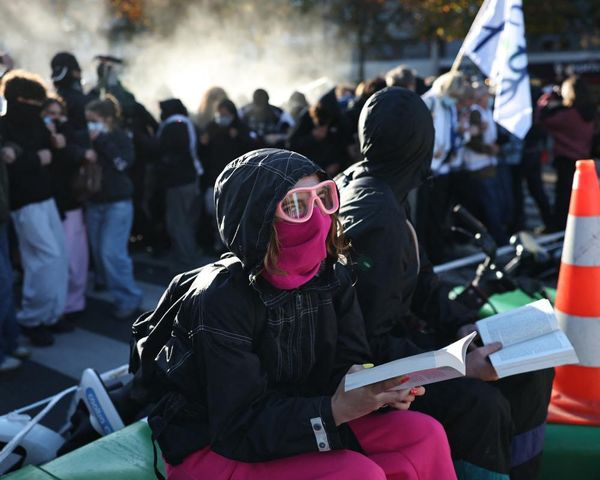
In 2012, the US Army Corps of Engineers restored Yellow Bar Hassock Island in Jamaica Bay, one of the deteriorating salt marsh islands in the region. About 375,000 cubic yards of dredged sand were used to raise the elevation of the island and restore its salt marsh habitat. The restoration project added approximately 42 acres, increasing the island's size to about 156 acres, according to the U.S. Army Corps of Engineers and project partners.

Yellow Bar Hassock Island is within the Jamaica Bay Wildlife Refuge, which the National Park Service manages as part of Gateway National Recreation Area. The Jamaica Bay unit spans thousands of acres in Brooklyn and Queens, including Jamaica Bay, adjoining shoreline areas, and islands. The refuge covers more than 9,000 acres of marsh, ponds, uplands, and open water. It is located in an area of dense urban development in New York City and includes areas such as John F. Kennedy International Airport.

A wetland that was shrinking for nearly a century

Jamaica Bay’s marsh islands have been shrinking for nearly a century. According to the U.S. Geological Survey, Jamaica Bay experienced the conversion of more than 60% of its vegetated salt-marsh islands to mudflats between 1951 and 2003.

Scientists have identified several causes for this trend, including urbanization, changes in water circulation, erosion, and sea level rise. Marshlands do more than provide habitat for grasses and other plants. They act as natural barriers, absorbing wave energy and reducing erosion and flooding nearby. According to the U.S. Army Corps of Engineers New York District, Jamaica Bay wetlands provide habitat for fish, shellfish and birds and help improve water quality by absorbing nutrients such as nitrogen and phosphorus.\

Making dredged sand a restoration tool

During the restoration of Yellow Bar Hassock, engineers reused dredged material. The sand was dredged from Ambrose Channel, one of the main shipping routes in the New York and New Jersey harbor system.

Instead of dumping the dredged material at sea, engineers used it to rebuild the marsh island. This is called the “beneficial use” approach, which recycles material from navigation projects for environmental restoration. After placing the sand, engineers shaped the island to the elevations needed for marsh vegetation to grow.

Finally, engineers planted native vegetation sourced from Jamaica Bay to help restore the marsh habitat. Nearly 30 acres were planted with smooth cordgrass in lower areas, while higher elevations were planted with salt meadow grass and spikegrass. Smooth cordgrass is especially important because its root systems help stabilize marshes.

Wildlife was not long in coming after the reconstruction

One sign of success was the wildlife that quickly used the new habitat. During restoration, workers observed a harbor seal sleeping near the dredge line used to transport sand. The Army Corps also reported biologists recording horseshoe crabs nesting in the Yellow Bar Hassock area, which had not been habitable before the land was rebuilt.

The return of species suggests the restored wetland is functioning well. Melissa Alvarez, a wetlands scientist at the Army Corps, said wildlife began using the reconstructed islands almost immediately after construction started.

A bigger effort to restore Jamaica Bay

Yellow Bar Hassock was one of many wetland restoration projects aimed at reversing decades of wetland loss in Jamaica Bay. The Yellow Bar Hassock project became a model for how urban areas can use nature-based approaches to address environmental problems. Unlike traditional flood barriers, restored wetlands protect the area while also providing habitat for many species.

Scientists continue to study how restored marshes respond to storms, erosion and climate change. The project suggests that even heavily degraded urban wetlands can be restored through engineering, ecological restoration and careful management.

Sign up to read this article
Read news from 100's of titles, curated specifically for you.
Already a member? Sign in here
Related Stories
Top stories on inkl right now
One subscription that gives you access to news from hundreds of sites
Already a member? Sign in here
Our Picks
Fourteen days free
Download the app
One app. One membership.
100+ trusted global sources.