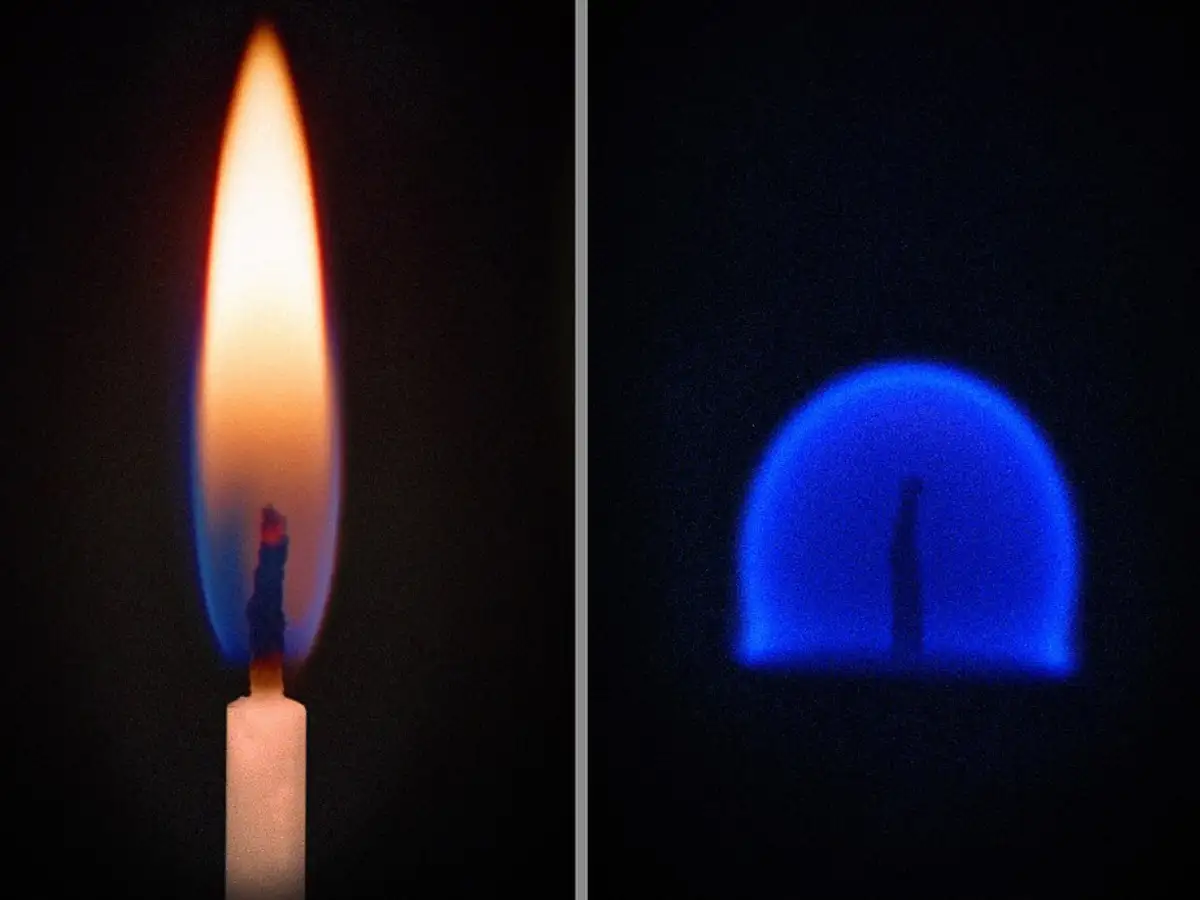
NASA ignited a fuel droplet aboard the International Space Station in 2012, and the flame did not extinguish as expected. Scientists working on the Flame Extinguishment Experiment, or FLEX, observed heptane droplets extinguish twice, with the findings later published in the journal Combustion and Flame. At first, the hot flame burned itself out, but after that the droplets shrank further, as if being consumed by something invisible. NASA called this phenomenon the cool flame, and its discovery led to a new research field: cool flame chemistry. Unlike the hot flame, which releases soot, carbon dioxide, and water, the cool flame emitted carbon monoxide and formaldehyde.
Why the experiment did not go as planned
The researchers aimed to understand how a flame burns in microgravity because that information is essential to ensuring astronauts' safety in the event of a fire aboard a spacecraft. Tiny fuel droplets, about three millimeters in diameter, were ignited in the Combustion Integrated Rack on board the space station and observed until they burned out. Nobody expected a droplet to go out but keep shrinking without showing any signs of a burning flame, either to the naked eye or on the space station's cameras.