Get all your news in one place.
100's of premium titles.
One app.
Start reading
The Economic Times
The Economic Times
Shreya Biswas

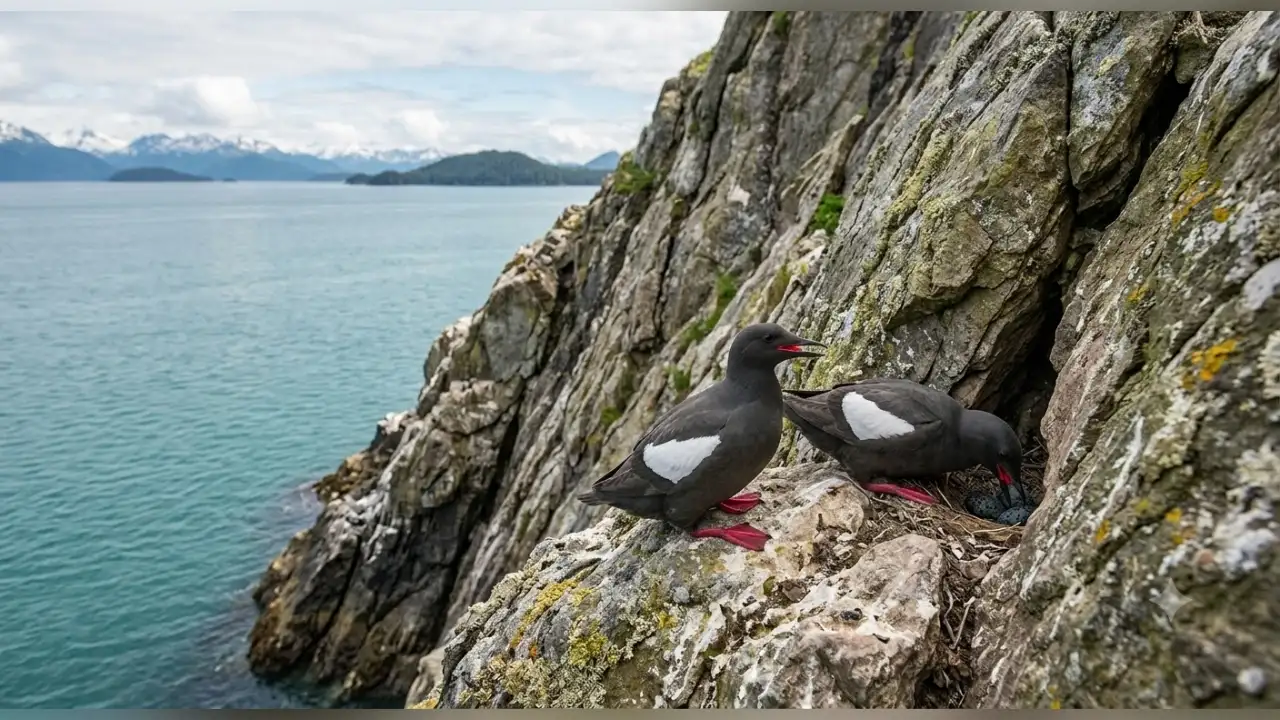
In 2012, Alaska counted 58 pigeon guillemots on Naked Island as mink threatened nests. 11 years later following restoration, their numbers had jumped nearly 400%, reaching 288 birds in 2023

In 2012, only 58 pigeon guillemots were counted at Alaska's Naked Island Group, where introduced American mink had become a major threat to the birds' nests, eggs and young.

Eleven years later, 288 Pigeon Guillemots were counted on the islands. The nearly 400% increase followed a multiyear restoration effort focused on removing introduced mink from the birds' nesting areas, as per a report.

The population had faced decades of pressure from changes in the marine environment, the effects of the Exxon Valdez oil spill, and predation by mink.

A major decline in Prince William Sound

The pigeon guillemot is a seabird in the auk family that nests along rocky coastlines throughout the North Pacific Ocean and feeds in inshore waters on a variety of fish and invertebrates. An estimated 50% to 80% of the world's Pigeon Guillemot population breeds in Alaska.

Prince William Sound's rocky shoreline provides nesting and foraging habitat for the species. Surveys conducted by the U.S. Fish and Wildlife Service in 1972 estimated that more than 15,000 Pigeon Guillemots lived in the Sound. By 2023, fewer than 2,000 remained, representing a decline of more than 85%.

The Naked Island Group, located in the middle of Prince William Sound, was once one of the area's most important nesting sites. About 2,000 Pigeon Guillemots nested there in 1978. Over the following decades, the nesting population declined by more than 95%, reaching its lowest point in 2012, as per a StoryMaps report.

READ ALSO: In 1996, New York flagged Upper Tonawanda Creek as a water-supply concern. 16 years later, NYSDEC removed it from the impaired list after farm BMPs improved water quality

Changes in the ocean and the Exxon Valdez oil spill

A climatic regime shift in the North Pacific during the winter of 1976-77 brought rapid and sustained warming that changed physical and biological conditions across Alaska and the North Pacific.

The shift affected the distribution and abundance of plankton, crustaceans and fish. These long-term changes also negatively affected the breeding success and population size of Pigeon Guillemots in Prince William Sound, including through changes in food availability.

The birds faced another major disruption on March 24, 1989, when the Exxon Valdez oil tanker struck a reef in Prince William Sound and spilled 43.9 million litres of crude oil.

Naked Island was the first major landmass hit by the oil. Because Pigeon Guillemots forage and interact in intertidal and nearshore habitats, they were among the bird species most vulnerable to the spill.

An estimated 2,000 to 6,000 Pigeon Guillemots died from acute oiling throughout the spill-affected area. Other effects included delayed egg laying, decreased hatching success, increased nest abandonment and slower chick growth.

By 2004, the obvious negative effects of the spill were no longer apparent, and there was no indication that Pigeon Guillemots in Prince William Sound were still being exposed to residual oil. However, the population was still not showing signs of recovery.

READ ALSO: In 2002, Shattuck Chemical agreed to pay $1.25 million for restoration of South Platte River following years of chemical release. 10 years later, the river was restored for migratory birds and native species

Mink became a major threat

American mink were introduced to the Naked Island Group in the 1970s by fur trappers.

Researchers determined that since the late 1990s, mink predation on pigeon guillemot nests and adults was likely the primary factor preventing population recovery and limiting reproductive success.

By 1998, mink predation accounted for the majority of pigeon guillemot chick and egg deaths at the Naked Island Group.

The birds were particularly vulnerable because mink could enter the crevices and burrows where they nested. As predation pressure increased, some Pigeon Guillemots shifted from sites that mink could easily access to deeper crevices on steep cliff faces.

Other nesting birds were also affected. Arctic Terns and Parakeet Auklets were eradicated as nesting species on the islands, while the numbers of Horned and Tufted Puffins were greatly reduced.

Restoration focused on mink removal

Funding for Pigeon Guillemot restoration at the Naked Island Group began in 2007 through the Exxon Valdez Oil Spill Trustee Council.

The preferred restoration approach was to control the introduced mink population while monitoring the number of pigeon guillemots nesting on the islands.

Through a partnership between the U.S. Fish and Wildlife Service and the USDA Animal and Plant Health Inspection Service Wildlife Services, experienced trappers worked to remove invasive mink from Pigeon Guillemot nesting areas.

By 2017, no mink were detected near those nesting areas.

READ ALSO: Georgia won UNESCO World Heritage status for the 636-square-mile Okefenokee Swamp to bolster conservation; the result raised global attention around a wetland home to 15,000 alligators and hundreds of species

Numbers increased after restoration

The pigeon guillemot population responded quickly as mink numbers were reduced.

The number counted at the Naked Island Group rose from 58 in 2012 to 163 by 2018, while the number of nests increased from 11 to 51.

Continued monitoring documented further growth, with 288 Pigeon Guillemots counted on the islands in 2023.

With predation pressure from introduced mink no longer described as a limiting factor, the pigeon guillemot population on the Naked Island Group may continue to increase.

Sign up to read this article
Read news from 100's of titles, curated specifically for you.
Already a member? Sign in here
Related Stories
Top stories on inkl right now
One subscription that gives you access to news from hundreds of sites
Already a member? Sign in here
Our Picks
Fourteen days free
Download the app
One app. One membership.
100+ trusted global sources.