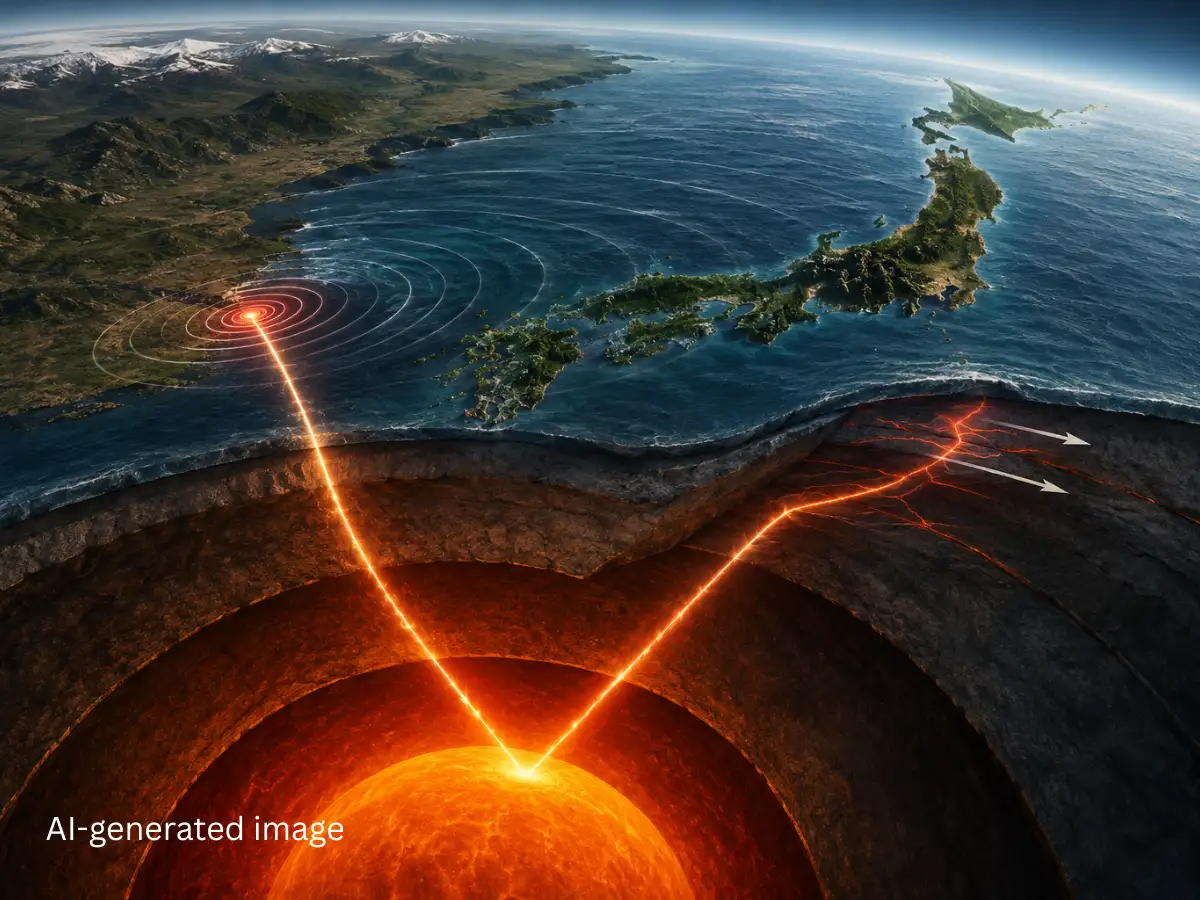
The magnitude 9.0 Tohoku earthquake that struck Japan on 11 March 2011 remains one of the most devastating natural disasters in modern history. The powerful quake triggered a massive tsunami, caused widespread destruction and led to the Fukushima nuclear disaster.
According to Japan's National Police Agency , more than 15,000 people lost their lives, while thousands were injured or remain missing. For years, scientists believed they had a detailed understanding of what happened during and after the disaster.

However, a new study suggests that the earthquake may have triggered an extraordinary chain of events deep inside the Earth that went unnoticed for more than a decade.
A mysterious movement detected after the main earthquake
Shortly after the devastating earthquake struck off Japan's north-eastern coast, scientists monitoring GPS stations noticed something unusual.
About 16 minutes after the mainshock, instruments across Japan recorded a sudden eastward shift. The movement happened almost simultaneously across the country and did not match any known aftershock pattern.
Researchers were puzzled. There were no major earthquakes occurring at that moment that could explain the movement.
For years, the phenomenon remained a mystery hidden within the enormous amount of data collected after the disaster.