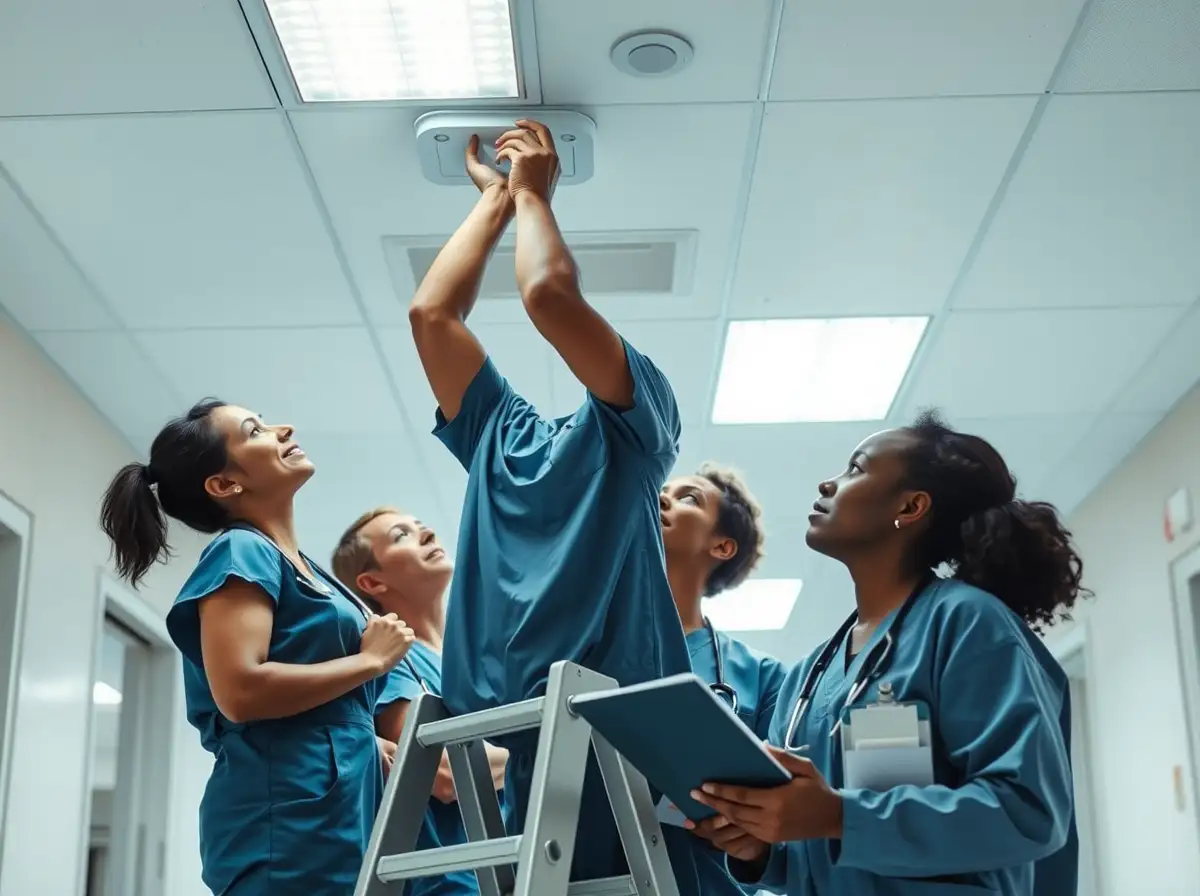
In 2011, the Captain James A. Lovell Federal Health Care Center in North Chicago, Illinois, joined the federal government’s environmental improvement effort with a focus on three major areas: energy, transportation and waste. Three years later, the facility had turned that commitment into a measurable energy-efficiency success story. A major lighting retrofit replacing conventional fluorescent fixtures with more efficient LED technology helped reduce the health care center’s electricity consumption by 15 percent in one year. The U.S. Environmental Protection Agency reported that the initiative was expected to generate $500,000 in savings over 10 years while avoiding an estimated 7.4 million pounds of carbon dioxide emissions.
The achievement is especially notable because Lovell FHCC is not a small office building. The facility operates across a 120-acre campus containing a full hospital, residences and a power plant. It serves sailors associated with Naval Station Great Lakes as well as veterans from northern Illinois and southern Wisconsin. Keeping a complex medical campus operating around the clock requires substantial energy, making lighting an important opportunity for efficiency improvements. The facility’s Green Environmental Management Systems Committee recognized that reducing electricity demand could complement its earlier sustainability work and make environmental responsibility part of everyday operations.