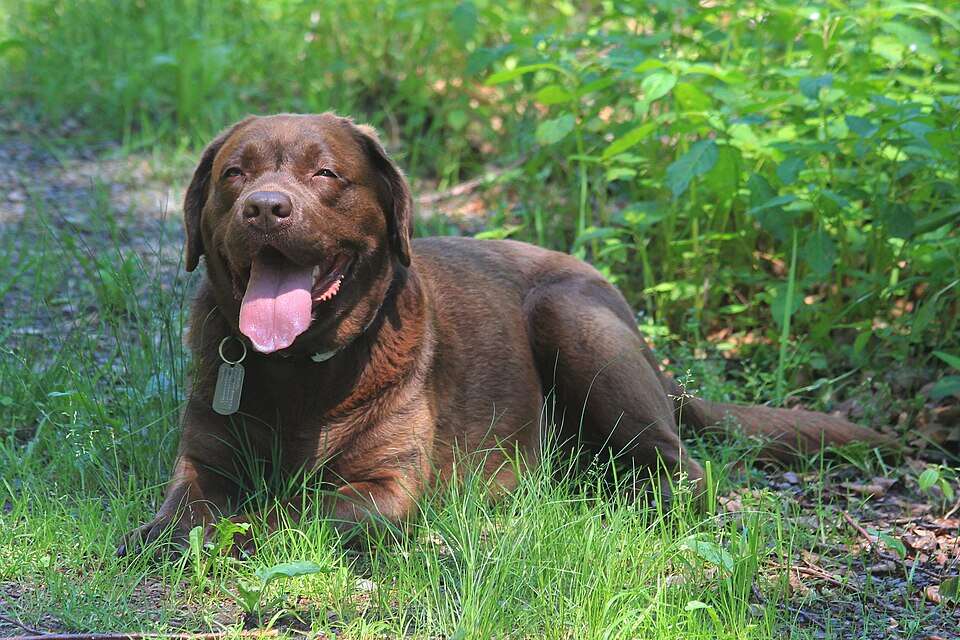
When Florida discovered giant African land snails in Miami in 2011, the challenge was finding them in the first place. Many could hide in vegetation, debris and other sheltered places, making eradication harder to track. In 2014, Florida added an unusual tool: specially trained Labrador retrievers that could detect the snails by scent even when people could not see them.
Get breaking news anytime, anywhere. Download the TOI app now!
According to the University of Florida IFAS , the giant African land snail ( Lissachatina fulica ) is native to East Africa and can grow to nearly 8 inches long. It feeds on a wide range of plants, with at least 500 plant species recorded as food sources. The snail can also consume materials such as stucco, which provide calcium needed for shell growth. The 2011 discovery was not Florida’s first encounter with the species. Three giant African land snails were brought to Miami in 1966 and released in a garden. The resulting infestation was detected in 1969, and more than 18,000 snails were eventually found during a 10-year eradication effort that ended in 1975.
The snails often hid in places that were difficult to inspect visually
According to the US Department of Agriculture’s Animal and Plant Health Inspection Service (USDA APHIS) , the first confirmed detection of the second outbreak came on September 9, 2011, in a residential area of Miami. Officials subsequently carried out large-scale surveys and, in April 2012, established quarantine borders and regulatory measures around the infested area. Finding the animals was particularly important because eradication depended on detecting the remaining population as numbers declined. Inspectors could search gardens and other likely hiding places, but a snail that remained concealed could escape visual surveys.
The programme also relied on residents to report possible sightings. Public reports helped officials identify locations that needed inspection, while repeated surveys showed how intensive the eradication effort was. Homes in heavily infested quarantine areas were repeatedly surveyed, with snails manually collected, hiding places removed and pesticides applied. Researchers also investigated whether traps could help control the snails. Thus, detection is as important as removal. An eradication programme cannot simply collect the visible animals and assume the rest are gone. Officials also carried out treatments in affected areas.
Then the Labradors joined the search
The dogs were introduced in 2014. Two black Labradors, Raider and Bear, were trained specifically to detect the scent of giant African land snails. Their training lasted 10 weeks, including four weeks at a US Department of Agriculture training facility and six weeks of practical work in Miami-Dade County. The dogs were particularly useful in areas where snails had previously been found but where their numbers had fallen to low levels.
That marked an important shift in the search strategy. Instead of relying entirely on human inspectors, handlers could take the dogs through gardens and other areas and watch for a trained response. When a dog detected a snail, it was trained to sit over the spot to indicate the find.
According to the Florida Department of Agriculture and Consumer Services , the trained dogs could distinguish giant African land snail scent from that of other snail species and detect snails that the human eye might miss. They were primarily used in areas where the snails had previously been found, but their numbers had fallen to very low levels. By the time the dogs were introduced, officials had already removed more than 140,000 snails through a combination of dog teams, bait, surveys, collection, experimental traps and habitat modification. That figure shows the dogs were only one part of the campaign's progress.
A decade-long search ended with eradication
The Florida campaign continued after the first detection, with surveillance maintained even as sightings declined. Fewer detections did not necessarily mean the infestation had disappeared. The last live giant African land snail from the 2011 outbreak was detected in 2017, after which Florida and federal authorities continued monitoring the area. In September 2021, the US Department of Agriculture’s Animal and Plant Health Inspection Service declared the infestation eradicated after no snails had been detected in Broward and Miami-Dade counties for three consecutive years. The declaration applied to that outbreak, not to the permanent elimination of the species from Florida. New infestations were later detected in Pasco County in 2022 and Broward County in 2023, prompting further eradication efforts.
The Miami campaign also illustrates why detection can become more difficult as an invasive population declines. When numbers are high, individuals may be easier to locate, but the remaining animals can become increasingly difficult to find. For an eradication programme, however, detecting those last individuals remains critical. The Labradors therefore served as an additional detection tool, working alongside human inspectors and other control measures rather than replacing them.