Get all your news in one place.
100's of premium titles.
One app.
Start reading
The Economic Times
The Economic Times
Team Global

In 2009, Illinois used an estimated 284,715 tons of recycled concrete material in highway construction; IDOT spent about $3.18 million on the material for embankments, bases, and subbases

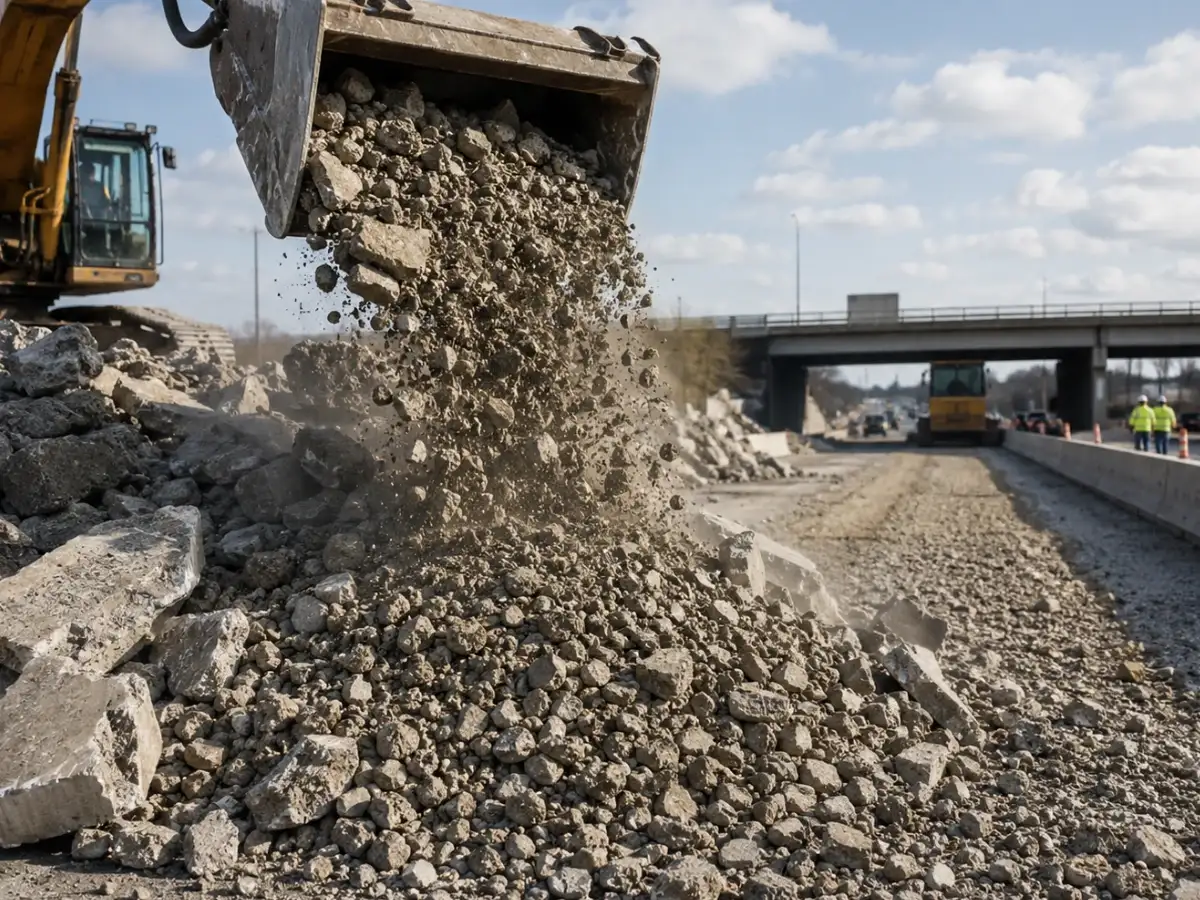
Every time an old bridge or cracked stretch of highway is torn down, someone has to decide what happens to the rubble. In Illinois, much of it ends up being reused for the new construction project. A 2011 IDOT report covering calendar year 2009, from the Illinois Department of Transportation's Bureau of Materials and Physical Research, estimated that 284,715 tons of Recycled Concrete Material were used during highway construction projects in the state that year. Instead of relying solely on freshly mined stone, IDOT spent nearly $3.18 million buying and using this crushed concrete. It may seem like a small line item in the state budget, but it points to a broader practice in how states handle old concrete in road construction, and Illinois has done so for years.

Where does old concrete actually go?

When crews tear down concrete pavement, bridges, or curbs and gutters, the debris does not automatically become trash. IDOT's report explains that the rubble is crushed into smaller pieces and stockpiled; small percentages of subbase soil and other debris are sometimes included. Once processed, this crushed concrete is officially labeled Recycled Concrete Material, or RCM. The agency says it is similar to natural aggregates in appearance and behavior, but rougher and more absorbent because of hardened cement paste on the stones.

What Illinois actually built with it

The 2009 figures show that RCM was not used for anything out of the ordinary. It was used in aggregate surface course, as well as in granular embankments, stabilization bases, and subbase layers beneath roads with pavements, all bulk roadbed roles rather than a single narrow substitution for gravel. It was also used in drainage layers and membrane waterproofing, where its angular shape helps water pass through while limiting settlement over time. At 284,715 tons, RCM was the second-highest recycled material IDOT used in 2009, behind only reclaimed asphalt pavement.

Sign up to read this article
Read news from 100's of titles, curated specifically for you.
Already a member? Sign in here
Related Stories
Top stories on inkl right now
One subscription that gives you access to news from hundreds of sites
Already a member? Sign in here
Our Picks
Fourteen days free
Download the app
One app. One membership.
100+ trusted global sources.