Get all your news in one place.
100's of premium titles.
One app.
Start reading
The Economic Times
The Economic Times
Team Global

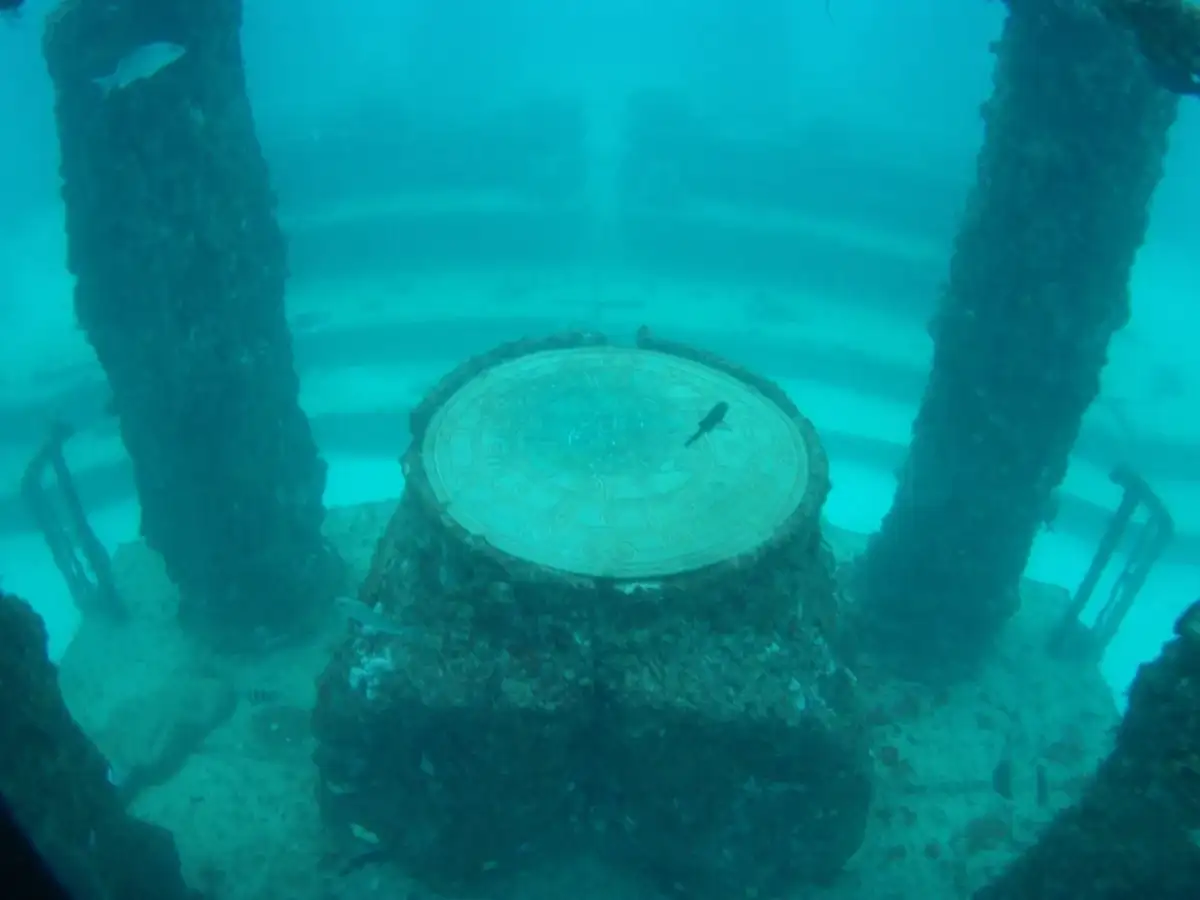
In 2007, the Neptune Memorial Reef began growing off Florida with cremated remains; the planned 16-acre site later developed into a coral habitat

Forty feet down, four miles out from Miami Beach, is a graveyard in the form of a lost city. It features stone lions, iron gates, and a great stairway that leads nowhere. No headstones, no flowers, and certainly no head-keepers mowing anything. Its concrete columns, however, are mixed with the cremated remains of hundreds of people who chose this reef, rather than a conventional burial, as their final resting place. This is the Neptune Memorial Reef.

A 2022 NOAA-led study, at the time of writing, still the most recent nationwide assessment of its kind, found that scientists from NOAA's Atlantic Oceanographic and Meteorological Laboratory and the University of Miami had documented net decline at roughly 70 percent of Florida's coral reef sites, driven by disease, bleaching, and storms. Now, the only living reef tract in the continental United States is eroding in real time, in Florida. When a private cemetery project goes largely unpublicized to become one of the world's largest man-made reefs, then it is fair to ask what this really says about us, and about the ocean that we never bother to protect via official means?
From a costume of Atlantis to a stroke of conservation

It started in the mid-2000s as a work of art and an idea to dive at a place where it was believed to be the Lost City of Atlantis. The cremation angle was added on when the business of creating underwater sculpture on a grand scale didn't work out. The Neptune Society opened the site about 3.25 miles off Key Biscayne, and it has been growing since 2007. The reef's Wikipedia page says that today it's slowly making its way to its intended size of 16 acres, and eventually will have room for tens of thousands of memorials and cremated remains that will be placed into specially formulated, pH-balanced concrete to provide something to which the coral larvae can cling.

Sign up to read this article
Read news from 100's of titles, curated specifically for you.
Already a member? Sign in here
Related Stories
Top stories on inkl right now
One subscription that gives you access to news from hundreds of sites
Already a member? Sign in here
Our Picks
Fourteen days free
Download the app
One app. One membership.
100+ trusted global sources.