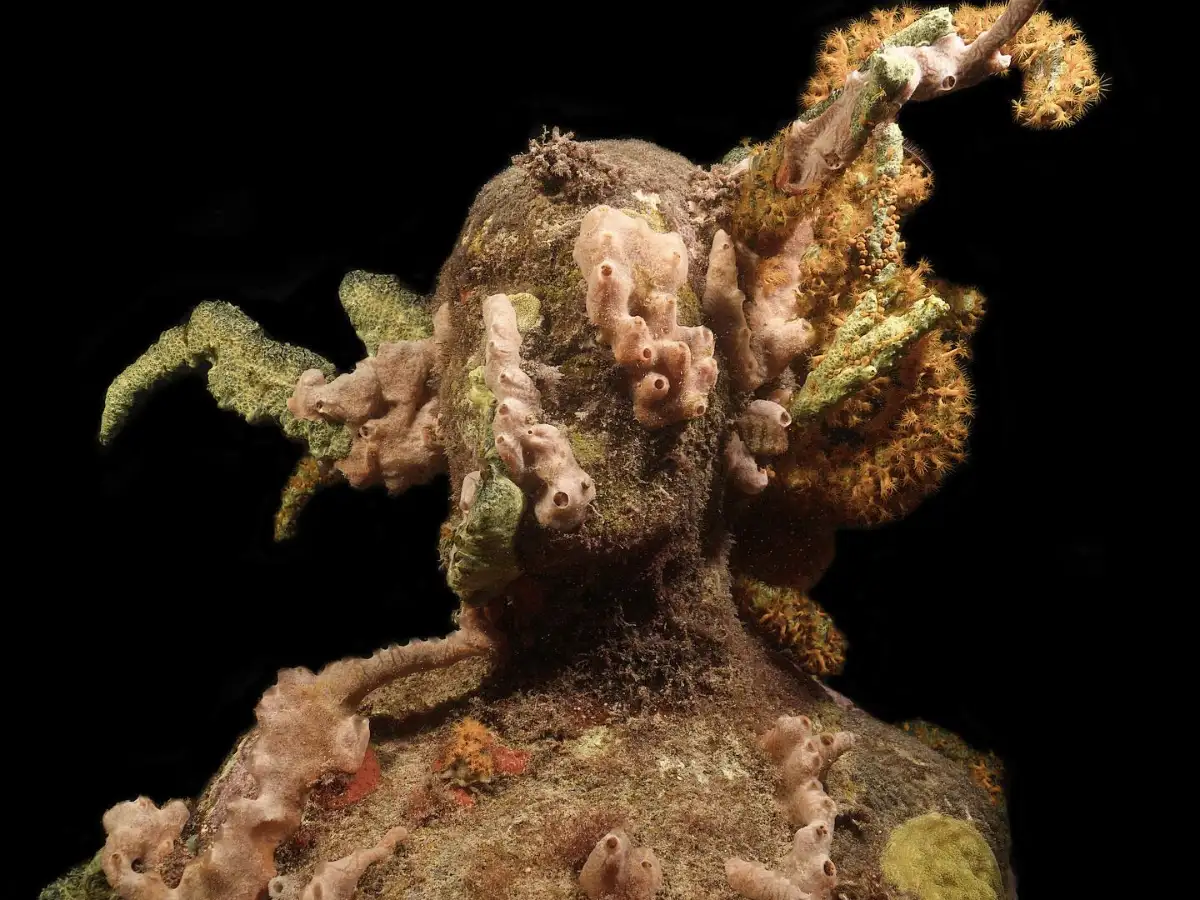
In 2004, Hurricane Ivan passed through Grenada, stripping large parts of coral from the reef that borders Molinere Bay. Two years later, sculptor Jason deCaires Taylor, letting his artwork work its magic, placed 75 concrete human figures on that same seabed, believing that art could speed up what nature would otherwise take decades to rebuild on its own. Two decades later, a study suggested that a version of that belief may have been justified. A 2024 study titled 'A Report on the Artificial Reef Use in Grenada, West Indies,' published in the Journal of Marine Science and Engineering, found that a separate set of concrete artificial reefs built within the same protected bay developed coral cover closely resembling nearby natural reefs within about two years of placement. This may have been the vision Taylor had in mind.
A reef born from disaster