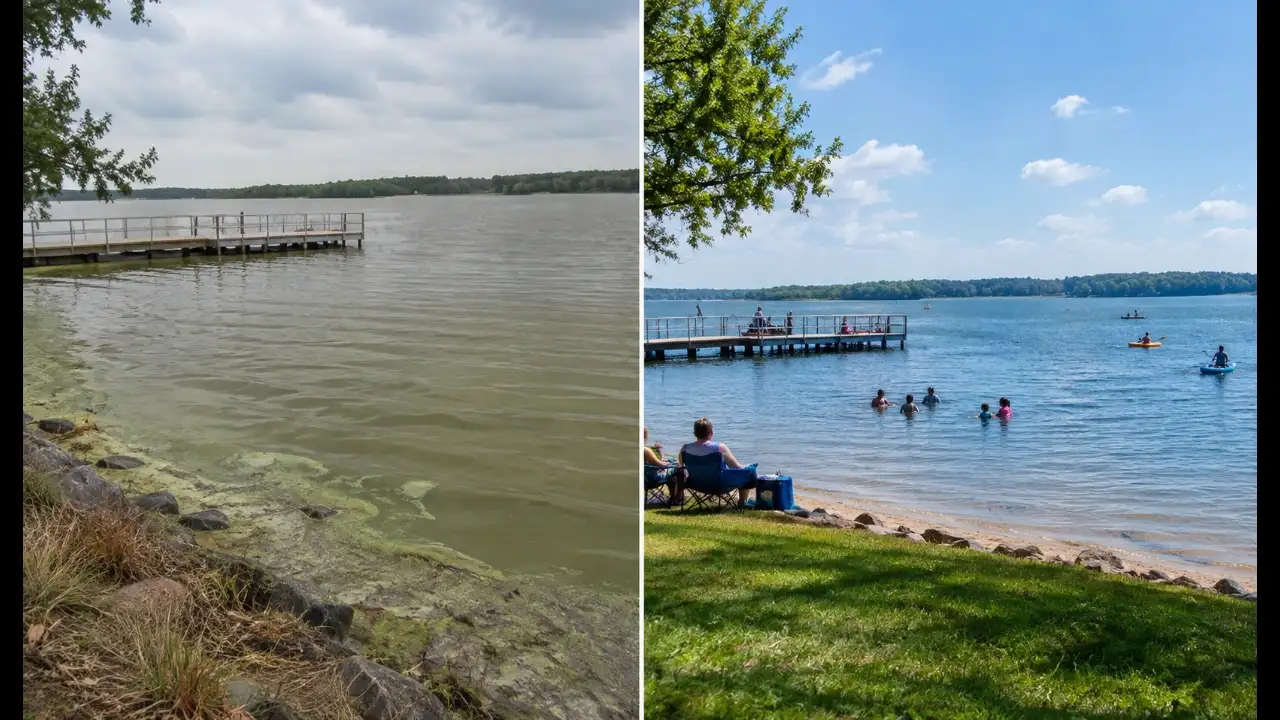
In 2004, Easter Lake in Des Moines, Iowa, was known for a problem that many urban lakes quietly face: too much sediment and poor water clarity. The lake was placed on Iowa’s impaired waters list because siltation and cloudy water were affecting its recreational and ecological uses. Two decades later, state monitoring shows a very different picture.
The change did not come from one quick cleanup. Restoration teams worked across the lake and its surrounding watershed, where rainwater could carry soil, nutrients and other pollutants into the water. Sediment was removed from the lake, while wetlands, rain gardens, prairie areas and other projects helped slow runoff before it reached the shoreline.